What is Newton's first law of motion?
Pucks, Tea, and Motion
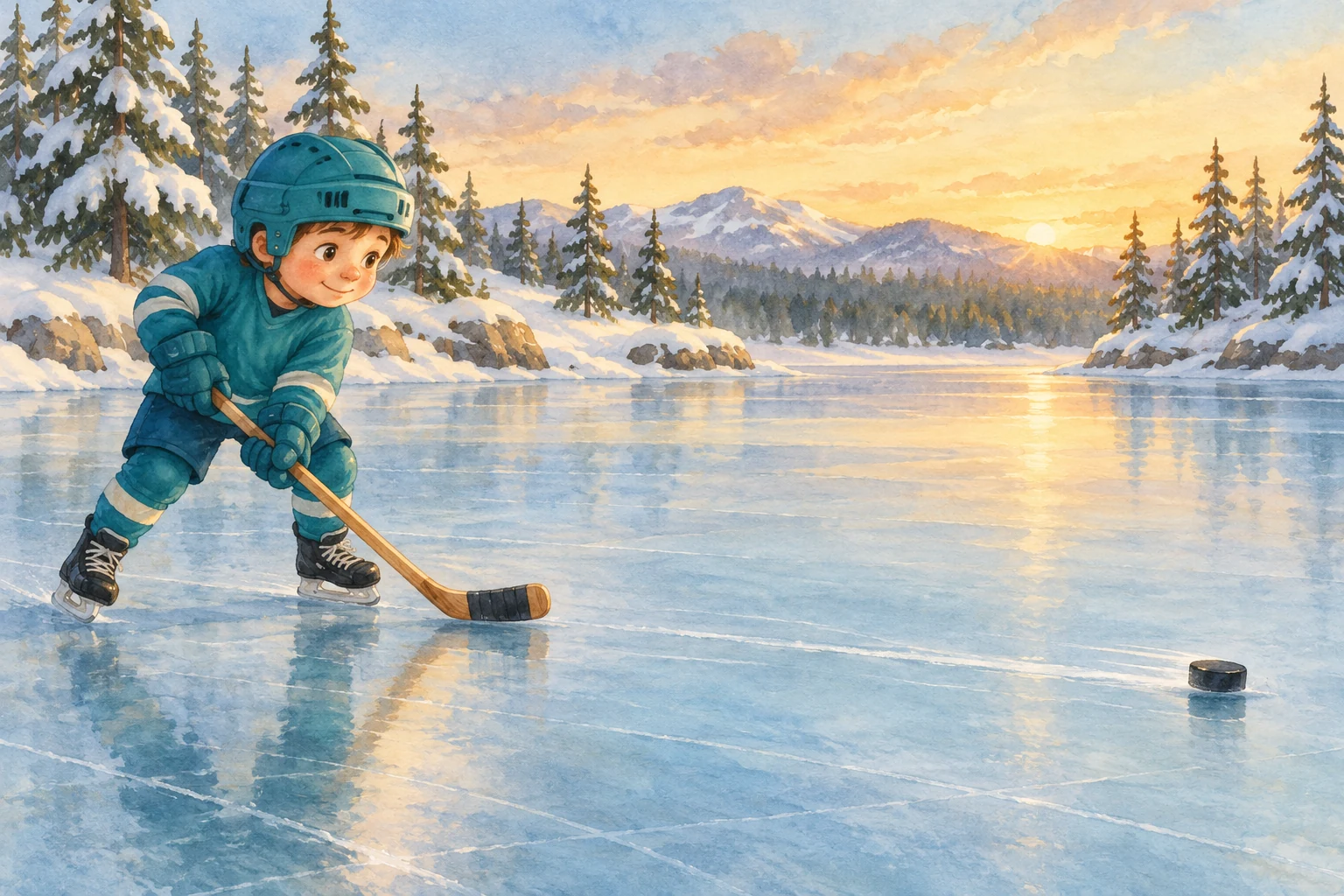
Tap. Your hockey stick stops. The puck doesn’t. Off it skims across the ice, as if it has somewhere better to be. What keeps pushing it? Nothing needs to! Moving objects don’t need a constant push to keep going. That little surprise helps explain a good pass, a smooth tea delivery, and a spacecraft’s very long goodbye.
A rule for the glide
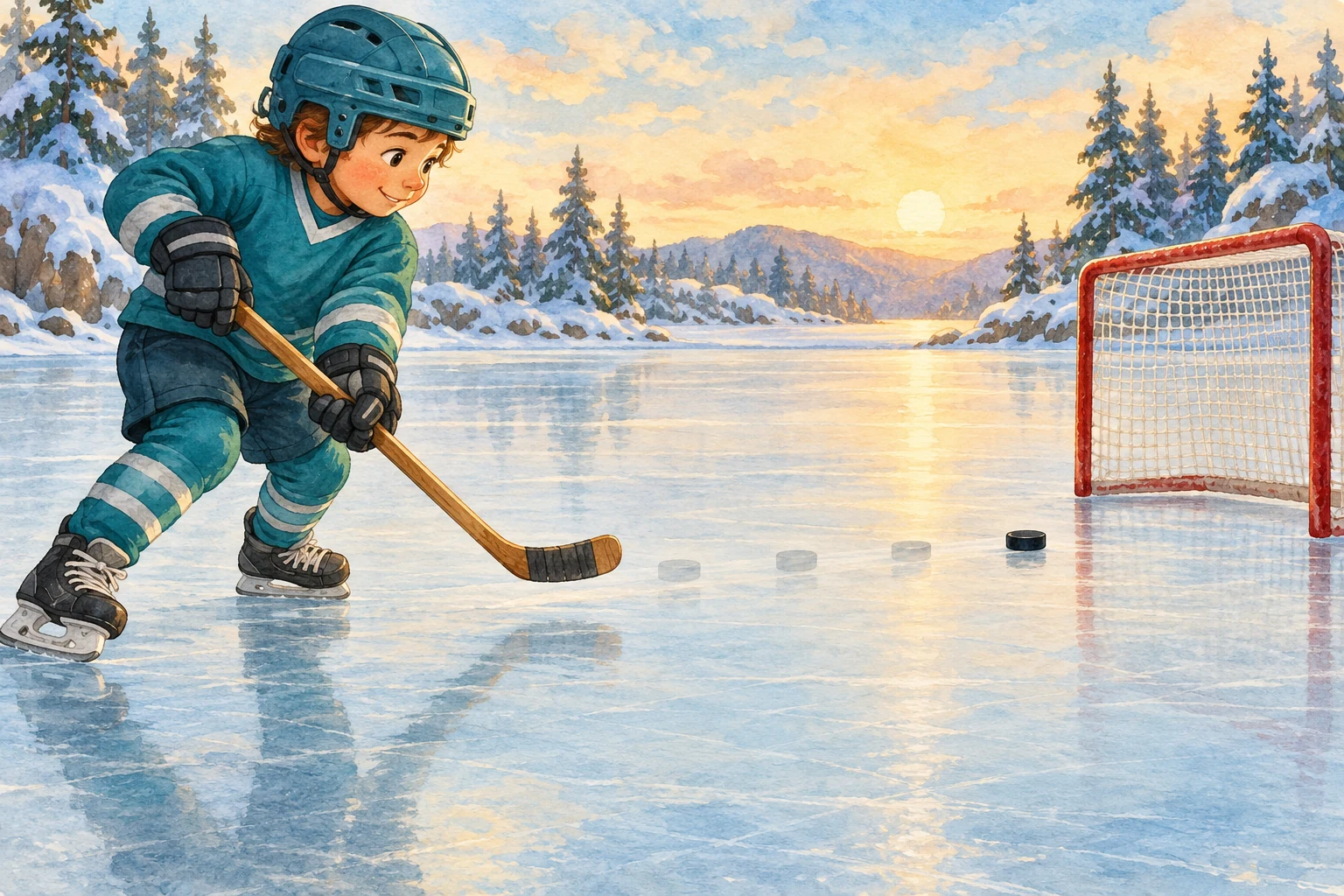
Isaac Newton’s first law of motion tells us what to expect. An object stays still, or keeps moving straight at the same speed, unless an unbalanced force acts. A force is a push or pull. “Unbalanced” means the pushes and pulls don’t cancel out. Your stick supplied one when it started the puck moving. Once the stick lets go, the puck keeps the appointment.
Held up, still sliding
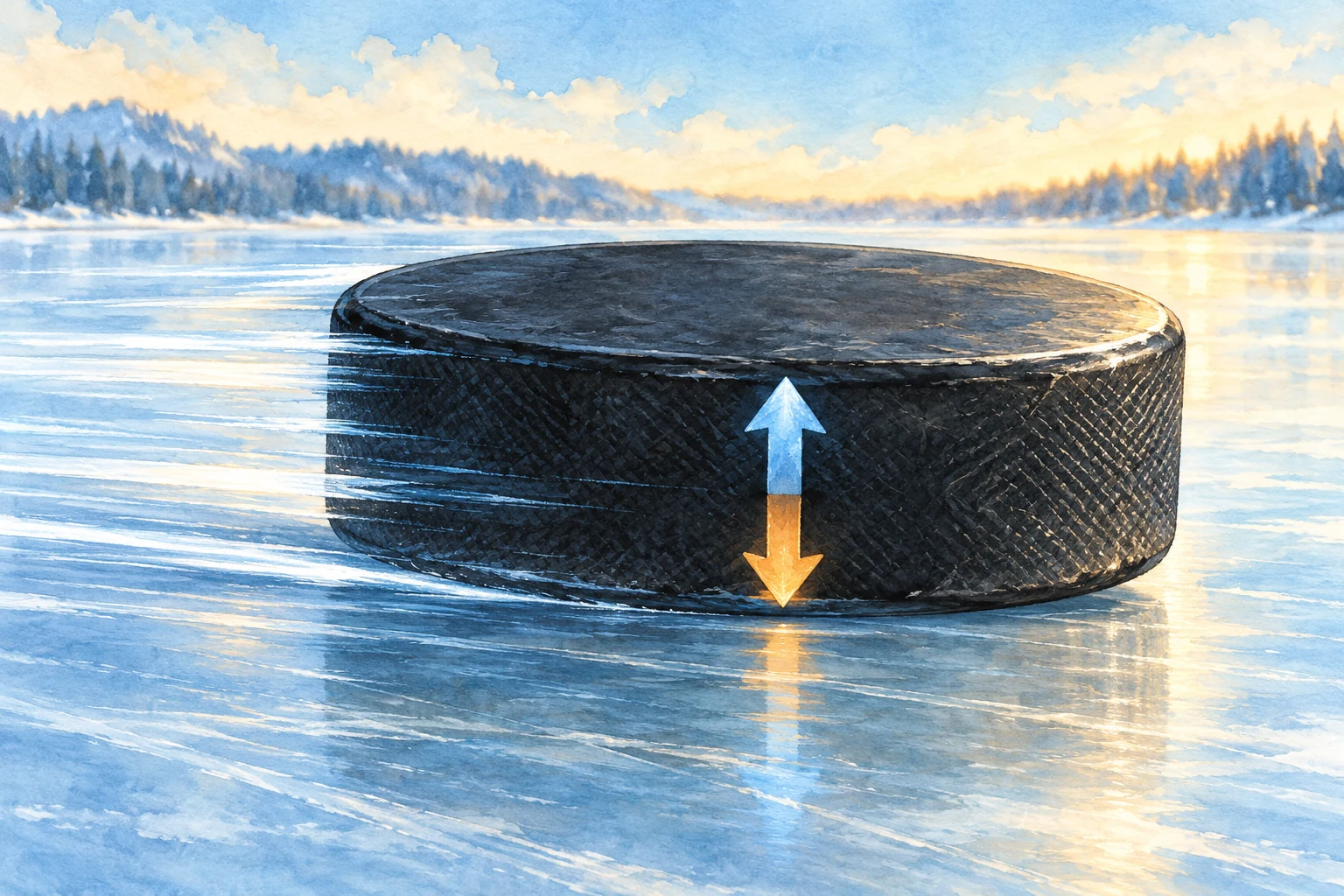
But gravity pulls down. Why doesn’t the puck dive through the ice? The ice pushes up, balancing gravity’s pull. Those forces don’t change its upward or downward motion. Holding it up doesn’t automatically stop it sliding along. This tendency to keep the same motion, or stay still, is called inertia. No secret motor. No determination. Just how objects behave.
A much shorter journey
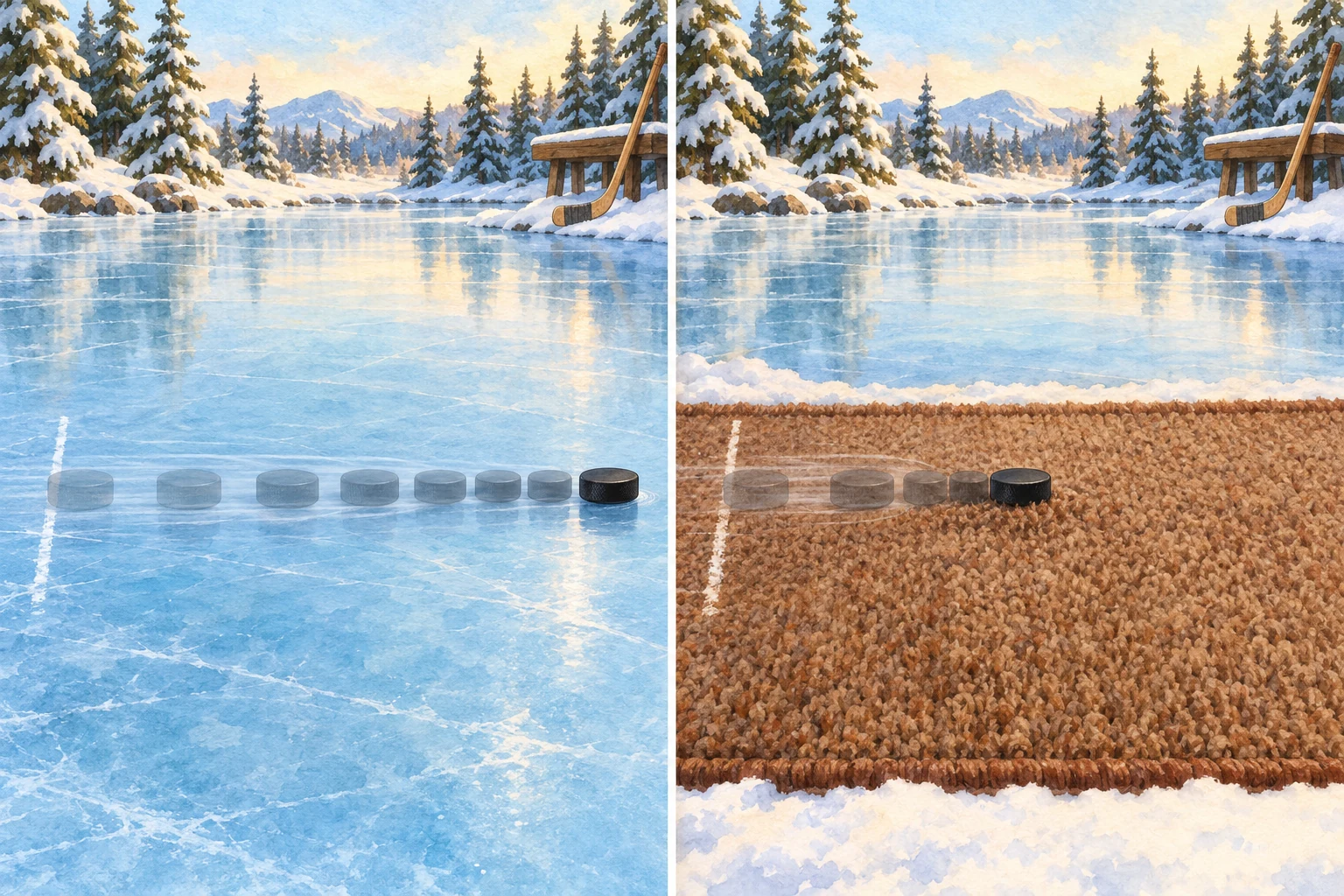
Still, the puck eventually slows. Did its motion run out? No: we forgot friction, a force that resists sliding between touching surfaces. On ice, friction is small. On carpet, it’s much greater. Send the puck across carpet at the same starting speed, and its grand journey becomes a short shuffle. Friction is the hidden brake we forget; air resists its motion too.
A nudge toward the net
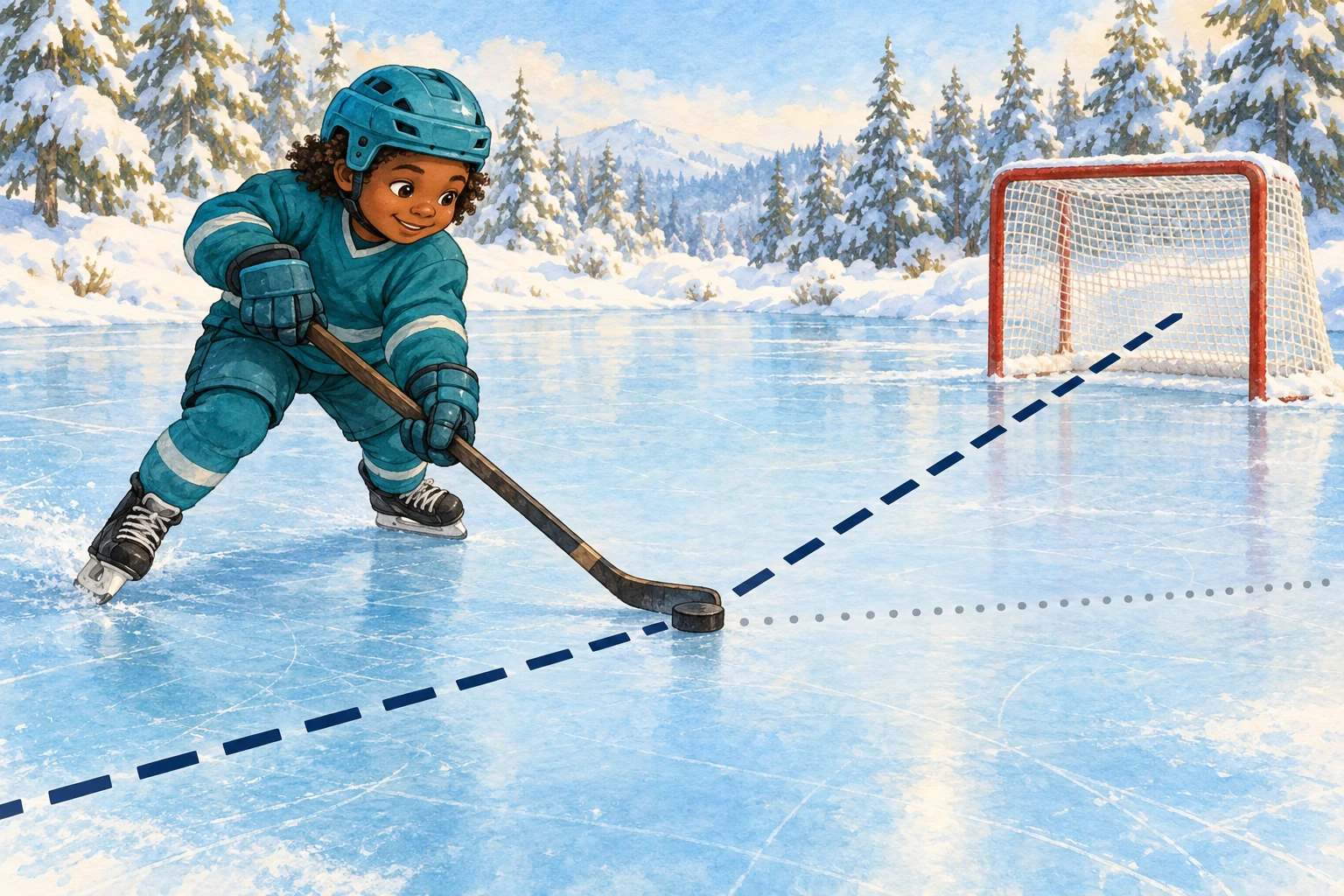
Back on the ice, the next pass is heading past the goal. A teammate redirects it with a stick. Aha, turning counts as changing motion, even if the speed stays the same. That needs an unbalanced force too. Newton’s law helps you aim: the puck won’t bend its route just because the goal looks inviting.
An unexpected tea passenger
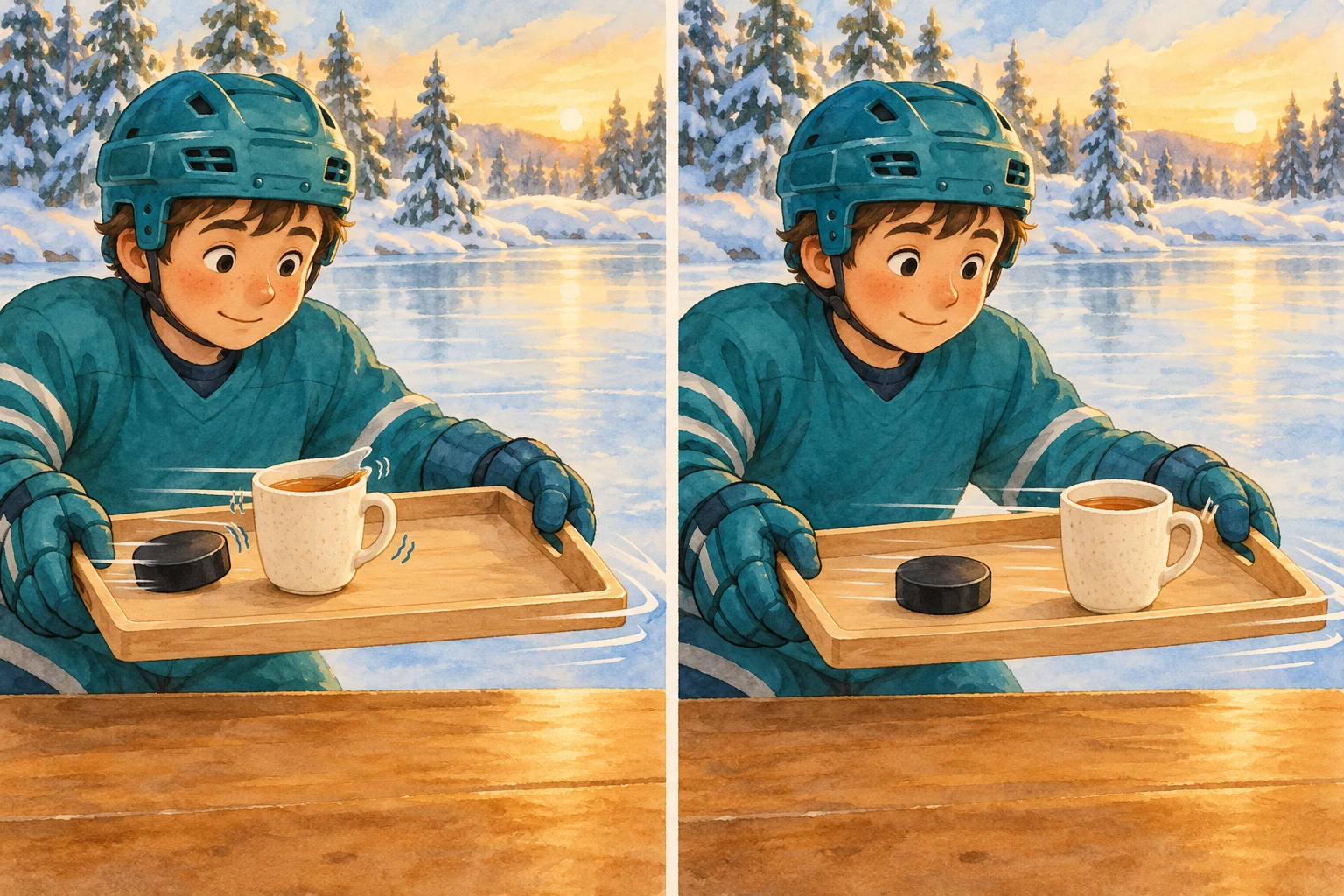
Practice over. The puck rides a tray beside a mug of tea. The tray starts with a quick jerk; the mug rattles, and the puck slips toward the back. The tray moved beneath them before friction could bring them along. A gentler start gives friction time to speed them up together. Our hidden brake has another job: helping deliver the tea.
Beyond the ice and air
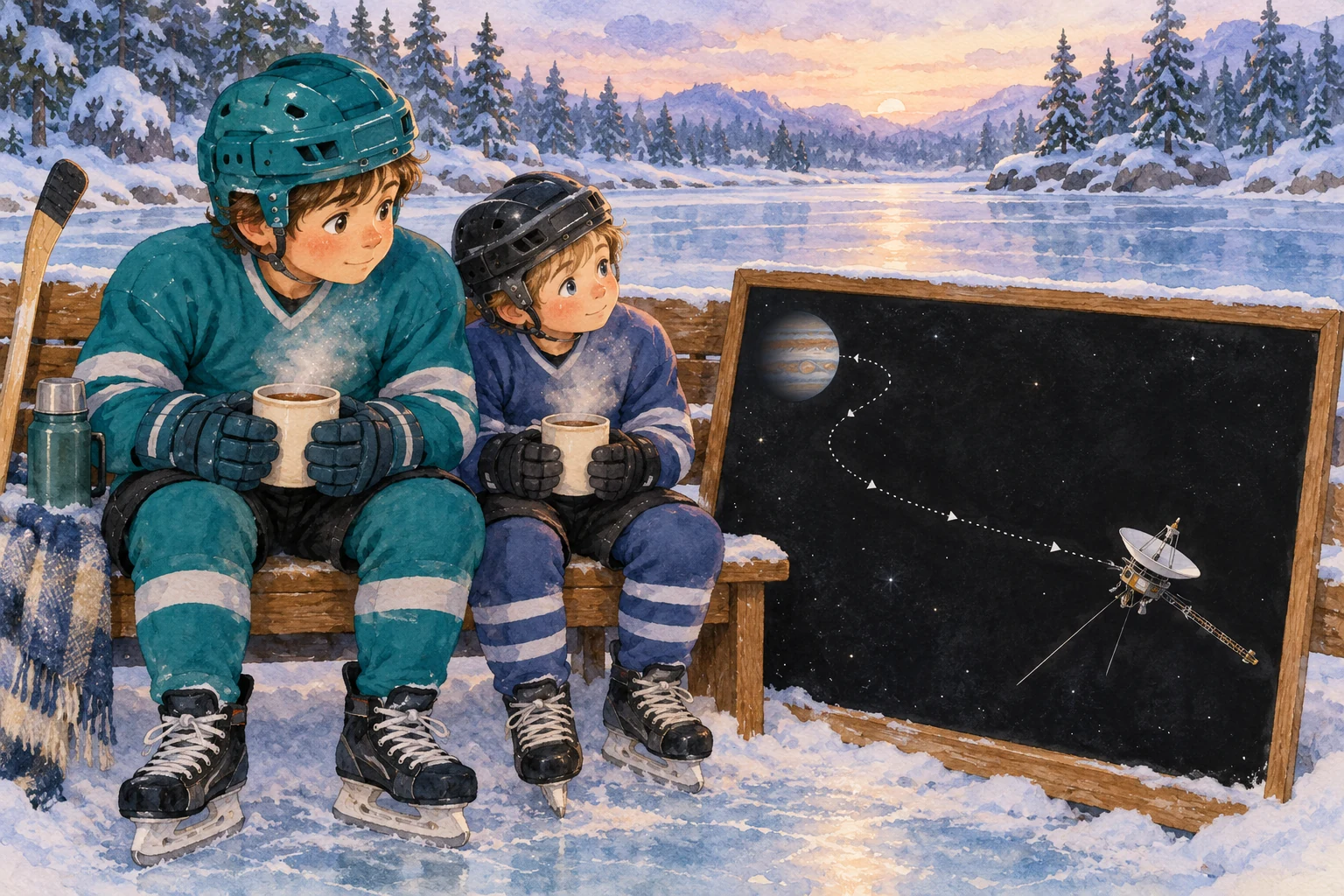
Over tea after practice, talk turns to the longest pass imaginable. The Voyager probes have coasted through space for decades without engines continually pushing them onward. There’s almost no air out there to slow them. Gravity still changes their motion, so their journeys aren’t perfectly straight glides at constant speed. But they don’t need fuel simply to keep moving. No cosmic carpet ends the trip.

Safe arrival
The tray reaches the table with a gentle stop. Friction slows the mug and puck along with it. There’s Newton’s first law at work: staying still or moving steadily in a straight line needs no unbalanced force. Starting, stopping, speeding up, slowing down, or turning does. That’s how you guide a pass and deliver tea without a slosh. The puck rests beside the mug. Apparently, this was its appointment.