Why is the ocean blue if water is clear?
The Ocean’s Blue
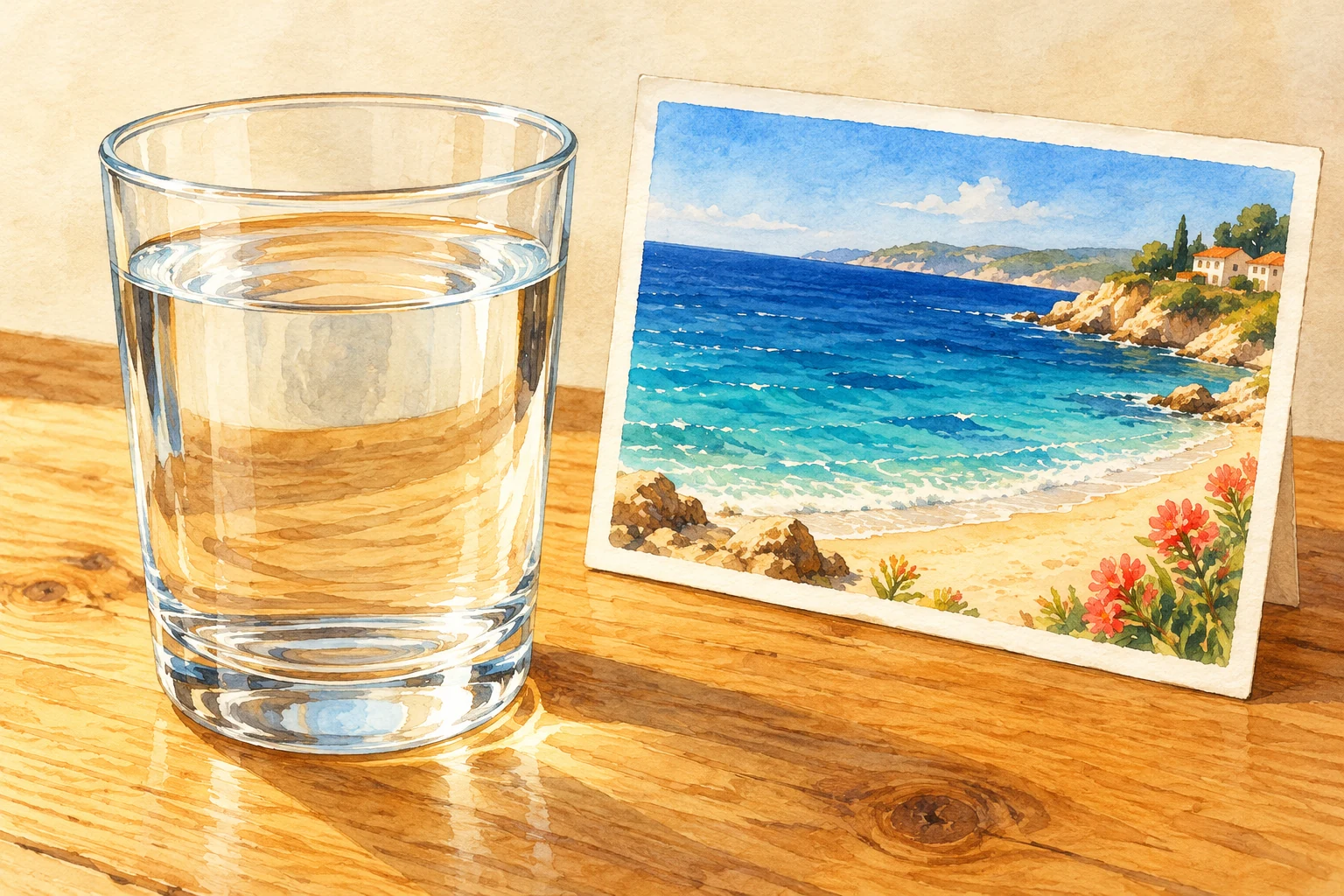
The ocean looks gloriously blue in the holiday photograph. Beside it, a glass of water looks innocent. Where did the color go? Here’s the secret: water absorbs red light more readily than blue. A glass barely changes the light passing through. An ocean gives it a much longer journey, and blue survives better. The holiday photos are about to reveal the trick.
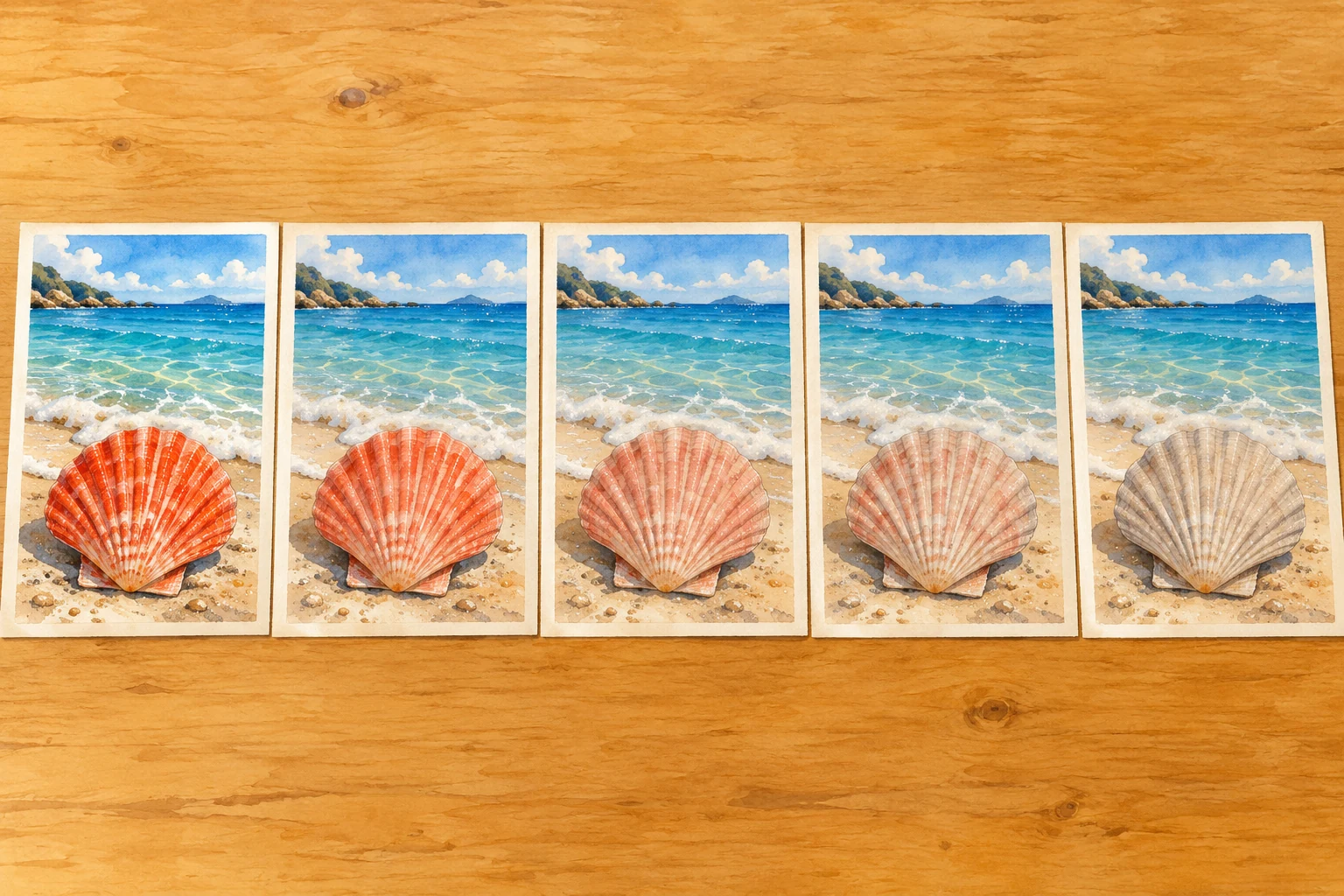
A little less red each time
Imagine editing a photo of a red shell beside blue water. Turn down the red a tiny bit. Then repeat that same edit, again and again. Eventually, the shell looks dull, while the water still looks blue. Water makes a similar change to light: it absorbs light, taking in its energy, and removes red faster than blue. More water to travel through means more little edits.
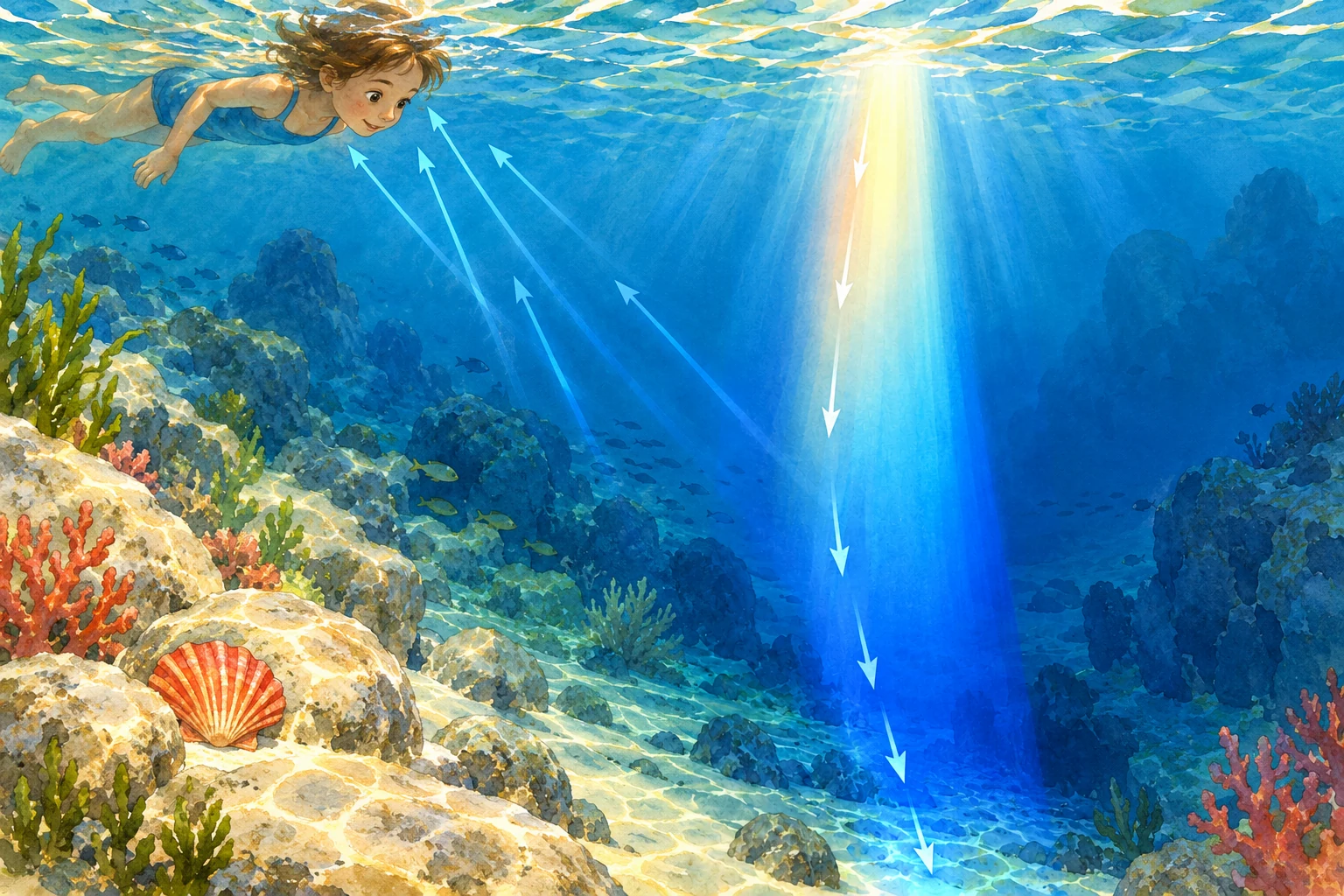
Follow the light beneath the waves
Underwater, distance does the editing. Sunlight contains many colors, but water steadily absorbs them at different rates. Along a long path through clear seawater, much of the red disappears, leaving mostly blue. Water also redirects some light toward the surface and into our eyes. That returning light has already had its colors edited. The sea doesn’t need blue paint; it needs room.
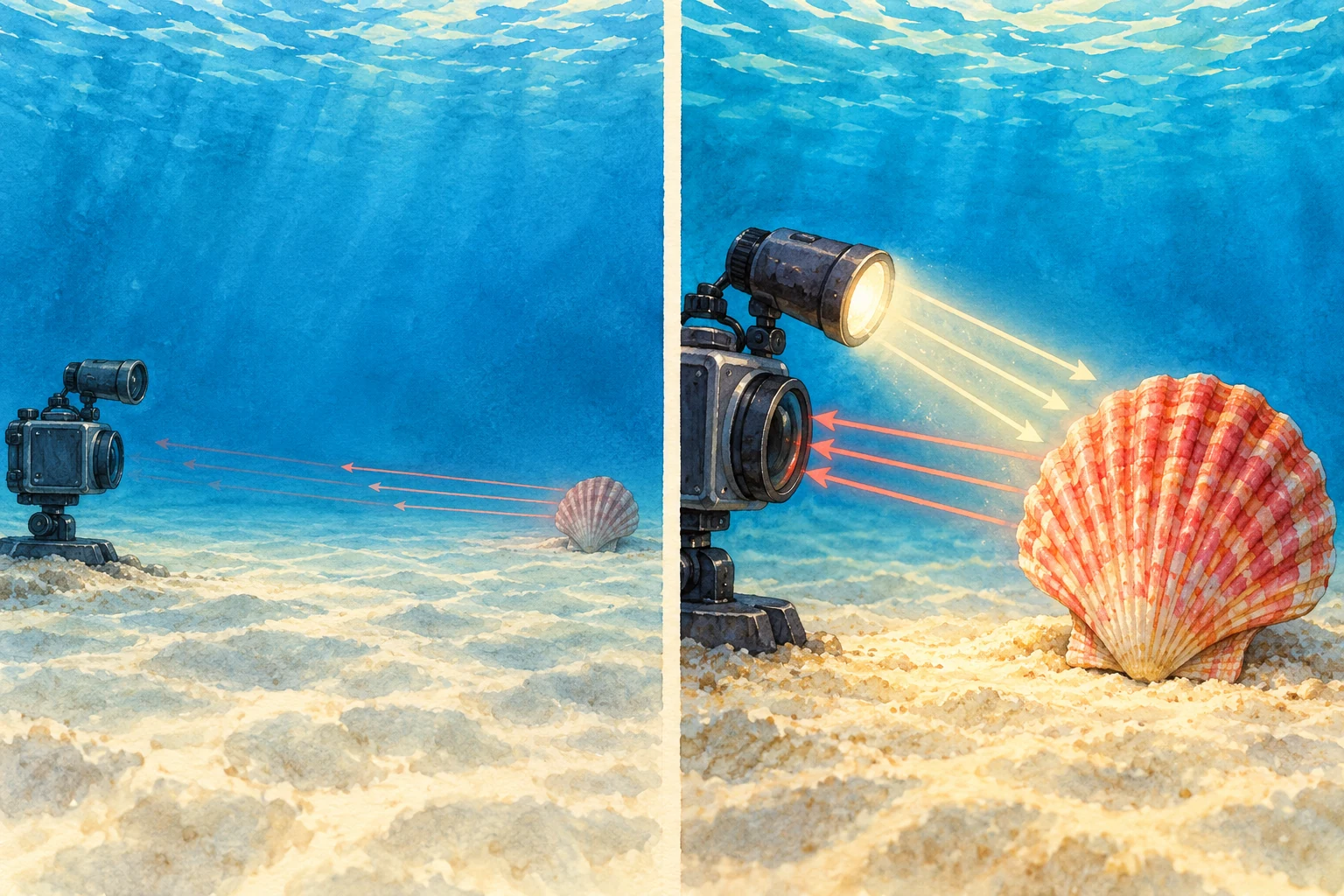
Fresh light for the shell
This explains a holiday-photo complaint: that red shell looked much brighter up close! An underwater camera looking through more water receives less of its red light. Could a nearby lamp help? Click, rosy again. The lamp supplies fresh light containing red, with only a short trip to the shell and back to the camera. Sometimes a better photograph needs a shorter commute.
Sand sends sunlight back
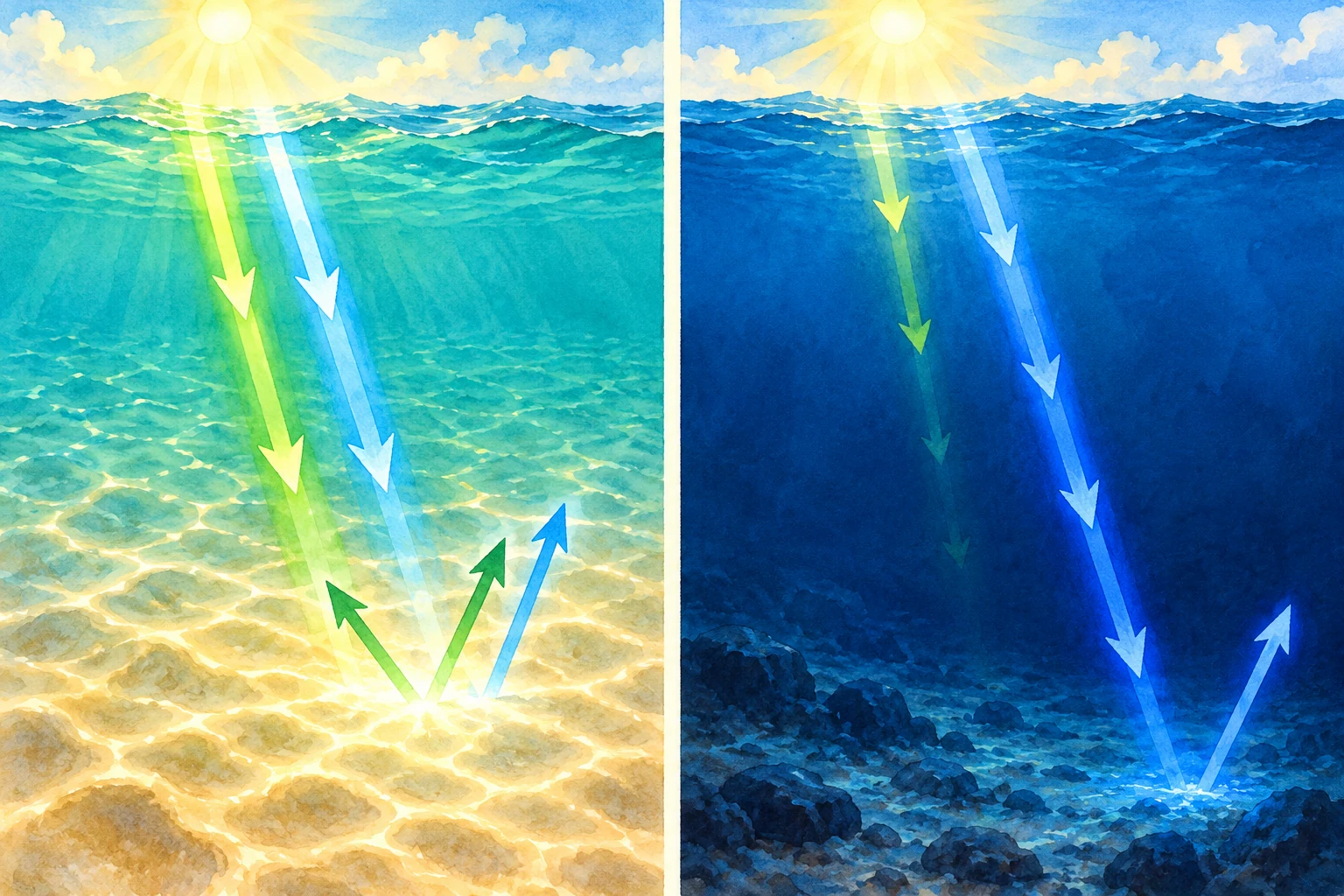
The next photograph is practically showing off: turquoise shallows over pale sand. Here, the sand reflects sunlight back upward before the water can make such a strong edit. More green survives alongside blue, often giving these shallows their turquoise glow. Farther out, longer journeys through clear water favor blue. Same editor, lighter touch, and a beach worth remembering.
A cloud on the ripples
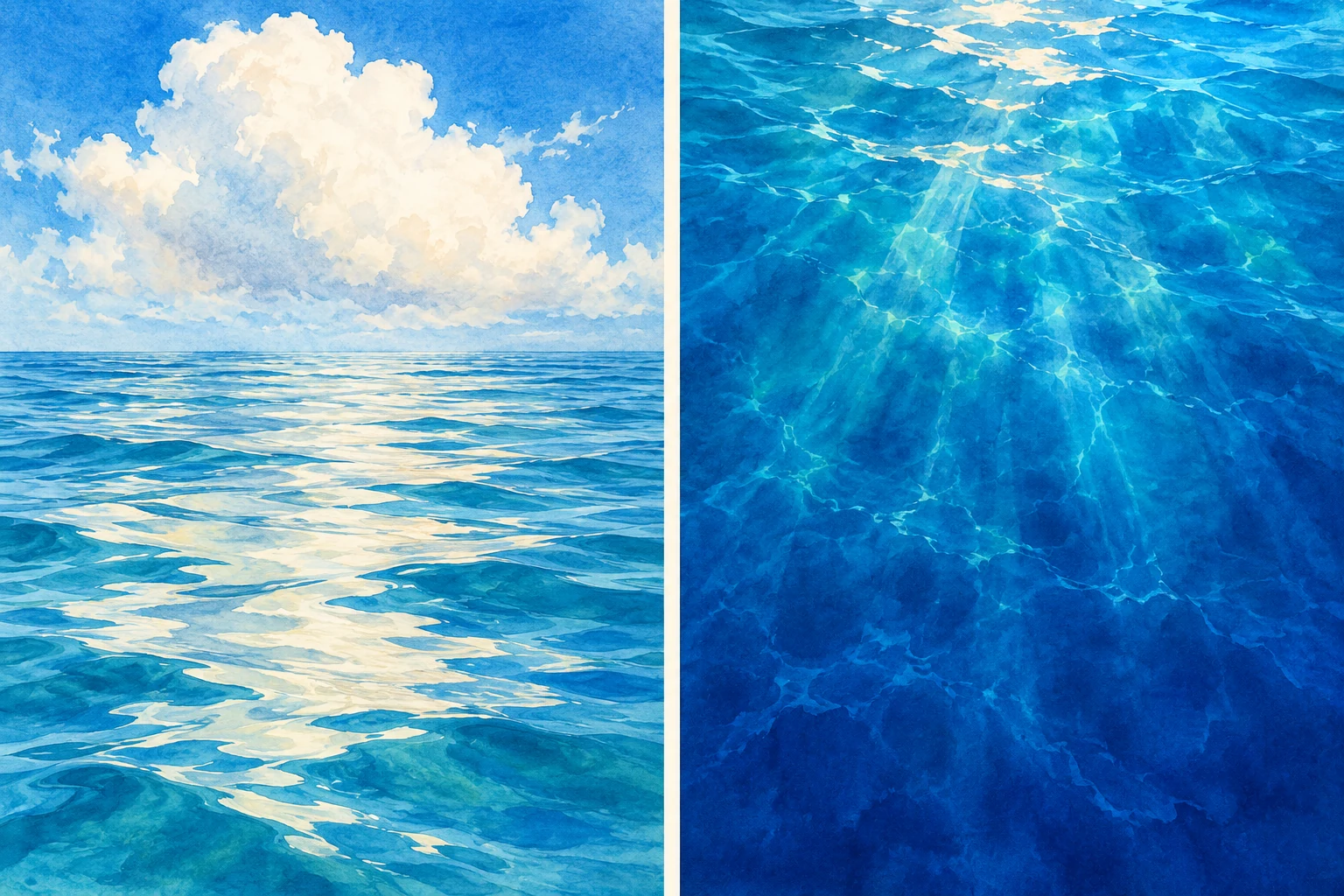
Now a cloud appears in the sea’s photograph. Aha, there is a mirror involved! The surface reflects the sky, especially when we look across it at a low angle. But looking down into clear, deep seawater, sky reflection usually contributes only a little of the blue. Most comes from light’s journey through the water. The sky has made a guest appearance, not edited the whole album.
Tiny passengers leave colorful clues
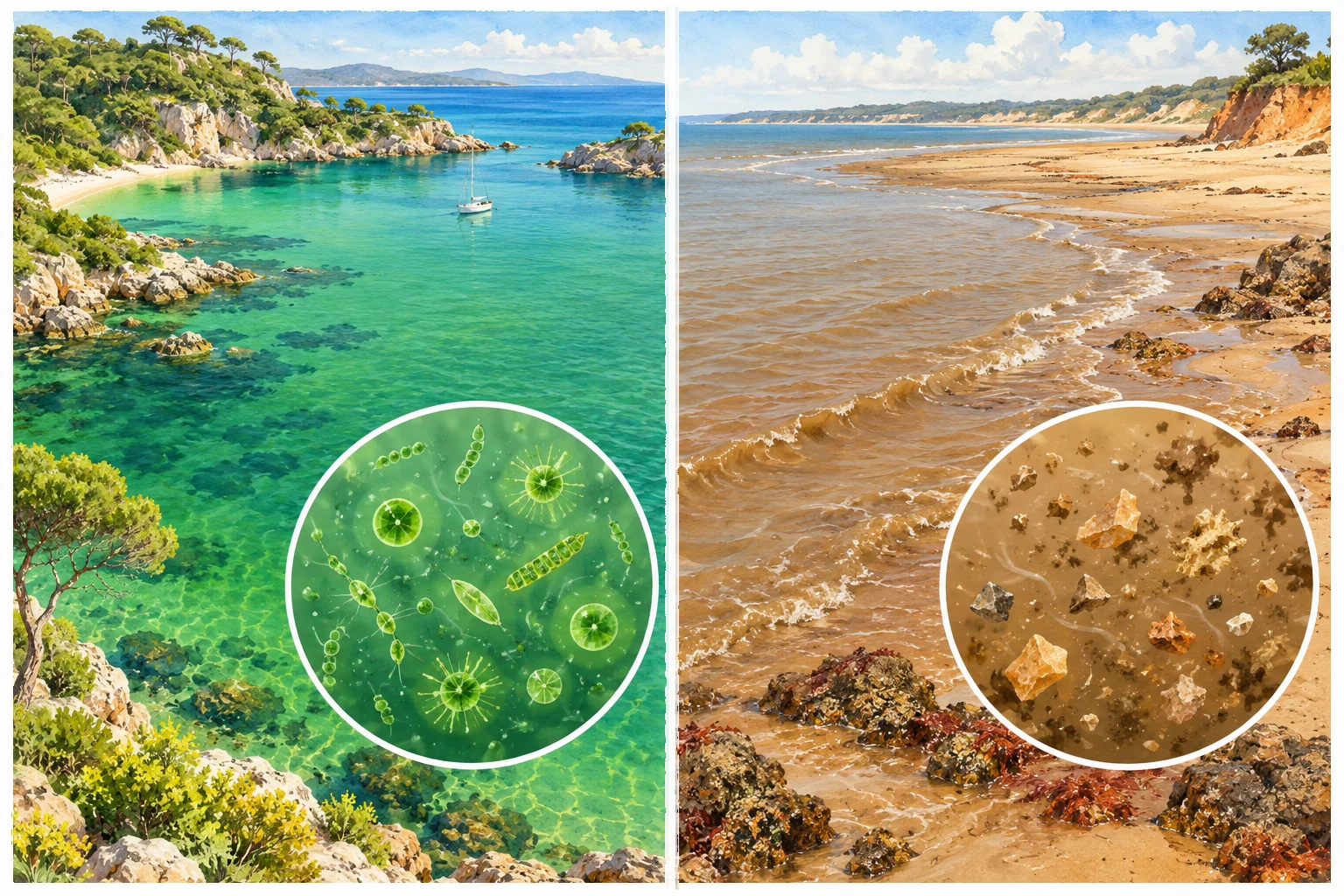
Then come photos of a green bay and a brown shoreline. Who changed the settings? This time, water has company. Tiny drifting organisms called plankton can tint it green. Sediment, small particles such as sand and mud, can tint it brown. These passengers change which light gets absorbed or sent back. Scientists use ocean-color pictures to track changes in plankton and sediment. A holiday view can hold clues.
One small sip, one long journey
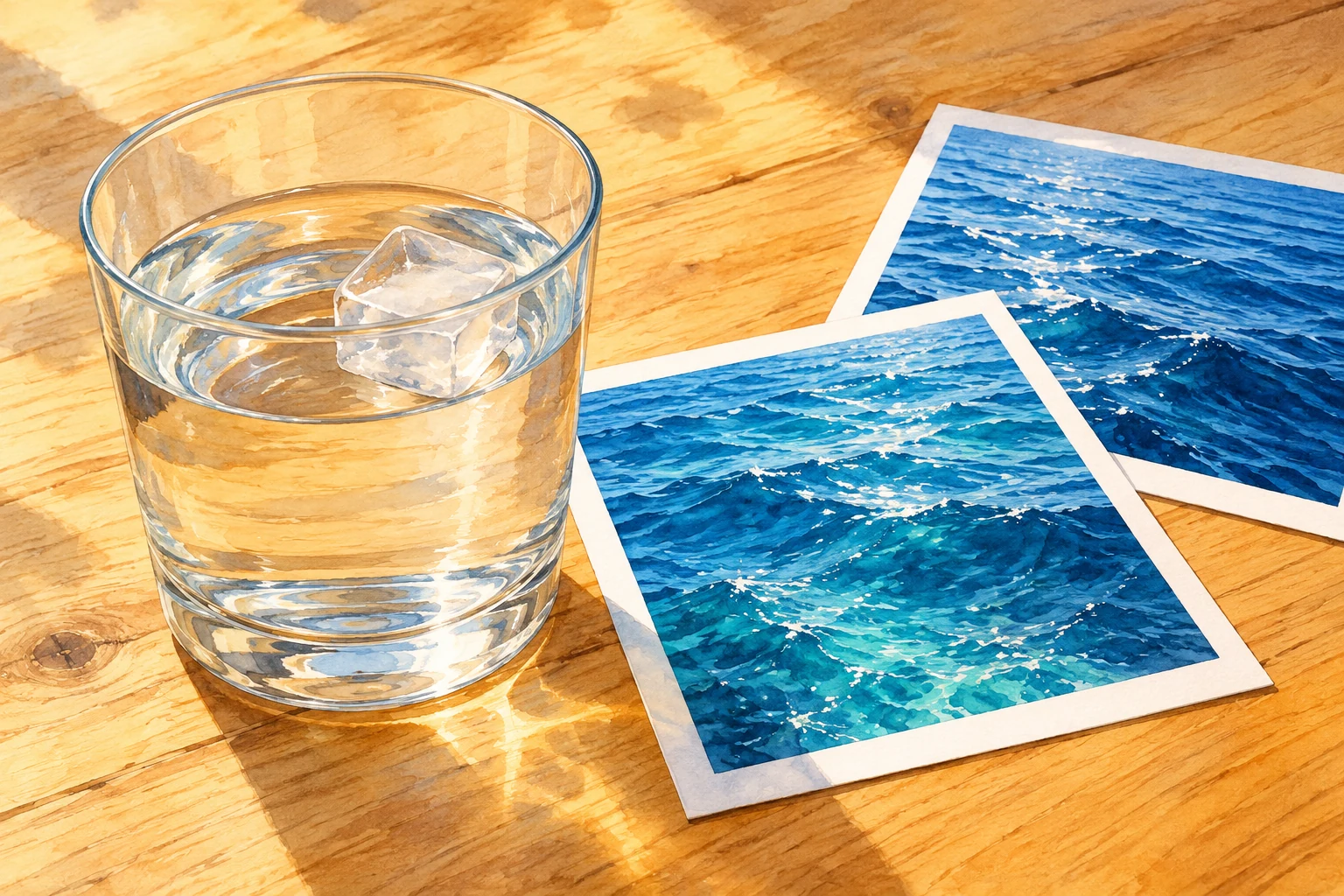
Back beside the holiday photos, the glass of water is cleared of all charges. Clear water lets us see through it, but it still absorbs some light. The effect is tiny across a glass; over a long ocean journey, much more red is lost and blue survives better. That explains both the blue sea and the faded underwater photo. The ocean had room for thousands of little edits. The glass barely has room for an ice cube.