Why is the ocean salty?
Ocean's Salt Story
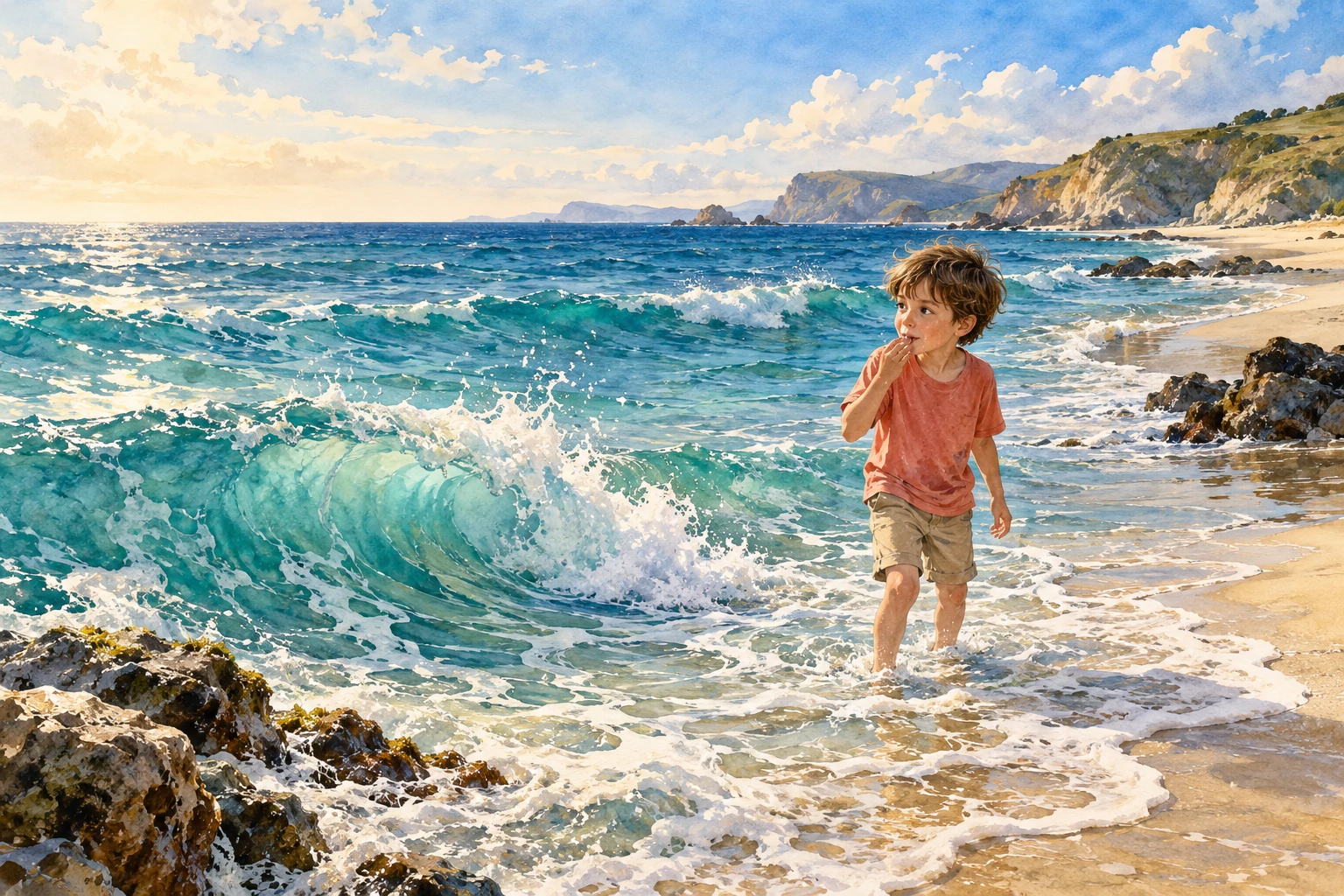
You've tasted it: that sharp, salty flavour when a wave surprises you at the beach. The ocean is salty. Really salty. A litre of typical seawater holds about 35 grams of dissolved salts. Where did all that salt come from?
Start with the rain
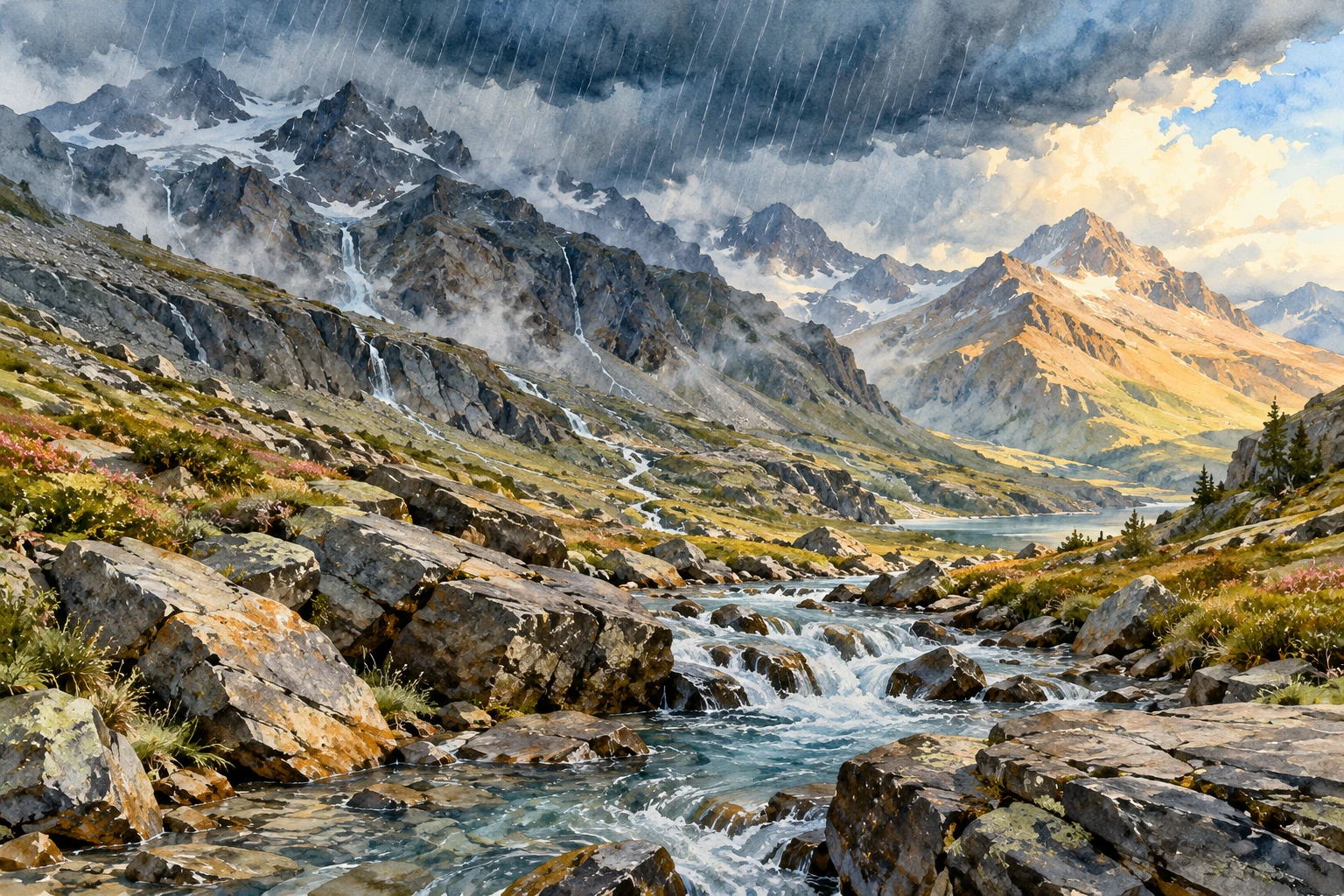
Start on land, where rain falls on mountains and runs through valleys. Rainwater is slightly acidic because it picks up carbon dioxide from the air. Little by little, it helps break down rock and release minerals. It's slow work, but rain has a lot of time.
An invisible cargo
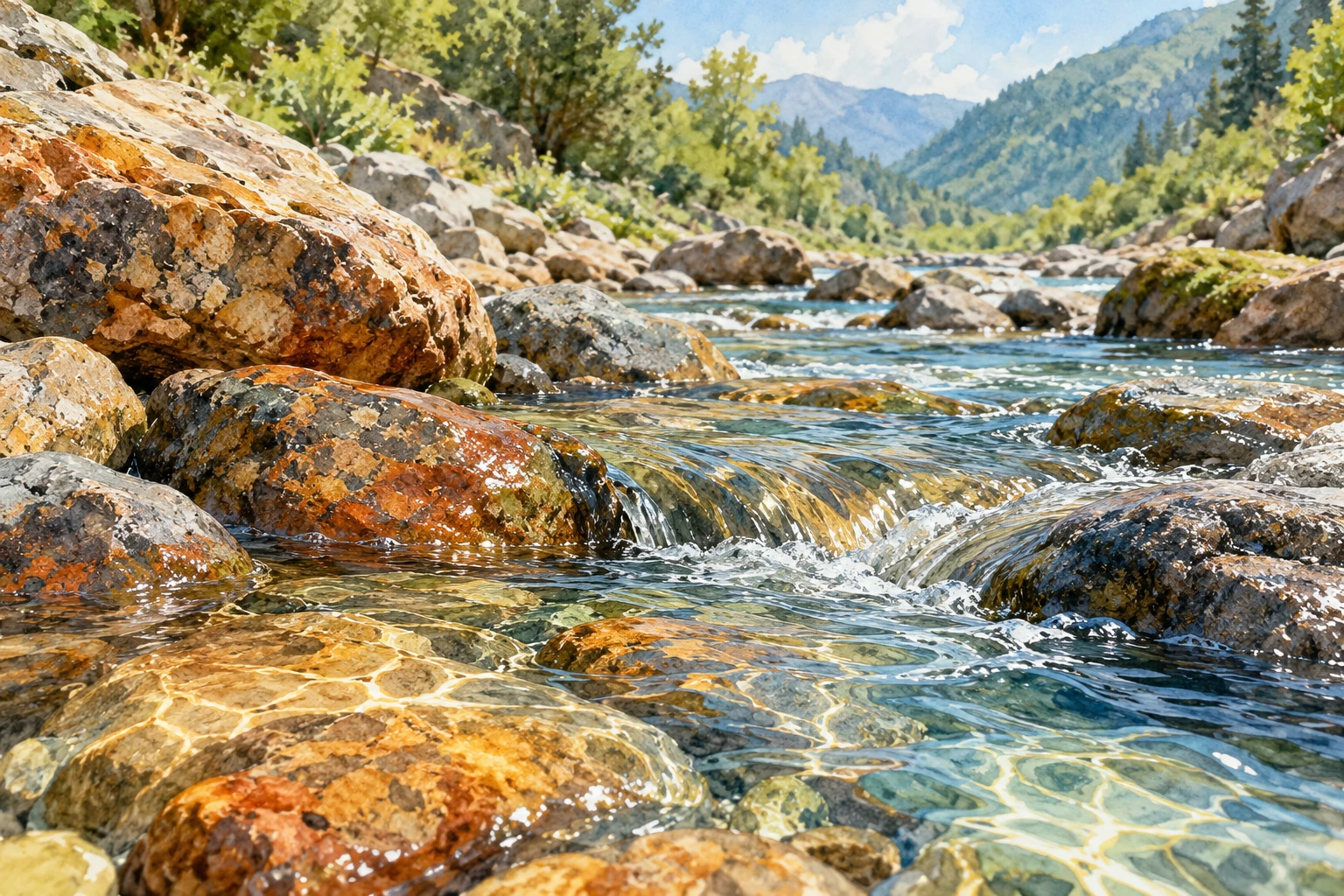
As water moves over rocks and through soil, some minerals dissolve into it. Their tiny charged particles, called ions, travel with the water. You can't see them. A stream can look perfectly clear while carrying an invisible cargo from the land.

Every river brings a little
Many streams join rivers that eventually reach the ocean, carrying their dissolved minerals along. Each river brings only a little salt compared with seawater. But rivers keep flowing, day after day. The ocean is Earth's mineral piggy bank, and every river that reaches it makes a deposit.
Water leaves. Salt stays.
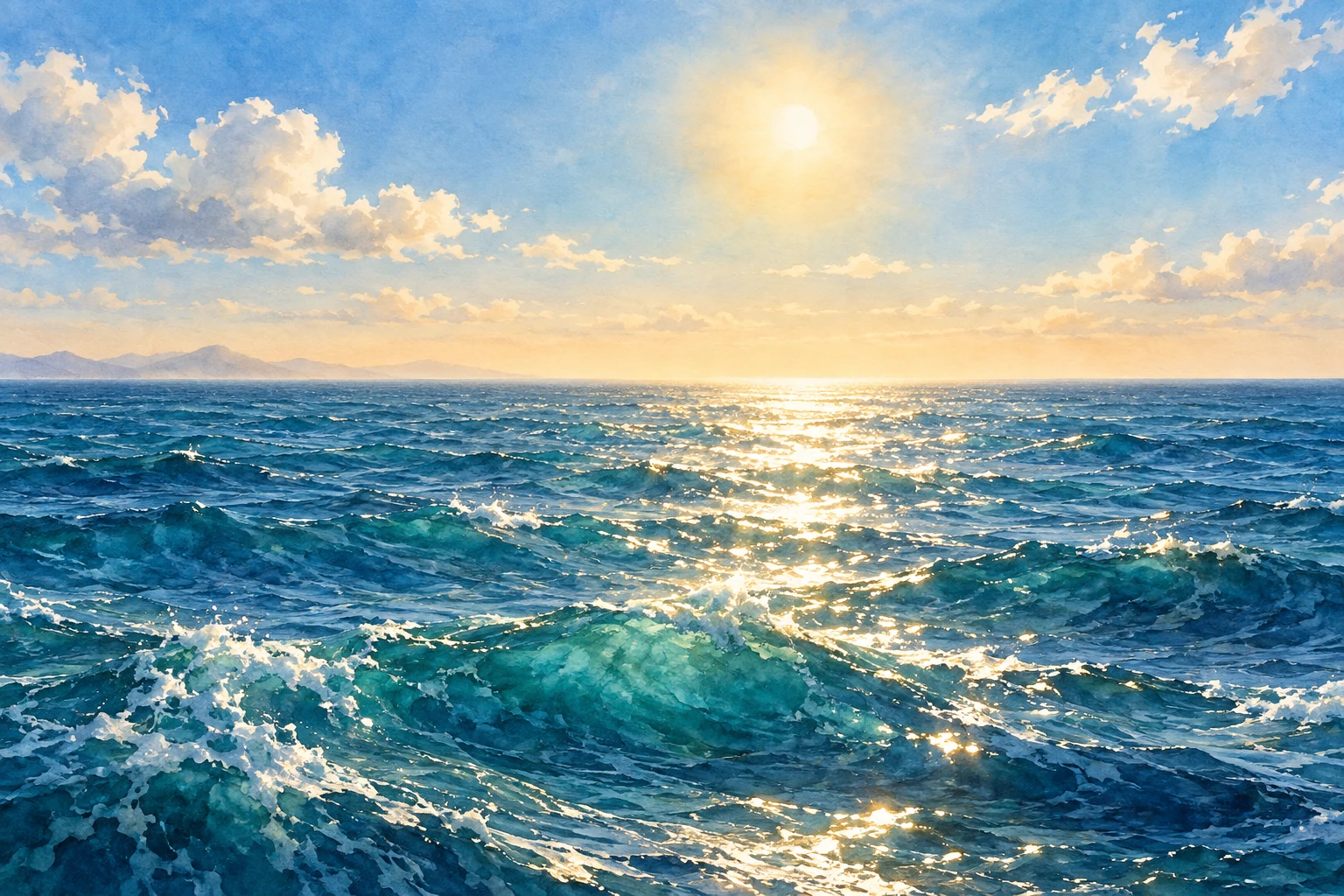
Now here's the trick: water can leave the ocean by evaporating into the air. Dissolved salts don't evaporate with it under ordinary ocean conditions. The invisible water vapour can later cool and condense into cloud droplets, then fall as rain. The salt stays in the sea.

Think of a pot of soup
It's like leaving a pot of soup simmering with the lid off. As water leaves, the salt remains, so the soup gets saltier. In the ocean, evaporation also leaves salt behind. But the sea has something the soup pot doesn't: rivers and rain keep bringing water back, and other processes remove minerals too.
The seafloor joins in
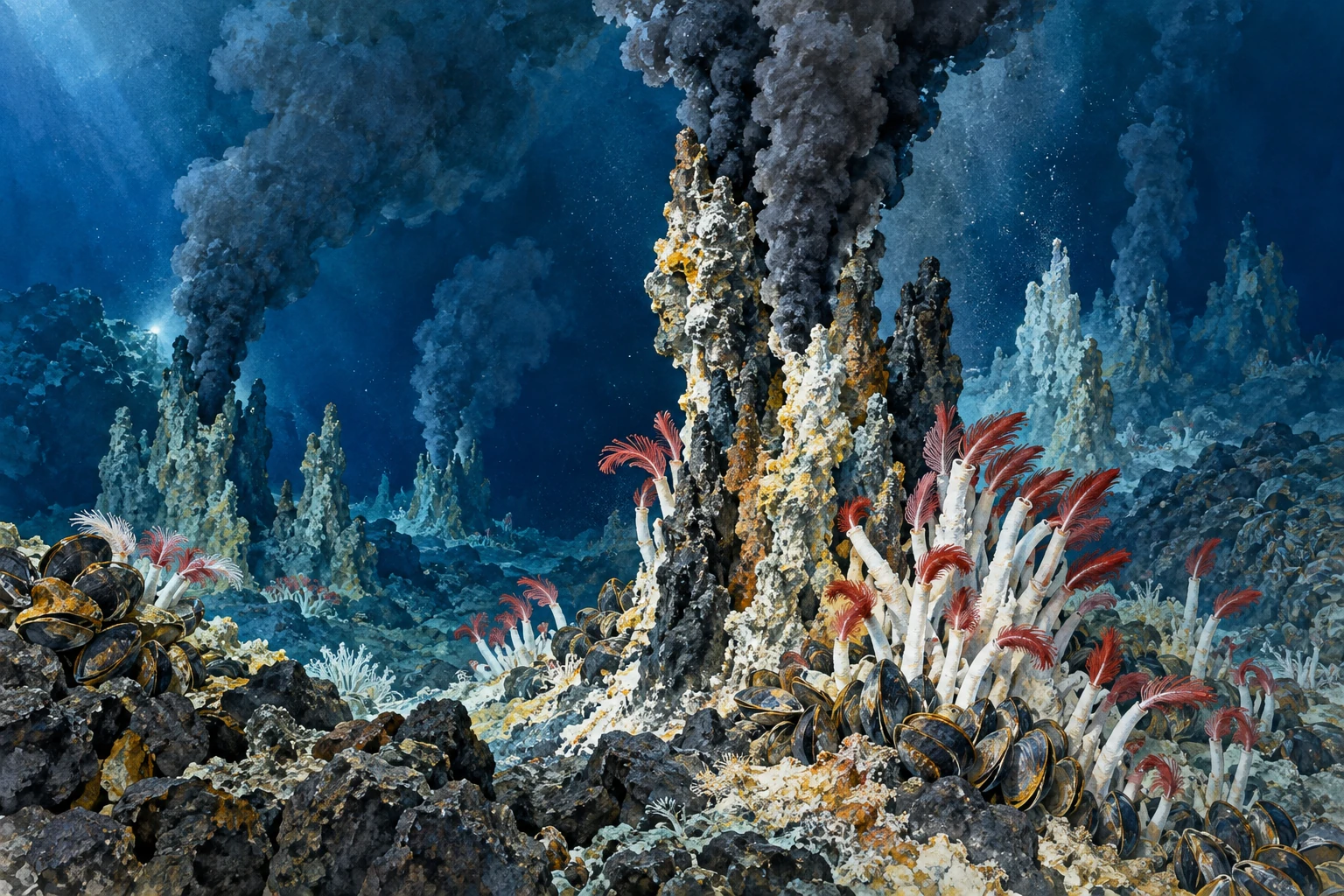
The land isn't the whole story. Seawater also seeps into cracks in the ocean floor, heats up and reacts with rock. It can pick up some dissolved minerals and leave others behind. Hydrothermal vents return that hot, mineral-rich water to the sea. The ocean and the rocks beneath it are always exchanging ingredients.
Salt has ways out, too
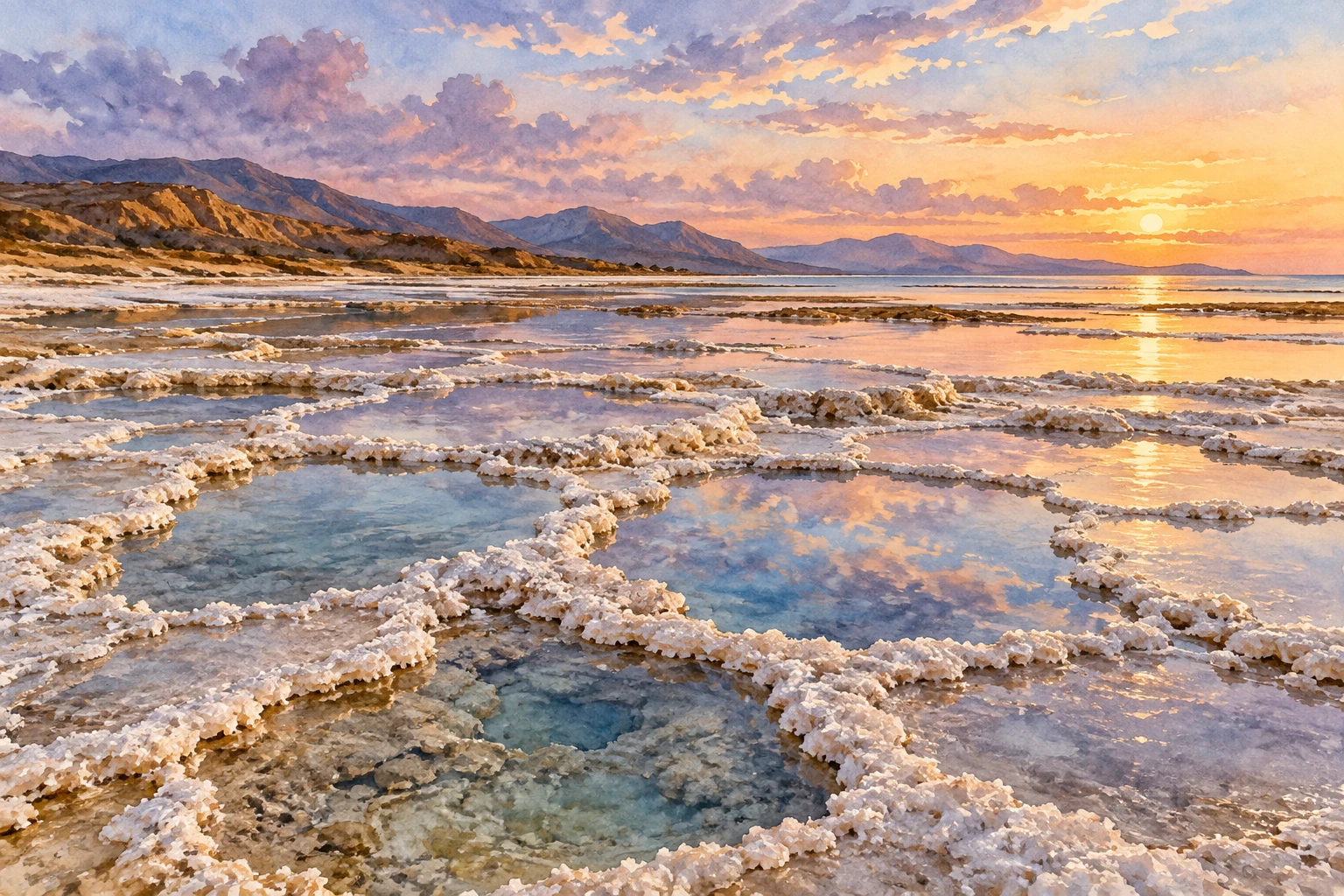
So why doesn't the ocean just keep getting saltier? Minerals leave the water as well as enter it. Some become part of seafloor deposits; others form salt beds when trapped seawater dries up. The ocean's chemistry reflects all these arrivals and departures. Saltiness also varies from place to place as evaporation, rain and rivers change the mixture.
A whole journey in one taste
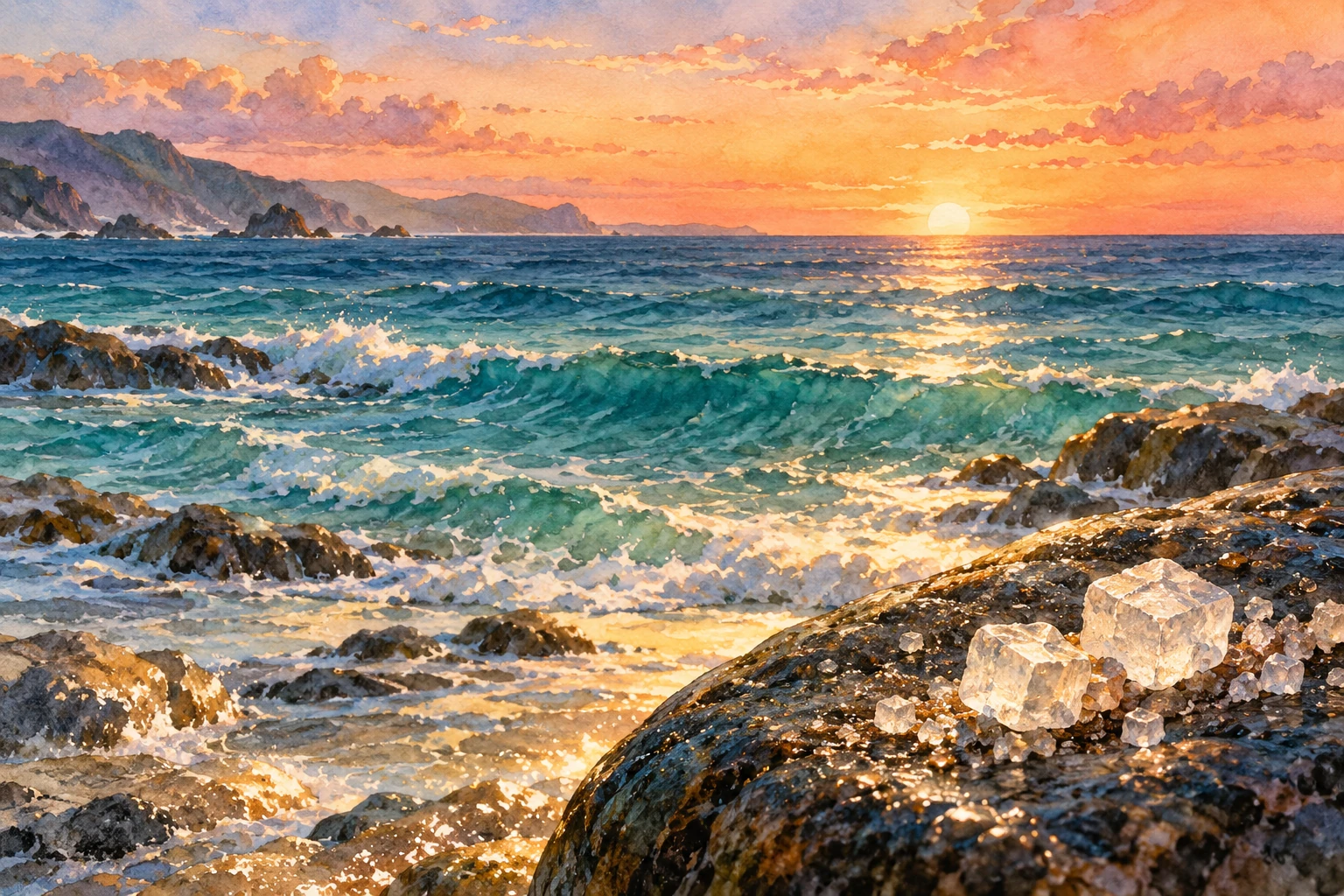
The next time a wave surprises you with that sharp taste, remember the journey: rain on rock, minerals in rivers, water rising into the sky, and exchanges deep beneath the waves. Something as small as a grain of salt connects you to a very big story. The ocean holds the traces of everywhere its water has been.