cover

Mars Move-In Day

Could people live on Mars someday?
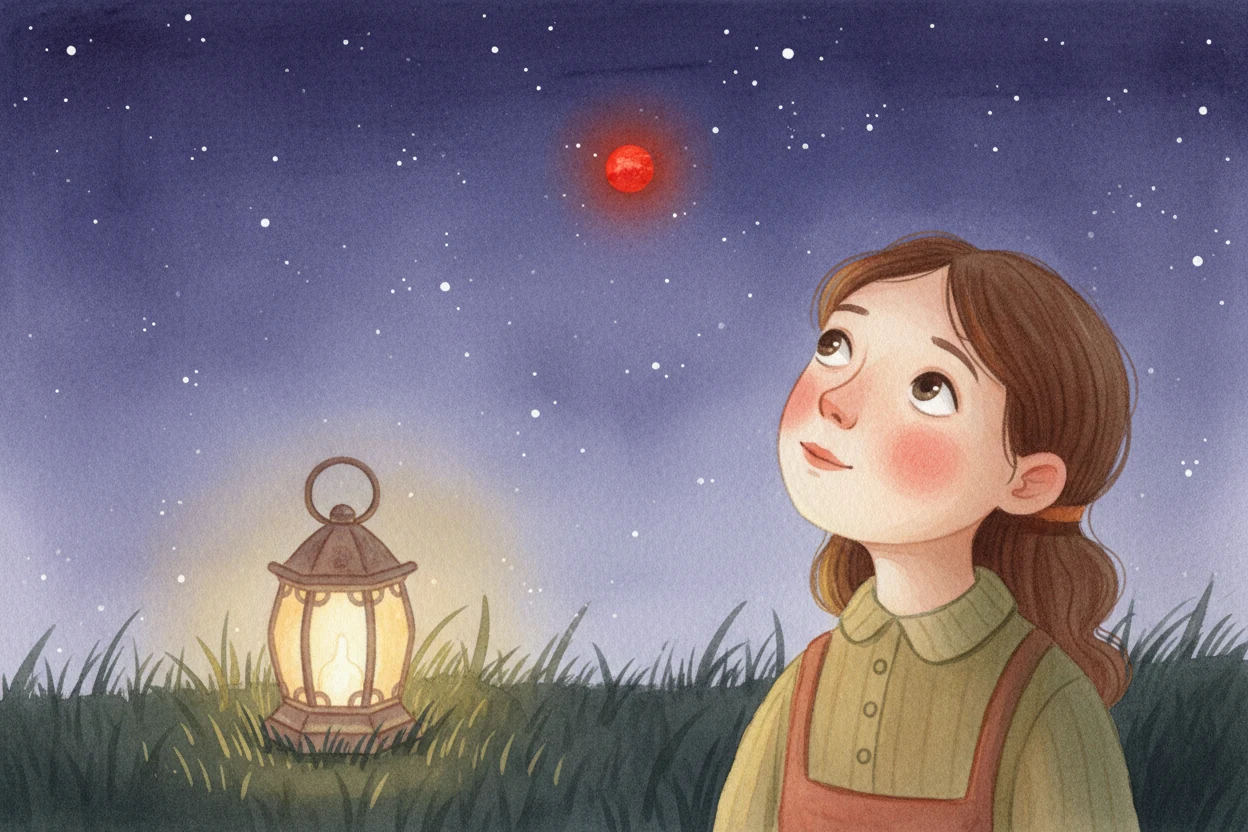
++Mars++ glows red in the night sky, and humans have been staring at it for thousands of years, wondering. ~~Could we ac

Mars glows red in the night sky, and humans have been staring at it for thousands of years, wondering. Could we actually live there someday? Not just visit for a quick flag-planting photo op, but build towns, grow food, raise families? The short answer is: maybe, but it's going to take some seriously clever engineering.

First problem: ++Mars++ has almost no air. Earth's atmosphere is thick and cozy, full of oxygen to breathe. Mars has a *

First problem: Mars has almost no air. Earth's atmosphere is thick and cozy, full of oxygen to breathe. Mars has a whisper-thin atmosphere made mostly of carbon dioxide — you can't breathe it, and it's so thin it barely holds any heat. Step outside without a spacesuit and you'd pass out in seconds.

Second problem: it's freezing. Mars is about **fifty percent farther from the Sun** than Earth, so it gets way less warm

Second problem: it's freezing. Mars is about fifty percent farther from the Sun than Earth, so it gets way less warmth. The average temperature is around negative eighty degrees Fahrenheit. That's colder than Antarctica in winter. Even the "warm" summer afternoons at the equator barely break fifty degrees.

Third problem: no magnetic shield. ++Earth++ has a magnetic field that wraps around the whole planet like an invisible f

Third problem: no magnetic shield. Earth has a magnetic field that wraps around the whole planet like an invisible force field, blocking dangerous radiation from space. Mars lost its magnetic field billions of years ago, so radiation just pours straight down onto the surface. Living there long-term without protection would be like getting too many X-rays every single day.

~~So why even try?~~ Because Mars has some things going for it. It has **water—locked up as ice** in the soil and at the

So why even try? Because Mars has some things going for it. It has water—locked up as ice in the soil and at the poles. It has a day that's almost the same length as Earth's, so your sleep schedule wouldn't go haywire. It has soil that, with some serious chemical tweaking, could maybe grow plants. And it's close enough that a spaceship can get there in six to nine months.

Living on Mars would mean living indoors—a lot. ~~Picture~~ sturdy domes or tunnels dug into hillsides, with **thick wal

Living on Mars would mean living indoors—a lot. Picture sturdy domes or tunnels dug into hillsides, with thick walls to block radiation. Inside, you'd have gardens under grow lights, recycling systems that turn your breath and sweat back into water, and airlocks everywhere because stepping outside means suiting up like an astronaut every single time.

The first ++Mars++ settlers would have to bring almost everything—tools, solar panels, spare parts, seeds—or learn to ma

The first Mars settlers would have to bring almost everything—tools, solar panels, spare parts, seeds—or learn to make things from Martian materials. Scientists are already testing ways to bake Martian bricks, extract oxygen from the carbon dioxide air, and 3D-print buildings using the red dust. It's like planning the most extreme camping trip in history, except you can't call for help if something breaks.

~~So could people live on Mars someday?~~ **Probably yes**—if we solve the air problem, the cold problem, the radiation

So could people live on Mars someday? Probably yes—if we solve the air problem, the cold problem, the radiation problem, the food problem, and the loneliness-of-being-140-million-miles-from-home problem. It won't be easy, and it won't be soon, but humans are stubborn explorers. We've always wanted to see what's over the next hill.

How was this book?

A Wonderleaf Book

Mars Move-In Day

— Could people live on Mars someday? —

Wonderleaf Editions
— ex libris —
A Wonderleaf Book

Mars Move-In Day

Could people live on Mars someday?

Wonderleaf Editions · MMXXVI
Scene 1
++Mars++ glows red in the night sky, and humans have been staring at it for thousands of years, wondering. ~~Could we ac
Mars Move-In Day2
Scene 1

Mars glows red in the night sky, and humans have been staring at it for thousands of years, wondering. Could we actually live there someday? Not just visit for a quick flag-planting photo op, but build towns, grow food, raise families? The short answer is: maybe, but it's going to take some seriously clever engineering.

3Mars Move-In Day
Scene 2
First problem: ++Mars++ has almost no air. Earth's atmosphere is thick and cozy, full of oxygen to breathe. Mars has a *
Mars Move-In Day4
Scene 2

First problem: Mars has almost no air. Earth's atmosphere is thick and cozy, full of oxygen to breathe. Mars has a whisper-thin atmosphere made mostly of carbon dioxide — you can't breathe it, and it's so thin it barely holds any heat. Step outside without a spacesuit and you'd pass out in seconds.

5Mars Move-In Day
Scene 3
Second problem: it's freezing. Mars is about **fifty percent farther from the Sun** than Earth, so it gets way less warm
Mars Move-In Day6
Scene 3

Second problem: it's freezing. Mars is about fifty percent farther from the Sun than Earth, so it gets way less warmth. The average temperature is around negative eighty degrees Fahrenheit. That's colder than Antarctica in winter. Even the "warm" summer afternoons at the equator barely break fifty degrees.

7Mars Move-In Day
Scene 4
Third problem: no magnetic shield. ++Earth++ has a magnetic field that wraps around the whole planet like an invisible f
Mars Move-In Day8
Scene 4

Third problem: no magnetic shield. Earth has a magnetic field that wraps around the whole planet like an invisible force field, blocking dangerous radiation from space. Mars lost its magnetic field billions of years ago, so radiation just pours straight down onto the surface. Living there long-term without protection would be like getting too many X-rays every single day.

9Mars Move-In Day
Scene 5
~~So why even try?~~ Because Mars has some things going for it. It has **water—locked up as ice** in the soil and at the
Mars Move-In Day10
Scene 5

So why even try? Because Mars has some things going for it. It has water—locked up as ice in the soil and at the poles. It has a day that's almost the same length as Earth's, so your sleep schedule wouldn't go haywire. It has soil that, with some serious chemical tweaking, could maybe grow plants. And it's close enough that a spaceship can get there in six to nine months.

11Mars Move-In Day
Scene 6
Living on Mars would mean living indoors—a lot. ~~Picture~~ sturdy domes or tunnels dug into hillsides, with **thick wal
Mars Move-In Day12
Scene 6

Living on Mars would mean living indoors—a lot. Picture sturdy domes or tunnels dug into hillsides, with thick walls to block radiation. Inside, you'd have gardens under grow lights, recycling systems that turn your breath and sweat back into water, and airlocks everywhere because stepping outside means suiting up like an astronaut every single time.

13Mars Move-In Day
Scene 7
The first ++Mars++ settlers would have to bring almost everything—tools, solar panels, spare parts, seeds—or learn to ma
Mars Move-In Day14
Scene 7

The first Mars settlers would have to bring almost everything—tools, solar panels, spare parts, seeds—or learn to make things from Martian materials. Scientists are already testing ways to bake Martian bricks, extract oxygen from the carbon dioxide air, and 3D-print buildings using the red dust. It's like planning the most extreme camping trip in history, except you can't call for help if something breaks.

15Mars Move-In Day
Scene 8
~~So could people live on Mars someday?~~ **Probably yes**—if we solve the air problem, the cold problem, the radiation
Mars Move-In Day16
Scene 8

So could people live on Mars someday? Probably yes—if we solve the air problem, the cold problem, the radiation problem, the food problem, and the loneliness-of-being-140-million-miles-from-home problem. It won't be easy, and it won't be soon, but humans are stubborn explorers. We've always wanted to see what's over the next hill.

17Mars Move-In Day

~ finis ~

Tiny picture books for big little questions.

— a small constellation of questions —
Wonderleaf
Editions