cover

From Idea to Ink

How are books made?
You hold a book in your hands โ€” smooth pages bound together, words marching across them in neat rows. ~~But how did it g

You hold a book in your hands โ€” smooth pages bound together, words marching across them in neat rows. But how did it get here? A book starts as an idea in someone's head, and travels through a whole factory's worth of machines, people, and steps before it lands on your shelf.

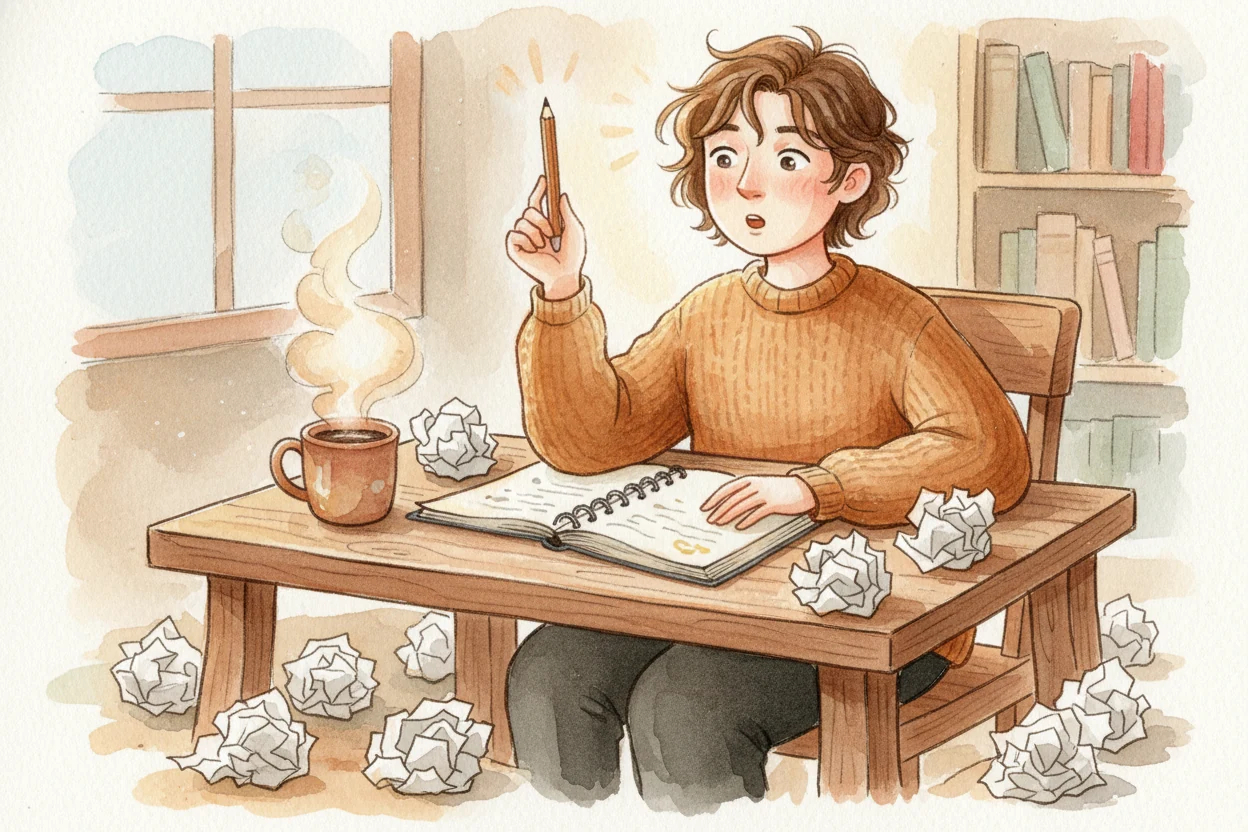
First, a writer types the story or fills the pages with information. An editor reads it, suggests changes, catches mista

First, a writer types the story or fills the pages with information. An editor reads it, suggests changes, catches mistakes โ€” like a coach helping an athlete perfect their game. Meanwhile, if it's the kind of book with pictures, an illustrator paints scenes to match the words. All of this happens on computers now, files zipping back and forth through email until everyone agrees: it's ready.

The finished book file goes to a printing company. But before they print thousands of copies, they need **printing plate

The finished book file goes to a printing company. But before they print thousands of copies, they need printing plates โ€” thin metal sheets with the book's pages etched onto them, one plate for each ink color. Think of them like giant stamps. The plates get clamped onto huge rollers inside the printing press.

The press roars to life. Paper rolls **as wide as a car** unwind and rush through the machine at incredible speed โ€” some

The press roars to life. Paper rolls as wide as a car unwind and rush through the machine at incredible speed โ€” some presses run faster than you can sprint. The rollers coated with printing plates kiss the paper as it flies past, stamping ink onto both sides at once. Cyan, magenta, yellow, black โ€” four colors layered together can make every color you see in a book.

The printed sheets come out in huge stacks, each sheet holding **sixteen or thirty-two book pages** arranged in a puzzle

The printed sheets come out in huge stacks, each sheet holding sixteen or thirty-two book pages arranged in a puzzle pattern. They're not in reading order yet โ€” page 1 might be next to page 16, page 5 beside page 12. This seems backwards, but it's clever: when the sheets get folded and stacked just right, the pages will line up perfectly.

Folding machines crease each giant sheet down the middle, then in half again, creating bundles called ++signatures++. A

Folding machines crease each giant sheet down the middle, then in half again, creating bundles called signatures. A book might have ten or twenty signatures stacked together. Next, a binding machine either stitches them along the spine with thread or glues them into a single block. The block gets its spine reinforced with fabric or stronger glue so the pages won't fall out when you read.

Now the book block meets its cover. The cover was printed separately โ€” often on thicker, glossy paper โ€” and sometimes la

Now the book block meets its cover. The cover was printed separately โ€” often on thicker, glossy paper โ€” and sometimes laminated with a protective coating so it won't scuff. A casing-in machine wraps the cover around the book block, gluing the first and last pages to the inside of the front and back covers. Mechanical arms press everything tight while the glue dries.

Finally, a trimming machine ~~slices the three outer edges~~ of the book โ€” **top, bottom, and the side opposite the spin

Finally, a trimming machine slices the three outer edges of the book โ€” top, bottom, and the side opposite the spine โ€” cutting all the pages to exactly the same size and giving the book those crisp, even edges. What started as giant rolls of paper and bottles of ink is now a finished book, ready to be boxed and shipped to bookstores, libraries, and readers like you.

How was this book?

A Wonderleaf Book

From Idea to Ink

โ€” How are books made? โ€”

Wonderleaf Editions
โ€” ex libris โ€”
A Wonderleaf Book

From Idea to Ink

How are books made?

Wonderleaf Editions ยท MMXXVI
Scene 1
You hold a book in your hands โ€” smooth pages bound together, words marching across them in neat rows. ~~But how did it g
From Idea to Ink2
Scene 1

You hold a book in your hands โ€” smooth pages bound together, words marching across them in neat rows. But how did it get here? A book starts as an idea in someone's head, and travels through a whole factory's worth of machines, people, and steps before it lands on your shelf.

3From Idea to Ink
Scene 2
First, a writer types the story or fills the pages with information. An editor reads it, suggests changes, catches mista
From Idea to Ink4
Scene 2

First, a writer types the story or fills the pages with information. An editor reads it, suggests changes, catches mistakes โ€” like a coach helping an athlete perfect their game. Meanwhile, if it's the kind of book with pictures, an illustrator paints scenes to match the words. All of this happens on computers now, files zipping back and forth through email until everyone agrees: it's ready.

5From Idea to Ink
Scene 3
The finished book file goes to a printing company. But before they print thousands of copies, they need **printing plate
From Idea to Ink6
Scene 3

The finished book file goes to a printing company. But before they print thousands of copies, they need printing plates โ€” thin metal sheets with the book's pages etched onto them, one plate for each ink color. Think of them like giant stamps. The plates get clamped onto huge rollers inside the printing press.

7From Idea to Ink
Scene 4
The press roars to life. Paper rolls **as wide as a car** unwind and rush through the machine at incredible speed โ€” some
From Idea to Ink8
Scene 4

The press roars to life. Paper rolls as wide as a car unwind and rush through the machine at incredible speed โ€” some presses run faster than you can sprint. The rollers coated with printing plates kiss the paper as it flies past, stamping ink onto both sides at once. Cyan, magenta, yellow, black โ€” four colors layered together can make every color you see in a book.

9From Idea to Ink
Scene 5
The printed sheets come out in huge stacks, each sheet holding **sixteen or thirty-two book pages** arranged in a puzzle
From Idea to Ink10
Scene 5

The printed sheets come out in huge stacks, each sheet holding sixteen or thirty-two book pages arranged in a puzzle pattern. They're not in reading order yet โ€” page 1 might be next to page 16, page 5 beside page 12. This seems backwards, but it's clever: when the sheets get folded and stacked just right, the pages will line up perfectly.

11From Idea to Ink
Scene 6
Folding machines crease each giant sheet down the middle, then in half again, creating bundles called ++signatures++. A
From Idea to Ink12
Scene 6

Folding machines crease each giant sheet down the middle, then in half again, creating bundles called signatures. A book might have ten or twenty signatures stacked together. Next, a binding machine either stitches them along the spine with thread or glues them into a single block. The block gets its spine reinforced with fabric or stronger glue so the pages won't fall out when you read.

13From Idea to Ink
Scene 7
Now the book block meets its cover. The cover was printed separately โ€” often on thicker, glossy paper โ€” and sometimes la
From Idea to Ink14
Scene 7

Now the book block meets its cover. The cover was printed separately โ€” often on thicker, glossy paper โ€” and sometimes laminated with a protective coating so it won't scuff. A casing-in machine wraps the cover around the book block, gluing the first and last pages to the inside of the front and back covers. Mechanical arms press everything tight while the glue dries.

15From Idea to Ink
Scene 8
Finally, a trimming machine ~~slices the three outer edges~~ of the book โ€” **top, bottom, and the side opposite the spin
From Idea to Ink16
Scene 8

Finally, a trimming machine slices the three outer edges of the book โ€” top, bottom, and the side opposite the spine โ€” cutting all the pages to exactly the same size and giving the book those crisp, even edges. What started as giant rolls of paper and bottles of ink is now a finished book, ready to be boxed and shipped to bookstores, libraries, and readers like you.

17From Idea to Ink

~ finis ~

Tiny picture books for big little questions.

โ€” a small constellation of questions โ€”
โœฆWonderleaf
Editions