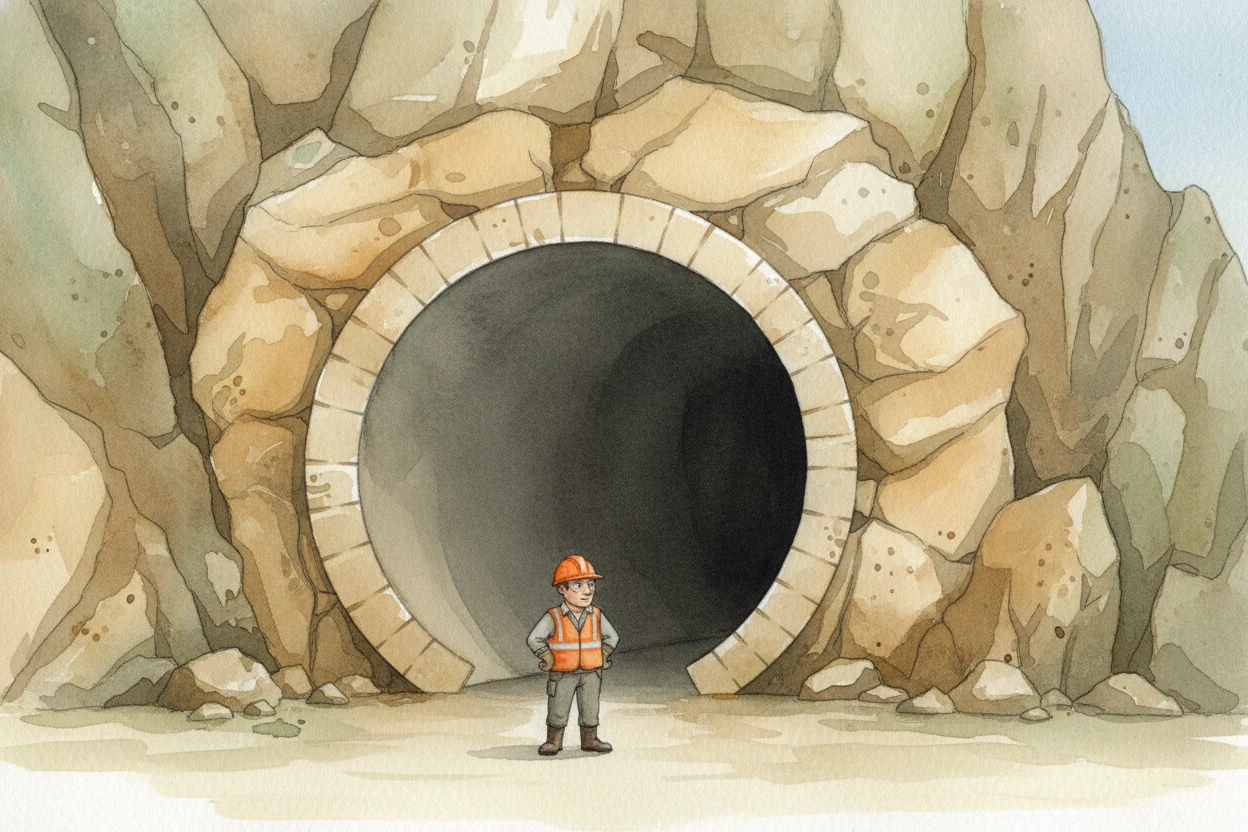
Worm Through Stone
You've probably walked through a tunnel โ maybe under a busy street or through a mountain. But how do you even start digging a hole that big? Someone has to go first, chewing through all that rock and dirt. Let's follow the machines that do the job.
For a long tunnel, engineers bring in a tunnel boring machine โ a TBM. Picture a enormous steel cylinder as wide as a house, lying on its side. The front end is a giant rotating disc covered in teeth. Those teeth are the hardest cutting tools humans make, tougher than the rock they're about to eat.
The cutting head spins slowly โ maybe two or three times per minute โ and grinds forward into the rock face. The teeth scrape and crack the stone into chunks. It sounds like a continuous low thunder inside the tunnel. Workers call it "the worm" because it inches forward, swallowing rock and leaving a smooth tunnel behind.
Behind the cutting head, a conveyor belt carries the broken rock backward through the machine's body, like a digestive system in reverse. The rubble rides out on belts or little rail cars. Meanwhile, the TBM's sides push against the tunnel walls with huge hydraulic jacks โ that's how it shoves itself forward. Push, grind, push, grind. A few feet per day.
Freshly cut rock walls are unstable. They could crack or collapse. So right behind the cutting head, the TBM installs a tunnel lining โ curved concrete panels that lock together like a giant jigsaw puzzle sleeve. A mechanical arm swings each panel into place and bolts it tight. By the time the machine moves on, the tunnel behind it is sealed and safe.
What about smaller tunnels, or places where a TBM can't fit? Then workers use the "drill-and-blast" method. They drill a pattern of holes into the rock face โ imagine a connect-the-dots grid. They pack explosives into those holes, retreat to safety, and boom. The blast fractures the rock along the dot pattern. Then they haul out the rubble and repeat.
Digging through soft ground โ mud, sand, or clay โ is trickier. The TBM has to work inside a pressurized bubble to keep the muck from squishing in. Think of it like a submarine moving through pudding. The cutting head scoops the soft earth into a chamber, and pumps flush it out as slurry through pipes. The machine crawls forward, and the concrete lining keeps the earth from collapsing inward.
The longest tunnels take years to finish. Two TBMs often start from opposite ends and dig toward each other, guided by lasers and GPS so precise they meet in the middle with only inches of error. When the crews finally break through and shake hands in the meeting point, it's a tradition to celebrate โ they've just connected two pieces of the world.
Once the tunnel is dug and lined, workers install the finishing touches: lights strung along the ceiling, ventilation fans to push fresh air through, and a smooth road or rail bed on the floor. What was solid mountain or riverbed is now a passageway. You can walk through stone.