cover

Cold Hunters

How did people keep food fresh before refrigerators?
You open the fridge, grab the milk, close the door. Easy. ~~But~~ **a hundred and fifty years ago**, there was no hum of

You open the fridge, grab the milk, close the door. Easy. But a hundred and fifty years ago, there was no hum of a refrigerator in the kitchen. No light bulb clicking on when you opened the door. So how did people keep their food from spoiling?
**The secret was cold.** *Cold slows down the tiny bacteria* that make food rot. ~~No electricity? No problem.~~ People

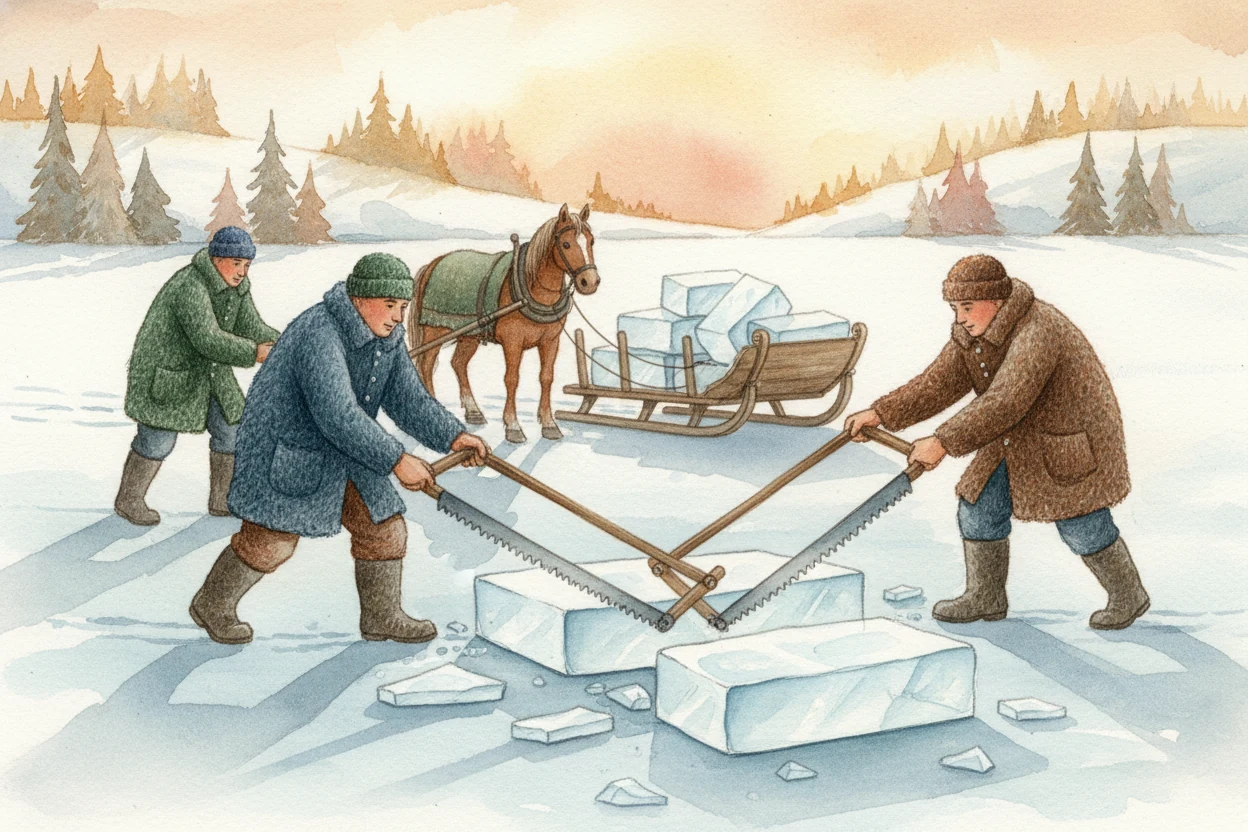
The secret was cold. Cold slows down the tiny bacteria that make food rot. No electricity? No problem. People went hunting for cold in the world around them. In winter, they cut huge blocks of ice from frozen lakes and rivers โ€” each one as big as a suitcase, heavy as a boulder.

They stored the ice in special buildings called ++icehouses++, buried halfway underground where the earth stayed cool. T

They stored the ice in special buildings called icehouses, buried halfway underground where the earth stayed cool. They packed sawdust and straw around every block, like wrapping a gift in a thick blanket. The insulation kept the ice frozen for months โ€” even through summer.

At home, families had wooden ++iceboxes++ โ€” **the great-great-grandparents of your fridge**. You'd buy a block of ice fr

At home, families had wooden iceboxes โ€” the great-great-grandparents of your fridge. You'd buy a block of ice from the iceman who delivered door-to-door, slide it into the top compartment, and the cold air would sink down over your butter and milk below. Meltwater dripped into a pan underneath. Every morning, someone had to empty it.

But people didn't rely on ice alone. They also transformed food so it could last. ~~Salt was magic.~~ Pack fish or meat

But people didn't rely on ice alone. They also transformed food so it could last. Salt was magic. Pack fish or meat in salt, and the salt pulls out all the moisture โ€” bacteria can't grow without water. Suddenly your cod could last a year. Sailors crossing oceans lived on salted beef and hardtack biscuits.

Smoke worked, too. ~~Hang strips of meat or fish in a smokehouse~~ โ€” _a small shed with a smoldering fire below_ โ€” and t

Smoke worked, too. Hang strips of meat or fish in a smokehouse โ€” a small shed with a smoldering fire below โ€” and the smoke dries the food and coats it with chemicals that keep bacteria away. The result tastes rich and deep. Bacon, smoked salmon, jerky โ€” all invented to stop spoiling.

Fruits and vegetables got a different treatment. Boil them with sugar to make jam, or pack them in vinegar brine to make

Fruits and vegetables got a different treatment. Boil them with sugar to make jam, or pack them in vinegar brine to make pickles. The sugar or acid creates a world bacteria hate. Line your pantry shelves with sealed jars, and you'd have strawberries in January, cucumbers in March.

++Root cellars++ โ€” **cool, dark rooms dug under the house** โ€” stored potatoes, carrots, apples, and onions for months. T

Root cellars โ€” cool, dark rooms dug under the house โ€” stored potatoes, carrots, apples, and onions for months. The earth's steady cold and high humidity kept them from shriveling. It was like having a living fridge that never needed a plug.

People combined all these tricks into a system. **Winter ice. Summer smoking. Autumn canning. Spring root vegetables** f

People combined all these tricks into a system. Winter ice. Summer smoking. Autumn canning. Spring root vegetables from the cellar. It took planning, labor, and a lot of empty jars. But it worked โ€” communities survived, families thrived, and no one had to wait for someone to invent the compressor.

Today you just open the fridge. ~~But somewhere in your pantry~~, there's probably still a jar of pickles or a smoked sa

Today you just open the fridge. But somewhere in your pantry, there's probably still a jar of pickles or a smoked sausage โ€” little echoes of the old ways, still delicious, still working. Cold may have changed addresses, but the tricks? They never really left.

How was this book?

A Wonderleaf Book

Cold Hunters

โ€” How did people keep food fresh before refrigerators? โ€”

Wonderleaf Editions
โ€” ex libris โ€”
A Wonderleaf Book

Cold Hunters

How did people keep food fresh before refrigerators?

Wonderleaf Editions ยท MMXXVI
Scene 1
You open the fridge, grab the milk, close the door. Easy. ~~But~~ **a hundred and fifty years ago**, there was no hum of
Cold Hunters2
Scene 1

You open the fridge, grab the milk, close the door. Easy. But a hundred and fifty years ago, there was no hum of a refrigerator in the kitchen. No light bulb clicking on when you opened the door. So how did people keep their food from spoiling?

3Cold Hunters
Scene 2
**The secret was cold.** *Cold slows down the tiny bacteria* that make food rot. ~~No electricity? No problem.~~ People
Cold Hunters4
Scene 2

The secret was cold. Cold slows down the tiny bacteria that make food rot. No electricity? No problem. People went hunting for cold in the world around them. In winter, they cut huge blocks of ice from frozen lakes and rivers โ€” each one as big as a suitcase, heavy as a boulder.

5Cold Hunters
Scene 3
They stored the ice in special buildings called ++icehouses++, buried halfway underground where the earth stayed cool. T
Cold Hunters6
Scene 3

They stored the ice in special buildings called icehouses, buried halfway underground where the earth stayed cool. They packed sawdust and straw around every block, like wrapping a gift in a thick blanket. The insulation kept the ice frozen for months โ€” even through summer.

7Cold Hunters
Scene 4
At home, families had wooden ++iceboxes++ โ€” **the great-great-grandparents of your fridge**. You'd buy a block of ice fr
Cold Hunters8
Scene 4

At home, families had wooden iceboxes โ€” the great-great-grandparents of your fridge. You'd buy a block of ice from the iceman who delivered door-to-door, slide it into the top compartment, and the cold air would sink down over your butter and milk below. Meltwater dripped into a pan underneath. Every morning, someone had to empty it.

9Cold Hunters
Scene 5
But people didn't rely on ice alone. They also transformed food so it could last. ~~Salt was magic.~~ Pack fish or meat
Cold Hunters10
Scene 5

But people didn't rely on ice alone. They also transformed food so it could last. Salt was magic. Pack fish or meat in salt, and the salt pulls out all the moisture โ€” bacteria can't grow without water. Suddenly your cod could last a year. Sailors crossing oceans lived on salted beef and hardtack biscuits.

11Cold Hunters
Scene 6
Smoke worked, too. ~~Hang strips of meat or fish in a smokehouse~~ โ€” _a small shed with a smoldering fire below_ โ€” and t
Cold Hunters12
Scene 6

Smoke worked, too. Hang strips of meat or fish in a smokehouse โ€” a small shed with a smoldering fire below โ€” and the smoke dries the food and coats it with chemicals that keep bacteria away. The result tastes rich and deep. Bacon, smoked salmon, jerky โ€” all invented to stop spoiling.

13Cold Hunters
Scene 7
Fruits and vegetables got a different treatment. Boil them with sugar to make jam, or pack them in vinegar brine to make
Cold Hunters14
Scene 7

Fruits and vegetables got a different treatment. Boil them with sugar to make jam, or pack them in vinegar brine to make pickles. The sugar or acid creates a world bacteria hate. Line your pantry shelves with sealed jars, and you'd have strawberries in January, cucumbers in March.

15Cold Hunters
Scene 8
++Root cellars++ โ€” **cool, dark rooms dug under the house** โ€” stored potatoes, carrots, apples, and onions for months. T
Cold Hunters16
Scene 8

Root cellars โ€” cool, dark rooms dug under the house โ€” stored potatoes, carrots, apples, and onions for months. The earth's steady cold and high humidity kept them from shriveling. It was like having a living fridge that never needed a plug.

17Cold Hunters
Scene 9
People combined all these tricks into a system. **Winter ice. Summer smoking. Autumn canning. Spring root vegetables** f
Cold Hunters18
Scene 9

People combined all these tricks into a system. Winter ice. Summer smoking. Autumn canning. Spring root vegetables from the cellar. It took planning, labor, and a lot of empty jars. But it worked โ€” communities survived, families thrived, and no one had to wait for someone to invent the compressor.

19Cold Hunters
Scene 10
Today you just open the fridge. ~~But somewhere in your pantry~~, there's probably still a jar of pickles or a smoked sa
Cold Hunters20
Scene 10

Today you just open the fridge. But somewhere in your pantry, there's probably still a jar of pickles or a smoked sausage โ€” little echoes of the old ways, still delicious, still working. Cold may have changed addresses, but the tricks? They never really left.
21Cold Hunters

~ finis ~

Tiny picture books for big little questions.

โ€” a small constellation of questions โ€”
โœฆWonderleaf
Editions