Time Before Ticking
Right now, you can glance at your phone and know it's 3:47 PM. But for most of human history, there were no clocks, no watches, no blinking digits. So how did anyone know when to wake up, when to meet a friend, or when dinner was ready?
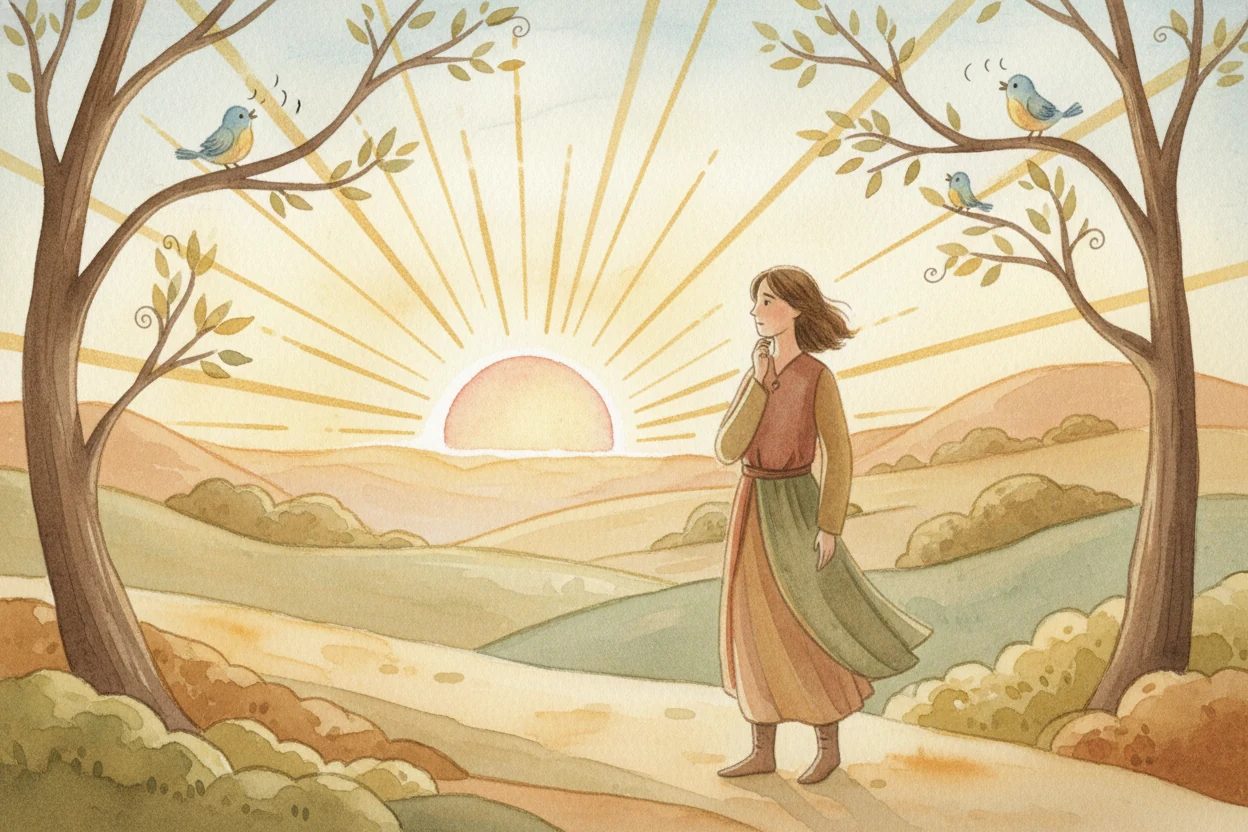
The first clock was the biggest one of all: the sun itself. People watched it crawl across the sky from east to west, and that journey divided the day into rough chunks. Sunrise meant "time to start work." When the sun stood directly overhead, it was midday—time to rest and eat. Sunset meant the workday was done.
But "midday" isn't precise enough if you need to meet someone. So around 3,500 years ago, the Egyptians invented the shadow clock—a simple L-shaped stick that cast a shadow on marked lines. As the sun moved, the shadow moved, and you could count the hours. It's like the sun was drawing the time on the ground for you.
Shadow clocks had one big problem: they only worked when the sun was shining. On cloudy days or at night, you were out of luck. So people got creative. The Egyptians also invented water clocks—bowls with a tiny hole at the bottom. Water dripped out slowly, and marks inside the bowl showed how much time had passed. One bowl could measure several hours before it needed refilling.
Candle clocks worked the same way, but with fire instead of water. You'd mark a tall candle with evenly spaced lines, light it, and watch it burn down. Each line that melted away meant another hour had passed. Some clever people even stuck metal pins into the candle at certain heights—when the wax melted to that pin, it would clang into a metal dish below. An alarm clock made of wax and gravity!
Meanwhile, people also paid attention to the sky at night. Certain stars appeared in predictable spots at predictable times of year. Sailors used star positions to guess the hour, and farmers used them to know when to plant crops. The stars were like a slow, gigantic calendar wheeling overhead, the same every year.
Even animals and plants became unofficial clocks. Roosters crowed at dawn. Flowers opened and closed at specific times—morning glories in the morning, moonflowers at dusk. Your own stomach rumbling could tell you it was probably time for lunch. People learned to read time from everything around them.
Then, around 700 years ago, mechanical clocks with gears and weights appeared in Europe. Suddenly you could know the exact minute, even indoors, even on the cloudiest night. Time became something you carried in your pocket instead of something you read from the world. But the sun, the stars, the dripping water, and the rooster? They're all still keeping time, just like they always have.