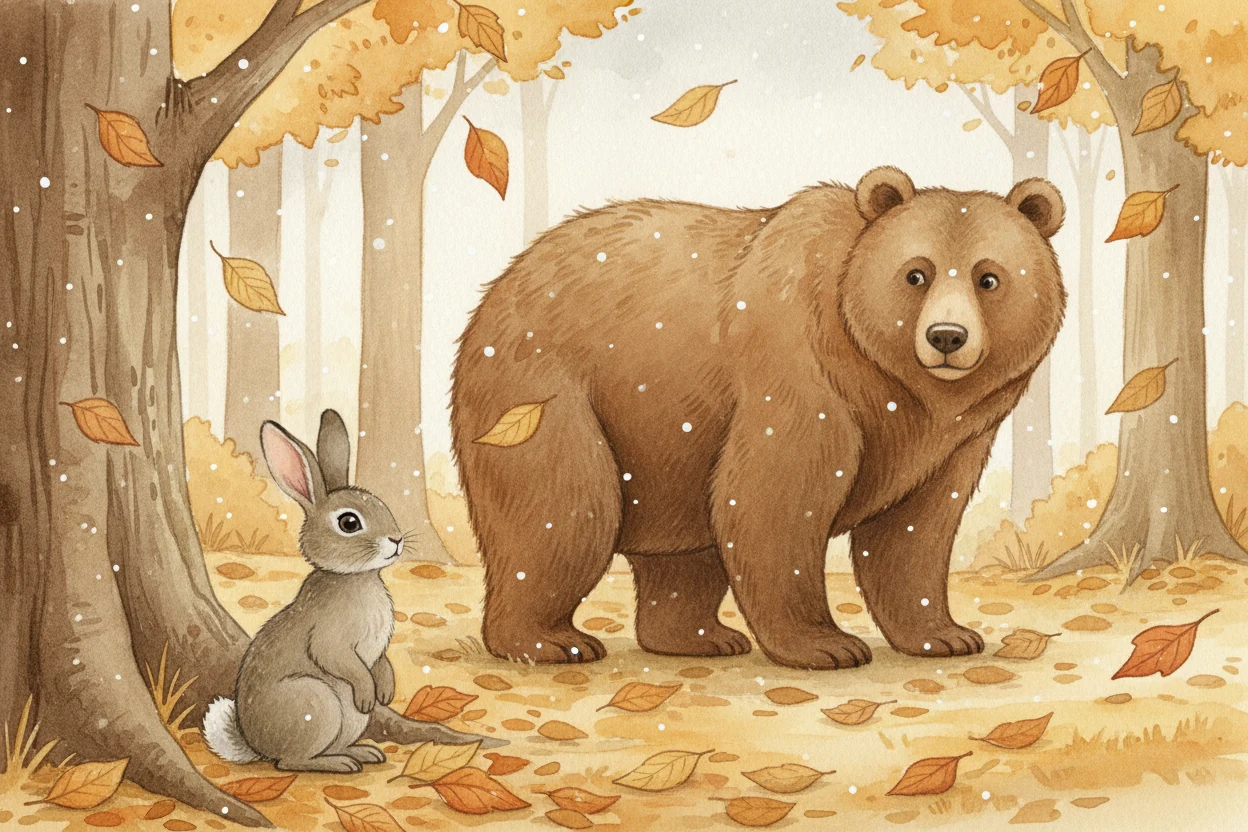
Winter's Secret Tricks
Winter's coming. The air turns cold, food disappears under snow, and yet โ come spring โ the woods are full of animals again. Where did they all go? How did they make it through months of freezing nights and empty branches?
Some animals just leave. Birds fly thousands of miles south to places where it's still warm and bugs are still flying. Monarchs flutter to Mexico. Arctic terns fly all the way to Antarctica and back โ the longest commute on Earth. Migration is the simplest plan: if winter's coming to your address, change your address.
But plenty of animals stay put. And their first problem is the same one you'd have camping in January: how do you stay warm when there's no heater? The answer is insulation. Foxes grow thick winter coats with two layers โ dense underfur like a thermal blanket, and long guard hairs that block wind. Some rabbits' fur gets so thick their ears look puffy.
Staying warm burns energy, and energy comes from food โ which is exactly what winter doesn't have. So some animals spend autumn eating like it's their job. Bears pack on hundreds of pounds of fat. Chipmunks stuff their cheeks and fill underground pantries with thousands of seeds and nuts. It's like stocking a freezer before a blizzard, except the freezer is your body or your burrow.
Then there's hibernation โ the ultimate energy-saver. A hibernating bear's heart rate drops from 50 beats per minute to 8. Its body temperature falls. It doesn't eat, drink, or even go to the bathroom for months. It's not sleeping; it's running on minimal power like a phone in low-battery mode, burning through that autumn fat one slow day at a time.
Ground squirrels take it further. They go into torpor โ a hibernation so deep their body temperature drops below freezing. Literally. Ice crystals form in some tissues. Every few weeks they wake up just long enough to warm up, shiver, maybe pee, then drop back into their frozen pause. Scientists still don't fully understand how they survive it.
Frogs and turtles have their own trick: they bury themselves in mud at the bottom of ponds and breathe through their skin. Wood frogs go further โ they actually freeze solid. Their hearts stop. Ice fills their bodies. But their cells are packed with glucose, which acts like antifreeze for the parts that matter. In spring, they thaw out and hop away.
Other animals just get creative. Deer bunch together in sheltered valleys to share body heat. Beavers hide in lodges with underwater doors, munching on sticks they stored on the pond bottom. Chickadees remember thousands of hiding spots where they stashed seeds. Survival isn't one strategy โ it's a whole toolkit, and every species has its own combination.
And then, just when it seems like winter will never end โ it does. The sun climbs higher. Snow melts. The first green shoots push through the mud. And all those animals that hid, or slept, or flew away, come back to life. The woods fill up again. Spring is loud with creatures who beat the cold and lived to tell about it.