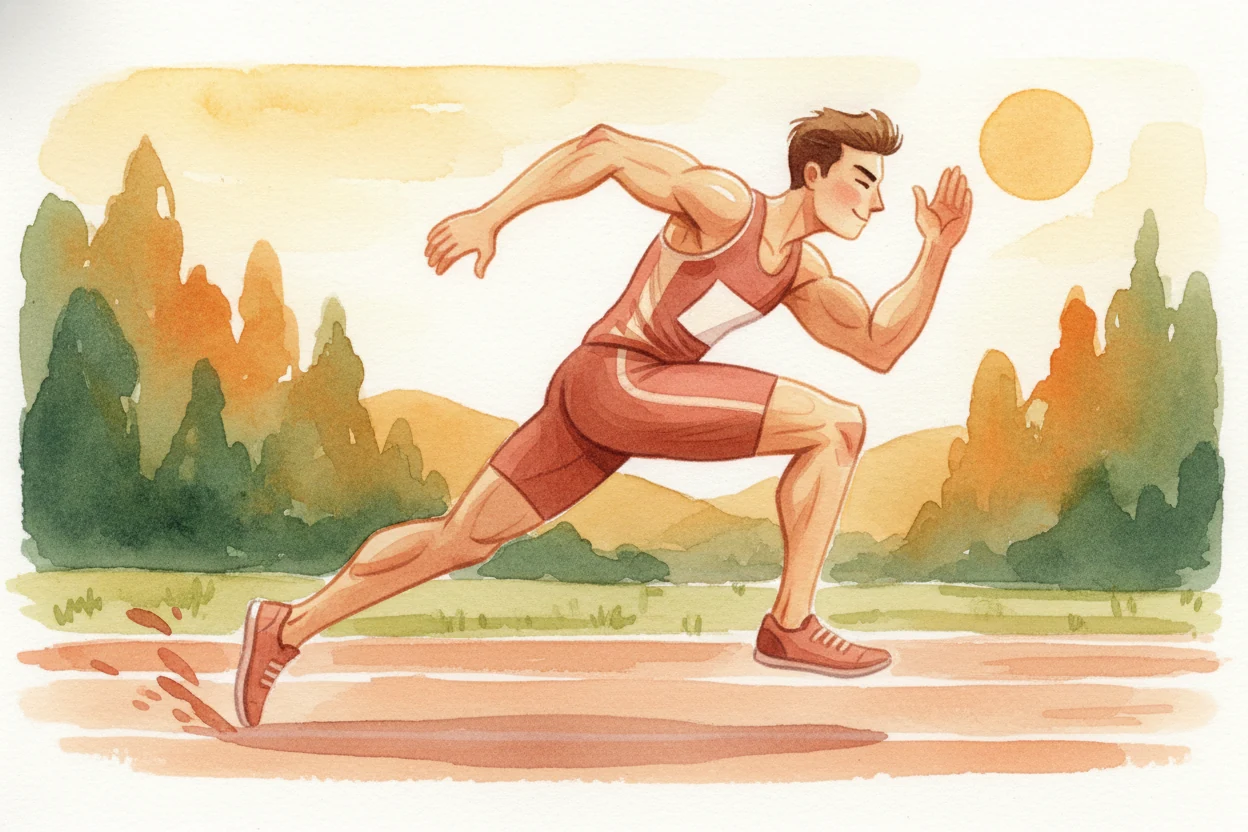
Sprinter's Speed Machine
Watch a sprinter explode off the blocks โ legs blurring, arms pumping, whole body a machine built for one thing: GO. How do they move that fast when the rest of us are huffing after the bus?
First, the legs. Sprinters don't just run โ they attack the ground. Every step slams down with hundreds of pounds of force, and the track pushes back just as hard. That push is what launches them forward. More force into the ground means more speed coming out.
But force alone isn't enough. You need fast-twitch muscle fibers โ the sprint versions of muscle cells. These fibers contract crazy fast, like rubber bands snapping tight in a fraction of a second. Sprinters are born with more of them, then train those fibers to fire even faster.
The stride matters too. Long strides eat up ground, but only if you can turn them over quickly. Elite sprinters take about four and a half steps per second at top speed โ that's like playing a drum solo with your feet while leaping forward each time.
Then there's the lean. Sprinters tilt their whole body forward, chest leading, so gravity is always pulling them ahead. They're not running upright โ they're falling forward in a controlled way, catching themselves with each explosive step.
The arms pump hard because they balance the legs. When your right leg drives back, your left arm swings forward to keep you from spinning like a top. Fast arms mean fast legs โ they're locked together in the same rhythm, one system moving as a blur.
And finally: the breath. At top speed, sprinters barely breathe โ they're running on stored energy for ten seconds, like holding your breath while sprinting across a parking lot. Distance runners breathe steady; sprinters just hold on and explode.
Put it together โ force into the ground, fast-twitch fibers firing, long quick strides, forward lean, pumping arms, one explosive breath held โ and you get a human moving faster than a car in a school zone. The rest of us? We're still looking for our keys.