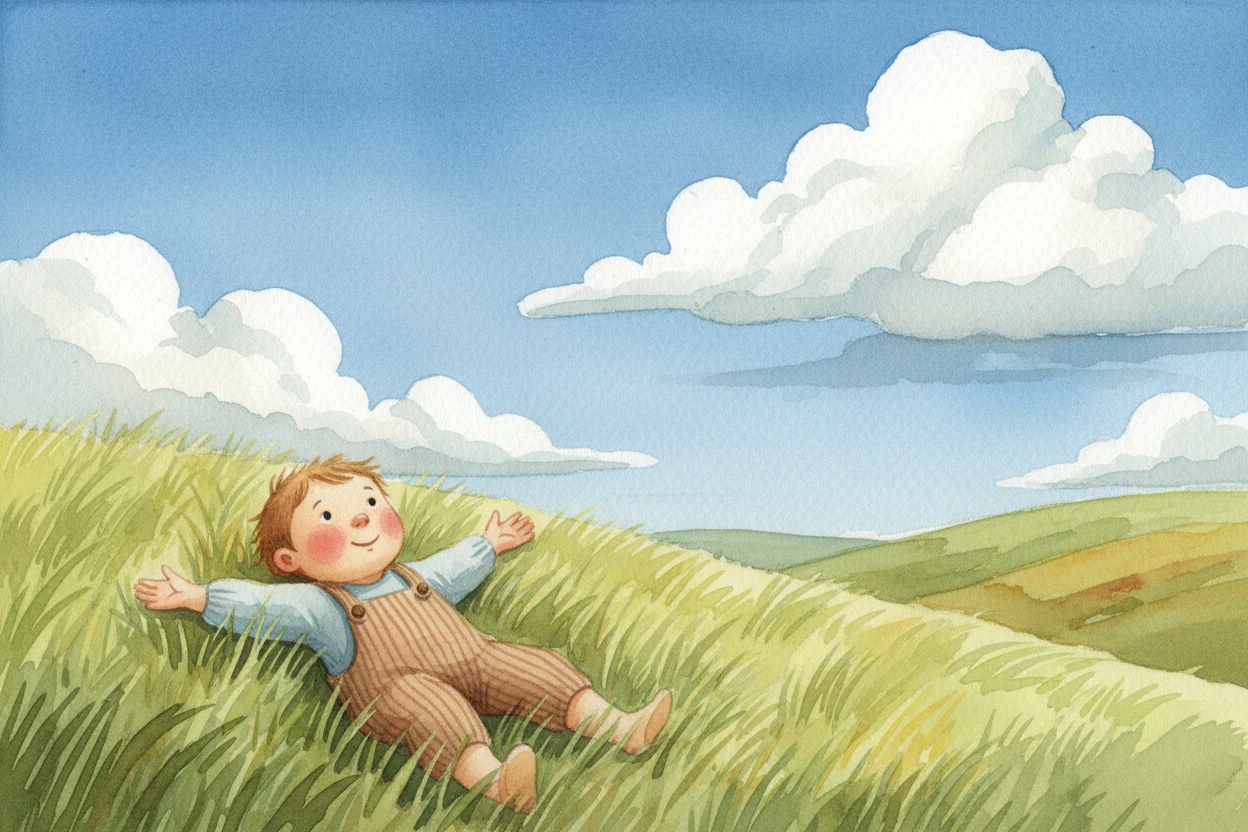
Cloud Dance
You've probably looked up at the sky and wondered: how do those giant fluffy clouds just hang up there without falling? They look heavy โ some weigh as much as a hundred elephants. So what's the secret?
Here's the trick: clouds are made of water, but not the kind you'd find in a glass. They're made of tiny droplets โ so tiny that a million of them together would barely fill a thimble. Each droplet is lighter than a speck of dust.
When water droplets are that small, they don't fall fast. Gravity still pulls on them, but air pushes back. It's like dropping a feather versus dropping a rock โ the feather drifts down slowly because air gets in its way.
These tiny droplets do fall, actually โ about one centimeter per second. That's slower than a snail crawls. But here's where it gets interesting: the air beneath a cloud is often moving upward, like an invisible elevator.
Warm air rises. When the sun heats the ground, it warms the air touching it, and that warm air floats upward like a hot air balloon. These rising currents of air are called updrafts, and they push upward faster than the droplets can fall.
So the cloud droplets are falling, and the air is rising, and they meet somewhere in the middle โ hovering. It's like walking down an escalator that's going up. If you walk at the same speed the escalator climbs, you stay in one place.
Eventually, droplets bump into each other and stick together, growing bigger and heavier. When they get heavy enough โ about a million times heavier than when they started โ gravity finally wins. Then they fall as rain.
So clouds float because they're made of things almost too small to fall, held up by air that's climbing faster than they can drop. Next time you see one, remember: it's not stuck up there. It's dancing.