Sound's Secret Recipe
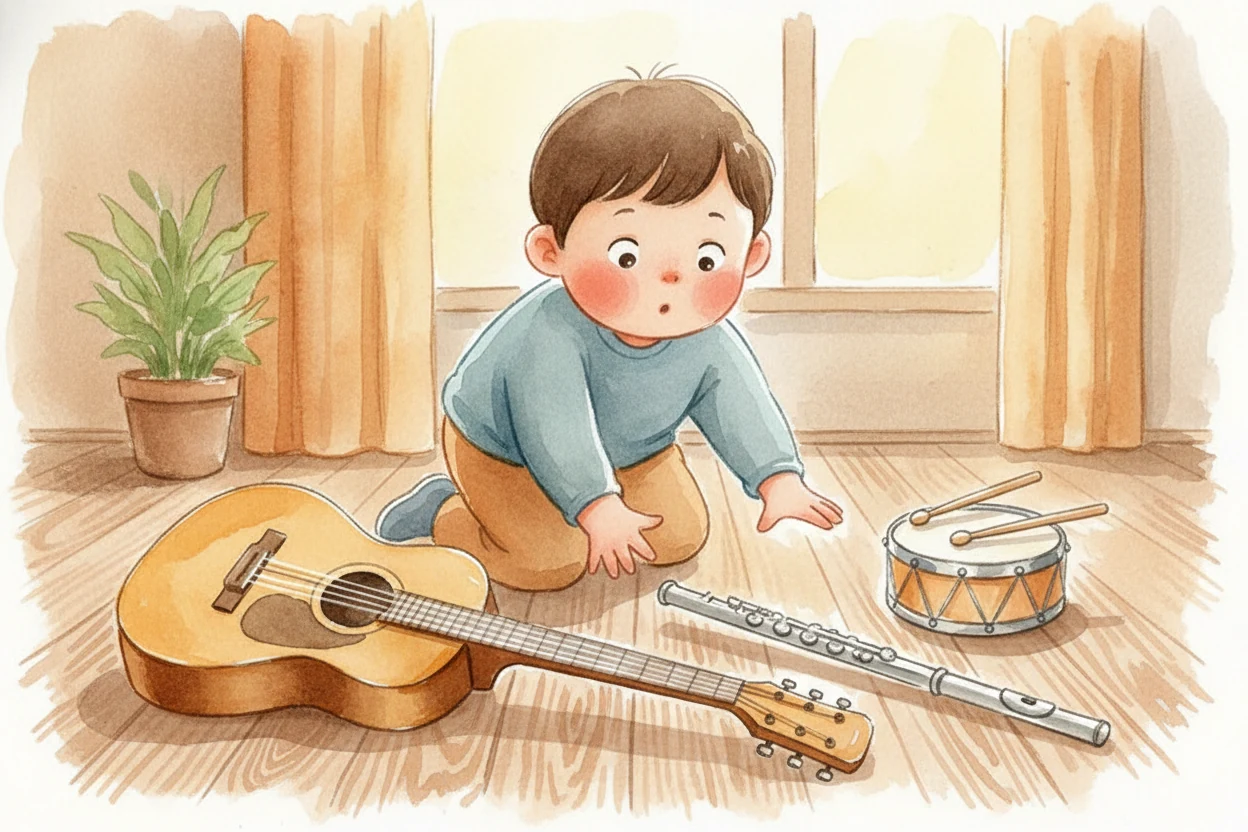
You pluck a guitar string and hear a twang. You blow across a flute and hear a whistle. You whack a drum and hear a boom. Same air, same room โ so why does every instrument sound completely different?
Sound is invisible wiggles traveling through air. When something vibrates โ moves back and forth really fast โ it pushes air molecules into tiny waves that spread outward. Your eardrum catches those waves and your brain says "I hear something!" But not all wiggles are created equal.
The speed of the wiggle changes the pitch. Fast wiggles make high sounds, like a piccolo's squeak. Slow wiggles make low sounds, like a tuba's rumble. A guitar string vibrates hundreds of times per second โ tighten it and it wiggles faster, making a higher note. Loosen it and it slows down, dropping lower.
But speed alone doesn't explain why a piano and a violin playing the same note sound so different. That's where shape comes in. When a string vibrates, it doesn't just wiggle as one simple wave โ it also vibrates in halves, thirds, and tinier fractions all at once, like a jump rope making big loops and little ripples at the same time.
Those extra little vibrations are called overtones, and every instrument makes a different mix of them. A flute makes mostly pure, simple waves with just a few quiet overtones โ that's why it sounds clear and sweet. A saxophone adds lots of strong overtones โ that's why it sounds warm and buzzy. Same starting note, different flavor.
The instrument's body shape amplifies certain overtones and muffles others, like a filter. A violin's wooden hollow box makes some frequencies ring louder. A trumpet's brass bell flares the sound outward and brightens the high overtones. The material matters too: metal sounds different from wood, wood sounds different from skin stretched over a drum frame.
How you start the sound changes everything. Plucking a string makes a sharp attack โ the sound jumps up fast, then fades. Bowing a string makes a smooth, sustained sound that keeps going as long as you pull. Blowing into a reed makes it flutter, adding a reedy buzz. Striking a drumhead makes it boom and decay quickly. The beginning of the sound is like the instrument's signature.
So when you hear a trumpet blare, a cello sing, or a snare drum crack, you're hearing a recipe: the speed of the vibration sets the pitch, the mix of overtones creates the color, the body shape filters and amplifies, and the way the sound starts gives it personality. Thousands of wiggles, one unique voice.