Falling Stones, Rising Roots
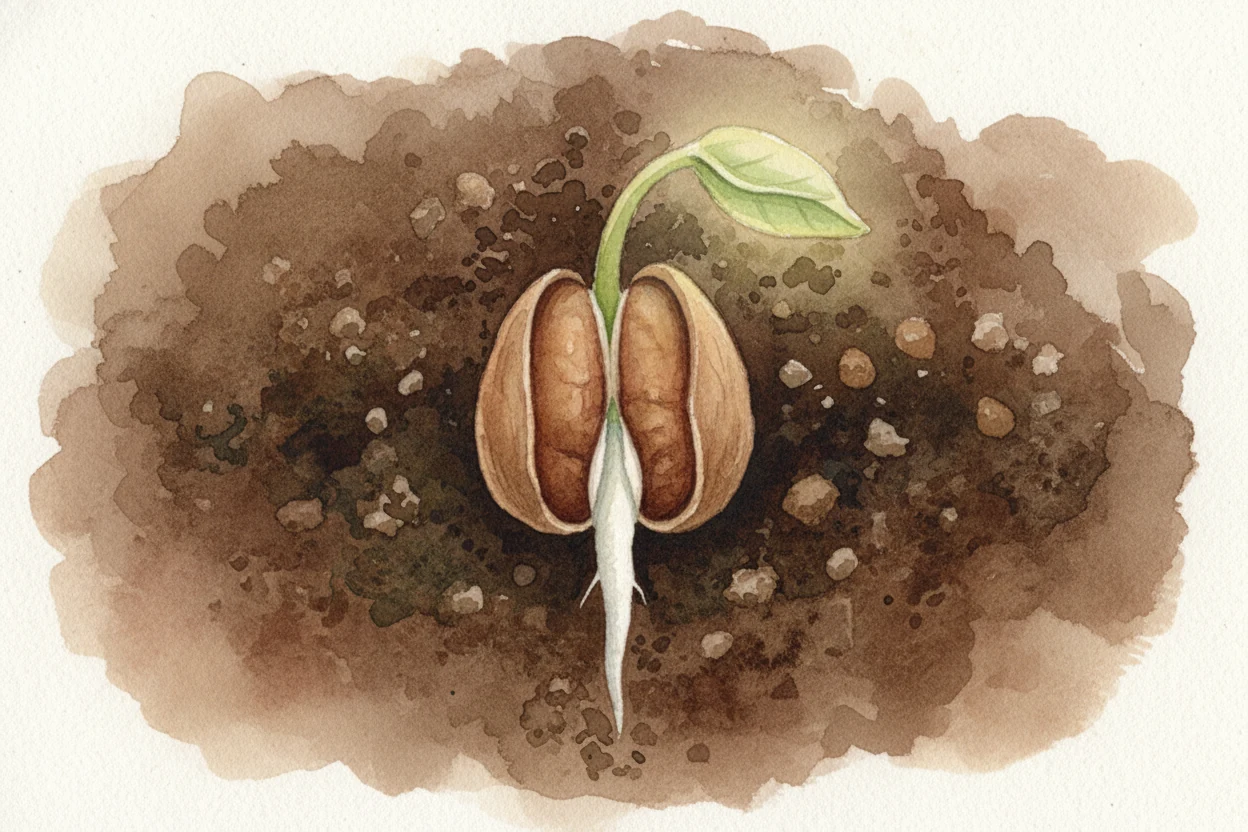
Plant a seed in dirt, walk away, come back in a week. The root punches down, the shoot climbs up. Every single time. No eyes, no brain, no GPS. So how does the root know which way is down?
Inside every root tip, thousands of tiny cells are packed with even tinier grains called statoliths. They're dense little pellets, heavier than water, heavier than the cell juice around them. And gravity pulls on heavy things.
When the root points straight down, the statoliths sit calmly at the bottom of their cells. Everything's fine. The root keeps growing that direction. But tip the whole plant sideways โ say the pot falls over โ and those statoliths tumble.
The statoliths press against a different wall now. That pressure nudges proteins in the cell membrane, and those proteins are switches. Press them, they send a chemical message: "Down is THAT way now."
The message spreads. Cells on the lower side of the sideways root start making a plant hormone called auxin, and they pump it to the upper side. Auxin makes cells grow longer โ stretch like taffy. So the upper side of the root grows faster than the lower side.
When one side of a root grows faster, the whole root bends. It curves down, chasing the statoliths' sense of gravity, until it's pointing straight into the earth again. Then the statoliths settle, the auxin evens out, and the root grows straight.
The shoot does the opposite trick. It has statoliths too, but it pumps auxin the other way โ to the lower side โ so that side grows faster and bends the shoot upward, toward the sun. Same gravity sensor, opposite response.
So a seed doesn't know anything, really. It just has a bag of tiny stones in every tip, falling the way stones fall. The falling whispers a direction. The direction bends the growing. And that's enough to crack the earth in two โ roots down, leaves up, every time.