Light Catchers
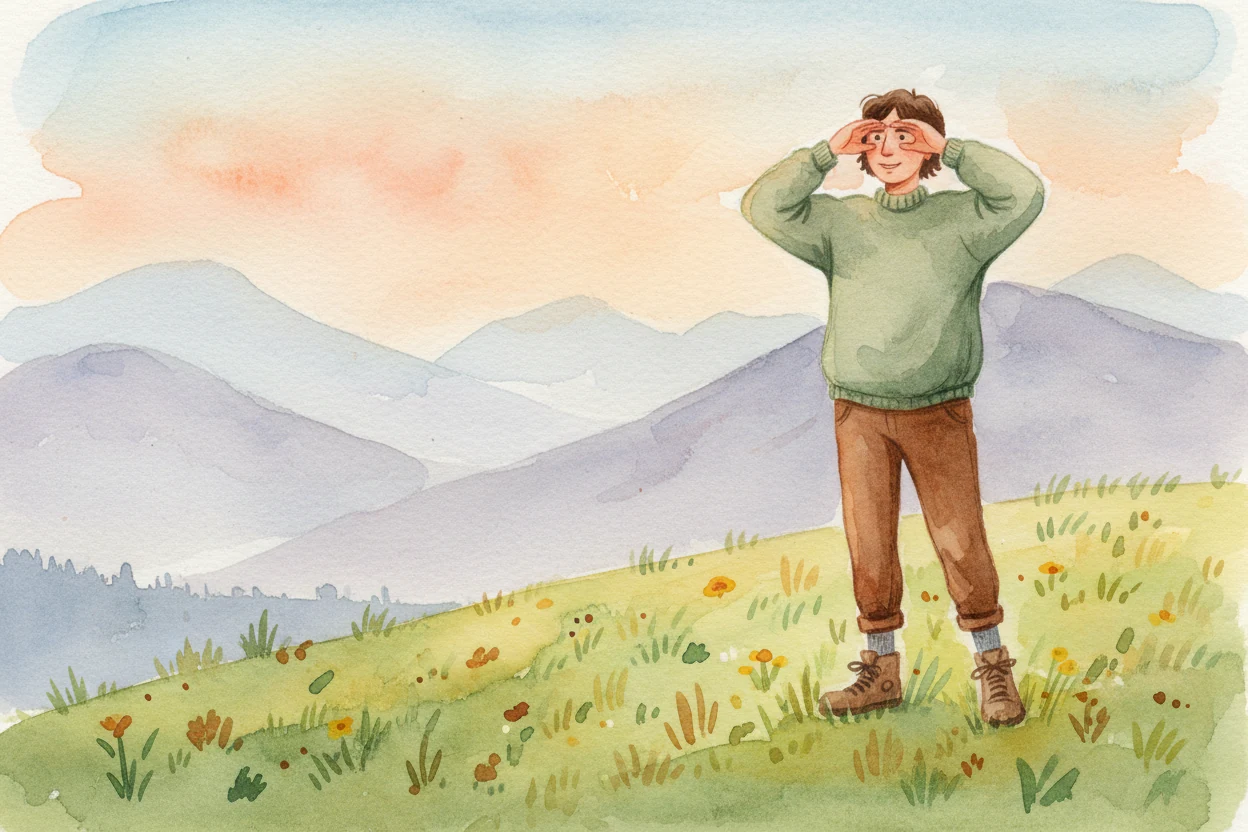
You point your eyes at a distant mountain and squint. Still blurry. You cup your hands around your eyes like binoculars. A little better, but not much. The mountain is just too far away, and your eyes โ as wonderful as they are โ can only gather so much light. That's the problem telescopes were born to solve.
Here's the trick: light from that mountain is already racing toward you at incredible speed, bouncing off every rock and tree. But by the time it reaches your eyes, it's spread out thin, like butter scraped over too much bread. Your pupil โ that black circle in the center of your eye โ is only about as wide as a pencil eraser. It catches a tiny circle of light, so the mountain looks dim and small.
A telescope is basically a giant pupil. The front end โ called the objective โ is a big glass lens or a curved mirror, sometimes as wide as a dinner plate, sometimes as wide as a house. All those light rays that would have flown past your head now get caught and funneled inward, like a satellite dish catching radio waves or a funnel catching rain.
More light means more information. Suddenly you can see the mountain's texture โ the individual trees, the shadows in the crevices, maybe even a goat on a ridge. It's not that the telescope is magically reaching out and grabbing the mountain. It's gathering light that was already coming your way, justโฆ more of it.
But telescopes do a second trick, too: they magnify. After the big lens or mirror catches all that light, it bounces or bends the rays through a smaller lens near your eye โ the eyepiece. This eyepiece spreads the image out across your retina, making details look bigger. It's like zooming in on a photo, except the photo is made of real light happening right now.
The farther away something is, the more desperately you need both tricks working together. Stars are so far away that even though they're giant blazing suns, they look like pinpricks. A backyard telescope gathers enough starlight to show you the rings of Saturn or the moons of Jupiter โ things your naked eyes could never, ever see, even on the clearest night.
Some telescopes don't use glass lenses at all โ they use mirrors, because mirrors can be built much bigger without getting too heavy or wobbly. The biggest telescopes on Earth have mirrors wider than a school bus. Space telescopes like Hubble float above the atmosphere, dodging the blurring effect of air, gathering light from galaxies billions of light-years away.
So when you look through a telescope, you're not reaching out into space. You're standing still, letting the universe send its light to you โ and catching as much of it as you possibly can. The mountain, the moon, the distant galaxy: they've been broadcasting their stories in light all along. The telescope just makes sure you don't miss a single word.