Nature's Slow Sculptor
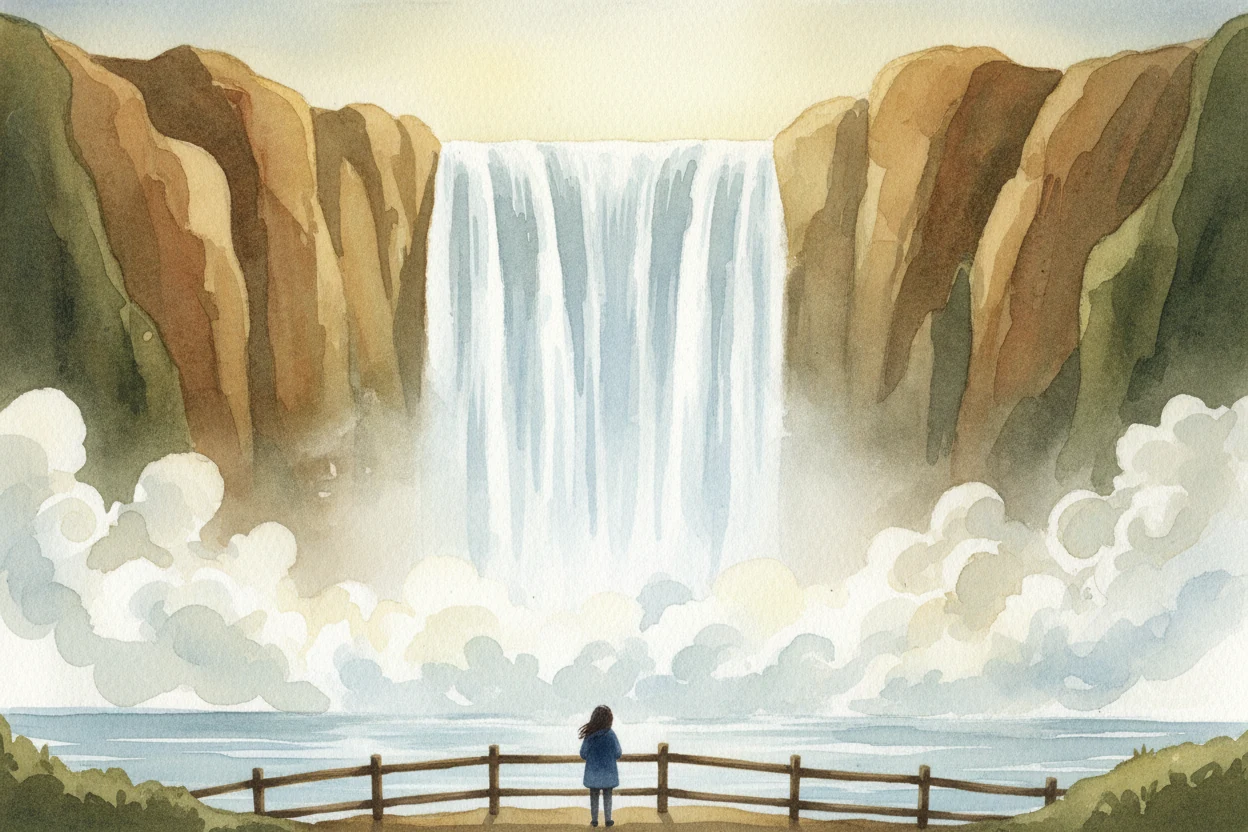
You're standing at the edge of Niagara Falls, and millions of gallons of water are thundering over the cliff every second. Where did this giant waterfall come from? Did someone dig it? Did it appear overnight? Nope โ waterfalls are nature's slow-motion sculptures, carved by water over thousands and thousands of years.
A waterfall starts with a river flowing along, minding its own business. But rivers are picky โ they always want to take the easiest path downhill. And here's the thing: not all rock is equally tough. Some rock is hard as a brick wall. Other rock is soft, like stale cake. When a river flows over both kinds of rock, the soft stuff wears away faster.
Imagine you're eating a sandwich where the top slice of bread is burnt and crusty, but the inside is mushy peanut butter. The river does the same thing โ it can't break through the hard top layer easily, but it carves out the soft rock underneath. Over hundreds of years, the soft rock erodes away, leaving the hard rock sticking out like a shelf with nothing underneath it.
Eventually, that rocky shelf gets too heavy. Gravity wins. The unsupported edge cracks and tumbles into the river below โ crash! โ and suddenly there's a drop where there used to be flat riverbed. That drop is the beginning of a waterfall. The water doesn't trickle down anymore; it falls**.
But the waterfall doesn't stay put. The water keeps hammering at the base, especially where it lands โ that spot gets pounded like a drum. The force digs out a deep pool called a plunge pool, and the swirling water down there keeps eating away at the soft rock behind and below the waterfall. The hard caprock above? Still hanging on.
So the same thing happens again: the soft rock below gets hollowed out, the hard rock on top loses its support, another chunk breaks off and tumbles down. The waterfall has moved a little bit upstream. Do this ten thousand times over ten thousand years, and the waterfall slowly walks backward, leaving a steep gorge in its wake.
Niagara Falls, for example, started about 12,000 years ago at the edge of Lake Ontario and has been creeping upstream ever since โ about a meter per year, sometimes faster when big chunks collapse. It's carved an entire eleven-kilometer gorge. If you could watch it in fast-forward, you'd see the waterfall walking backward through the landscape like a very slow, very wet lawnmower.
So that's how waterfalls are born: a river finds soft rock, digs it out, the hard rock breaks, water falls, repeat for millennia. Every waterfall you've ever seen is a work in progress, still carving, still creeping backward, still shaping the land. Next time you see one, remember โ you're watching geology happen, one thundering gallon at a time.