Scab Construction Crew
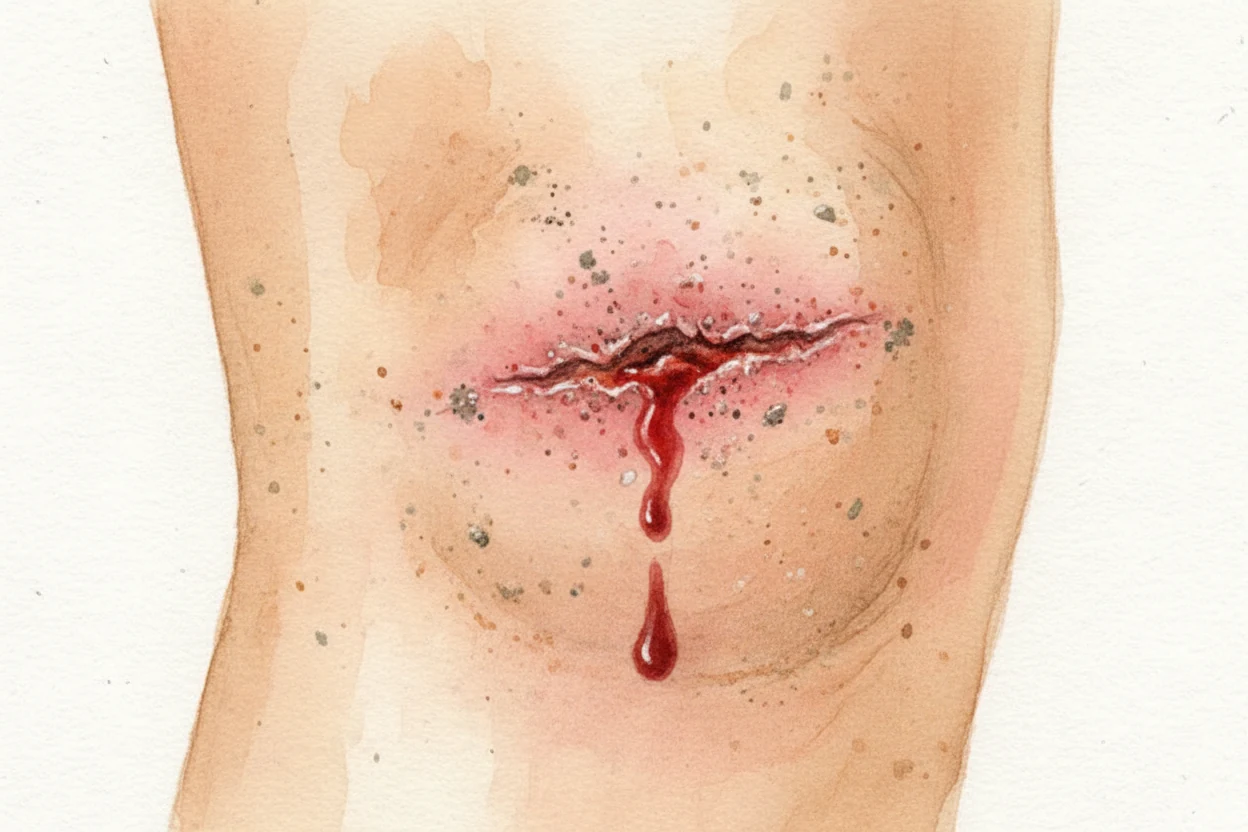
You scrape your knee on the sidewalk โ ow! โ and there's blood. But the next morning, the cut is covered by a dark, crusty scab. How did your body build that overnight?
The moment you get cut, blood rushes out carrying special cells called platelets. Platelets are like tiny construction workers floating in your blood, waiting for emergencies. When they hit air and see the edges of the wound, they know: time to plug this leak.
Platelets are shape-shifters. In calm blood, they're smooth and round. But at a wound, they grow sticky arms and clump together, grabbing onto each other and the torn edges of skin. They form a living plug, like sandbags piled against a flood.
But a platelet plug is fragile โ it would wash away in seconds. So your blood releases a protein called fibrin, which works like liquid scaffolding. Fibrin threads shoot out in all directions, weaving through the platelet pile like spider silk, locking everything in place.
This tangle โ platelets plus fibrin โ is a clot. It's your body's emergency dam. Blood cells get stuck in the mesh, and the whole thing dries out in the air, hardening from wet red jelly into a tough, dark crust. That crust is the scab.
Underneath the scab, your body is busy rebuilding. Skin cells at the edges of the wound start multiplying, crawling across the gap like a slow-motion wave. New blood vessels sprout. White blood cells patrol for germs. The scab is a construction tarp โ it keeps the work site clean while repairs happen below.
As the new skin grows thicker and stronger, the scab becomes unnecessary. The skin cells underneath push upward, loosening the scab's grip. Eventually, the scab pops off โ sometimes in the shower, sometimes when you're not even paying attention โ and reveals smooth new skin.
So that scrape on your knee? It triggered a whole construction crew: platelets piling up, fibrin weaving the scaffolding, skin cells rebuilding from the edges. The scab was the sign on the fence: "Work in Progress โ Do Not Disturb."