The Secret Handshake
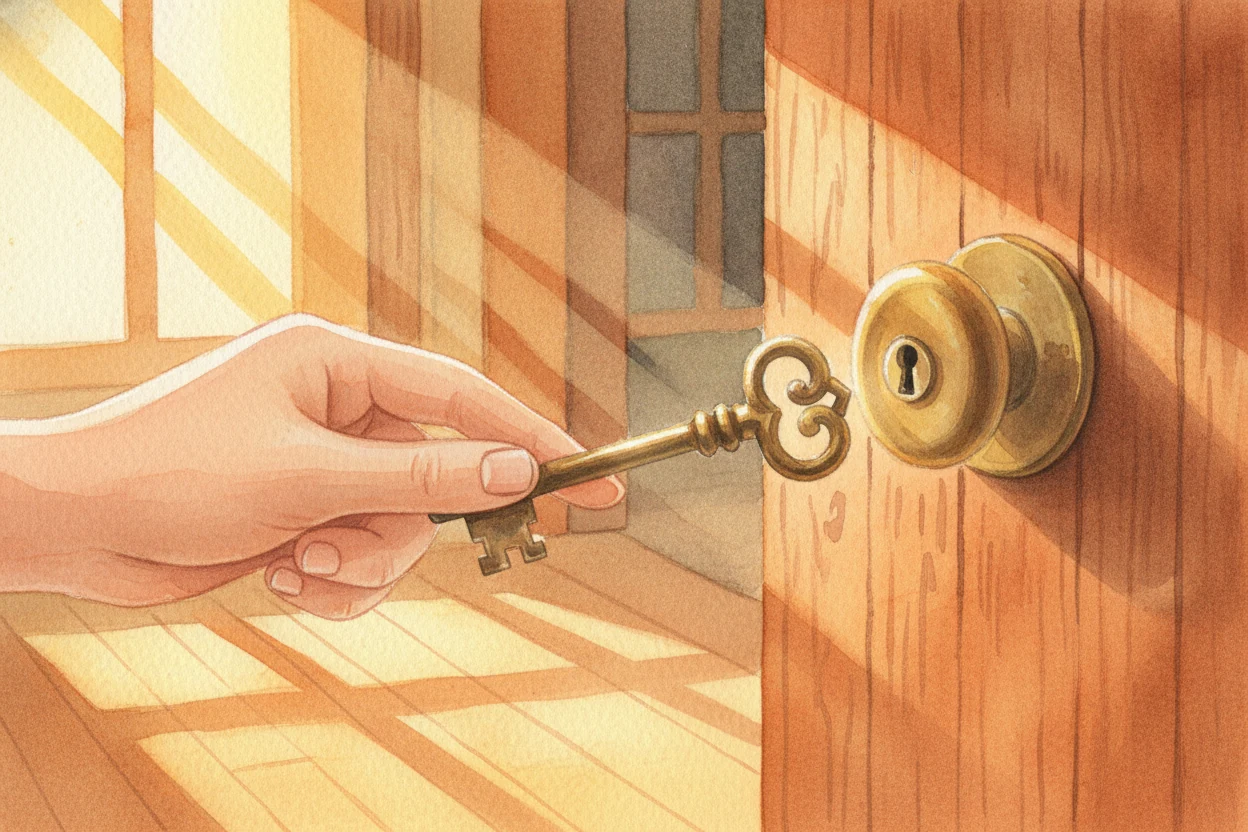
You slide a key into a lock, turn it, and click โ the door opens. But inside that little brass cylinder, something clever is happening. A secret handshake between metal shapes, perfectly matched.
Inside the lock, hidden pins are stacked like tiny metal columns. Each pin has two parts: a bottom pin that touches your key, and a top pin that sits above it. Right now, those top pins are jamming down into the cylinder, holding everything locked tight.
Your key has a bumpy, notched edge โ a secret code cut into metal. Each notch is a different height, like steps going up and down a staircase. When you slide the key in, those notches push the bottom pins up.
Here's the magic: the right key pushes each bottom pin up exactly the right amount. When every bottom pin lifts to precisely the correct height, all five pairs split at the same level โ a flat line across the cylinder.
That flat line is the finish line. Now the top pins sit completely above the cylinder, and the bottom pins sit completely below. Nothing is jamming into the cylinder anymore. The cylinder is free.
So when you turn the key, you're turning the cylinder itself. The cylinder rotates inside its shell, and that rotation pulls back a metal bolt โ the little tongue that sticks out and holds the door shut.
A wrong key has the wrong notches. It pushes the pins to the wrong heights โ some pairs split too high, some too low. The top pins still jab into the cylinder at different spots, blocking it like branches across a path. No turn, no open.
Millions of possible notch combinations mean millions of possible keys. But only one key has the exact stair-step pattern that turns those five metal columns into a flat line โ and only that key opens your door. Click.