cover

Mold's Cheese Magic

How does mold turn milk into blue cheese?
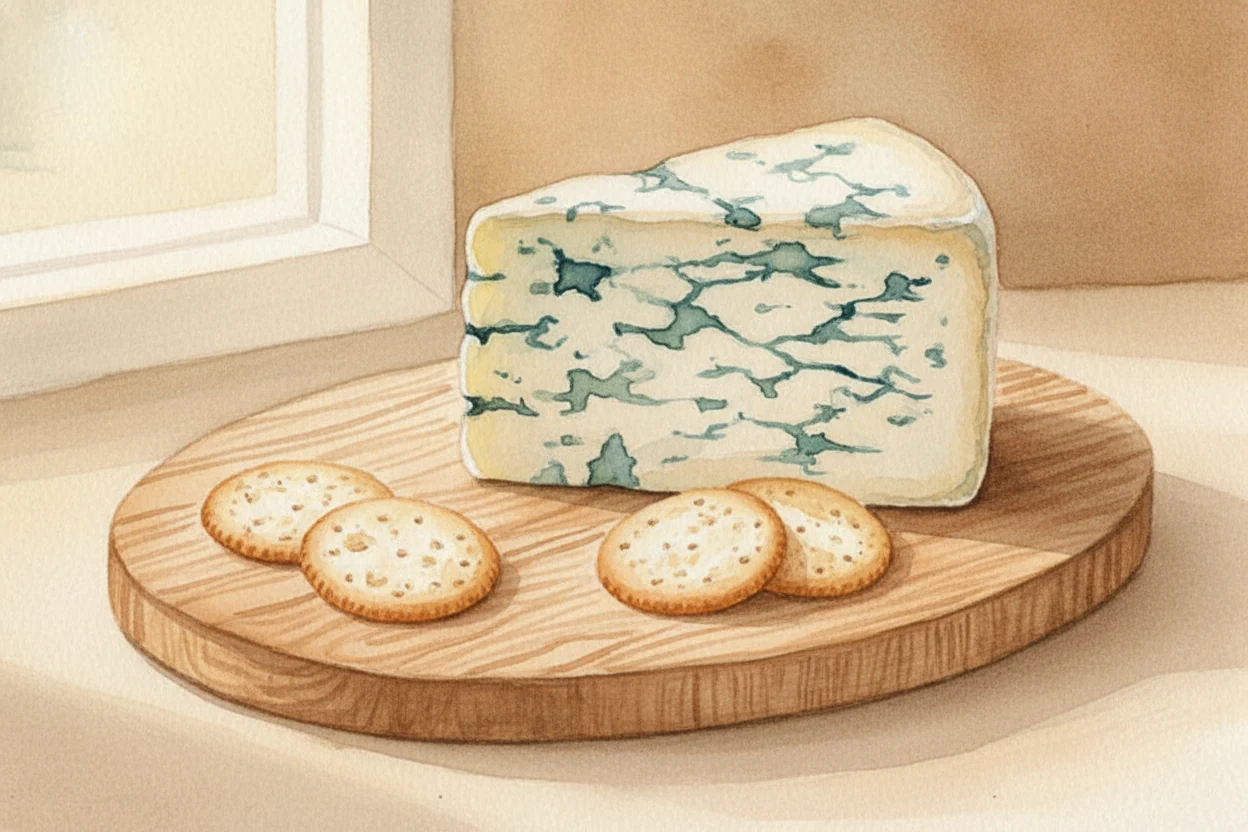
You've probably seen blue cheese at the grocery store โ€” that creamy white cheese with **blue-green veins running through

You've probably seen blue cheese at the grocery store โ€” that creamy white cheese with blue-green veins running through it like little rivers. It looks weird. It smells funky. And yes, those blue streaks are mold. The same kind of stuff that ruins bread if you leave it out too long. So how does that same mold turn ordinary milk into fancy cheese that people actually want to eat?

First, cheesemakers start with regular milk โ€” usually from cows. They warm it up and add **special bacteria** _(the help

First, cheesemakers start with regular milk โ€” usually from cows. They warm it up and add special bacteria (the helpful kind, like the ones in yogurt). These bacteria eat the milk sugar and make acid, which causes the milk proteins to clump together into curds. It's like when you make pudding and it thickens up, except chunkier. The curds are the beginning of cheese. The watery stuff left over is called whey.

~~Here's where blue cheese gets its personality:~~ the cheesemaker adds mold spores to the curds. Specifically, spores f

Here's where blue cheese gets its personality: the cheesemaker adds mold spores to the curds. Specifically, spores from a mold called FX2. Picture tiny seeds, way too small to see, mixed throughout the wet curds like invisible confetti. These spores are alive, but sleeping. They're waiting for the right conditions to wake up and grow.

The curds get scooped into molds โ€” ~~not the fuzzy kind of mold~~, but plastic or metal forms that shape the cheese into

The curds get scooped into molds โ€” not the fuzzy kind of mold, but plastic or metal forms that shape the cheese into wheels or blocks. Then the cheese sits in a warm room for a few days. The bacteria keep working, making the cheese tangier. But the mold spores? Still sleeping. They need one thing the cheese doesn't have yet: oxygen. Mold needs air to grow, and right now the curds are packed too tightly.

So the cheesemaker pokes holes. ~~They take long metal needles and stab right through each wheel~~, making **tunnels fro

So the cheesemaker pokes holes. They take long metal needles and stab right through each wheel, making tunnels from top to bottom. Now air can flow into the center of the cheese. The mold spores wake up. They stretch out tiny thread-like roots called hyphae, which tunnel through the cheese looking for food. And what's their favorite meal? The fat and protein in the cheese itself.

Over the next few weeks, the mold spreads along those air tunnels **like tree roots following cracks in a sidewalk**. Wh

Over the next few weeks, the mold spreads along those air tunnels like tree roots following cracks in a sidewalk. Wherever the hyphae grow, they turn blue-green โ€” that's their natural color. The mold eats the cheese's fat and protein and transforms them into new molecules: enzymes that break down more cheese, and flavor compounds that smell sharp and taste tangy, earthy, even a little peppery. This is the mold doing chemistry.

The enzymes the mold makes also change the cheese's texture. They *break down proteins into smaller pieces*, making the

The enzymes the mold makes also change the cheese's texture. They break down proteins into smaller pieces, making the cheese creamier and softer. The fat breaks into molecules that give blue cheese its signature strong smell โ€” the same smell that makes some people wrinkle their noses and others lean in for a bigger bite. The mold has turned plain cheese into something bold.

After about ++two to three months++, the cheesemaker decides the cheese is ready. The mold has done its job. The cheese

After about two to three months, the cheesemaker decides the cheese is ready. The mold has done its job. The cheese gets wrapped up โ€” usually in foil or wax to keep the mold from spreading further โ€” and shipped to stores. So the next time you see blue cheese, remember: those blue streaks are a tiny mold that spent weeks eating tunnels through milk, transforming fat and protein into bold, funky flavor. That's not rot. That's craftsmanship.

How was this book?

A Wonderleaf Book

Mold's Cheese Magic

โ€” How does mold turn milk into blue cheese? โ€”

Wonderleaf Editions
โ€” ex libris โ€”
A Wonderleaf Book

Mold's Cheese Magic

How does mold turn milk into blue cheese?

Wonderleaf Editions ยท MMXXVI
Scene 1
You've probably seen blue cheese at the grocery store โ€” that creamy white cheese with **blue-green veins running through
Mold's Cheese Magic2
Scene 1

You've probably seen blue cheese at the grocery store โ€” that creamy white cheese with blue-green veins running through it like little rivers. It looks weird. It smells funky. And yes, those blue streaks are mold. The same kind of stuff that ruins bread if you leave it out too long. So how does that same mold turn ordinary milk into fancy cheese that people actually want to eat?

3Mold's Cheese Magic
Scene 2
First, cheesemakers start with regular milk โ€” usually from cows. They warm it up and add **special bacteria** _(the help
Mold's Cheese Magic4
Scene 2

First, cheesemakers start with regular milk โ€” usually from cows. They warm it up and add special bacteria (the helpful kind, like the ones in yogurt). These bacteria eat the milk sugar and make acid, which causes the milk proteins to clump together into curds. It's like when you make pudding and it thickens up, except chunkier. The curds are the beginning of cheese. The watery stuff left over is called whey.

5Mold's Cheese Magic
Scene 3
~~Here's where blue cheese gets its personality:~~ the cheesemaker adds mold spores to the curds. Specifically, spores f
Mold's Cheese Magic6
Scene 3

Here's where blue cheese gets its personality: the cheesemaker adds mold spores to the curds. Specifically, spores from a mold called FX2. Picture tiny seeds, way too small to see, mixed throughout the wet curds like invisible confetti. These spores are alive, but sleeping. They're waiting for the right conditions to wake up and grow.

7Mold's Cheese Magic
Scene 4
The curds get scooped into molds โ€” ~~not the fuzzy kind of mold~~, but plastic or metal forms that shape the cheese into
Mold's Cheese Magic8
Scene 4

The curds get scooped into molds โ€” not the fuzzy kind of mold, but plastic or metal forms that shape the cheese into wheels or blocks. Then the cheese sits in a warm room for a few days. The bacteria keep working, making the cheese tangier. But the mold spores? Still sleeping. They need one thing the cheese doesn't have yet: oxygen. Mold needs air to grow, and right now the curds are packed too tightly.

9Mold's Cheese Magic
Scene 5
So the cheesemaker pokes holes. ~~They take long metal needles and stab right through each wheel~~, making **tunnels fro
Mold's Cheese Magic10
Scene 5

So the cheesemaker pokes holes. They take long metal needles and stab right through each wheel, making tunnels from top to bottom. Now air can flow into the center of the cheese. The mold spores wake up. They stretch out tiny thread-like roots called hyphae, which tunnel through the cheese looking for food. And what's their favorite meal? The fat and protein in the cheese itself.

11Mold's Cheese Magic
Scene 6
Over the next few weeks, the mold spreads along those air tunnels **like tree roots following cracks in a sidewalk**. Wh
Mold's Cheese Magic12
Scene 6

Over the next few weeks, the mold spreads along those air tunnels like tree roots following cracks in a sidewalk. Wherever the hyphae grow, they turn blue-green โ€” that's their natural color. The mold eats the cheese's fat and protein and transforms them into new molecules: enzymes that break down more cheese, and flavor compounds that smell sharp and taste tangy, earthy, even a little peppery. This is the mold doing chemistry.

13Mold's Cheese Magic
Scene 7
The enzymes the mold makes also change the cheese's texture. They *break down proteins into smaller pieces*, making the
Mold's Cheese Magic14
Scene 7

The enzymes the mold makes also change the cheese's texture. They break down proteins into smaller pieces, making the cheese creamier and softer. The fat breaks into molecules that give blue cheese its signature strong smell โ€” the same smell that makes some people wrinkle their noses and others lean in for a bigger bite. The mold has turned plain cheese into something bold.

15Mold's Cheese Magic
Scene 8
After about ++two to three months++, the cheesemaker decides the cheese is ready. The mold has done its job. The cheese
Mold's Cheese Magic16
Scene 8

After about two to three months, the cheesemaker decides the cheese is ready. The mold has done its job. The cheese gets wrapped up โ€” usually in foil or wax to keep the mold from spreading further โ€” and shipped to stores. So the next time you see blue cheese, remember: those blue streaks are a tiny mold that spent weeks eating tunnels through milk, transforming fat and protein into bold, funky flavor. That's not rot. That's craftsmanship.

17Mold's Cheese Magic

~ finis ~

Tiny picture books for big little questions.

โ€” a small constellation of questions โ€”
โœฆWonderleaf
Editions