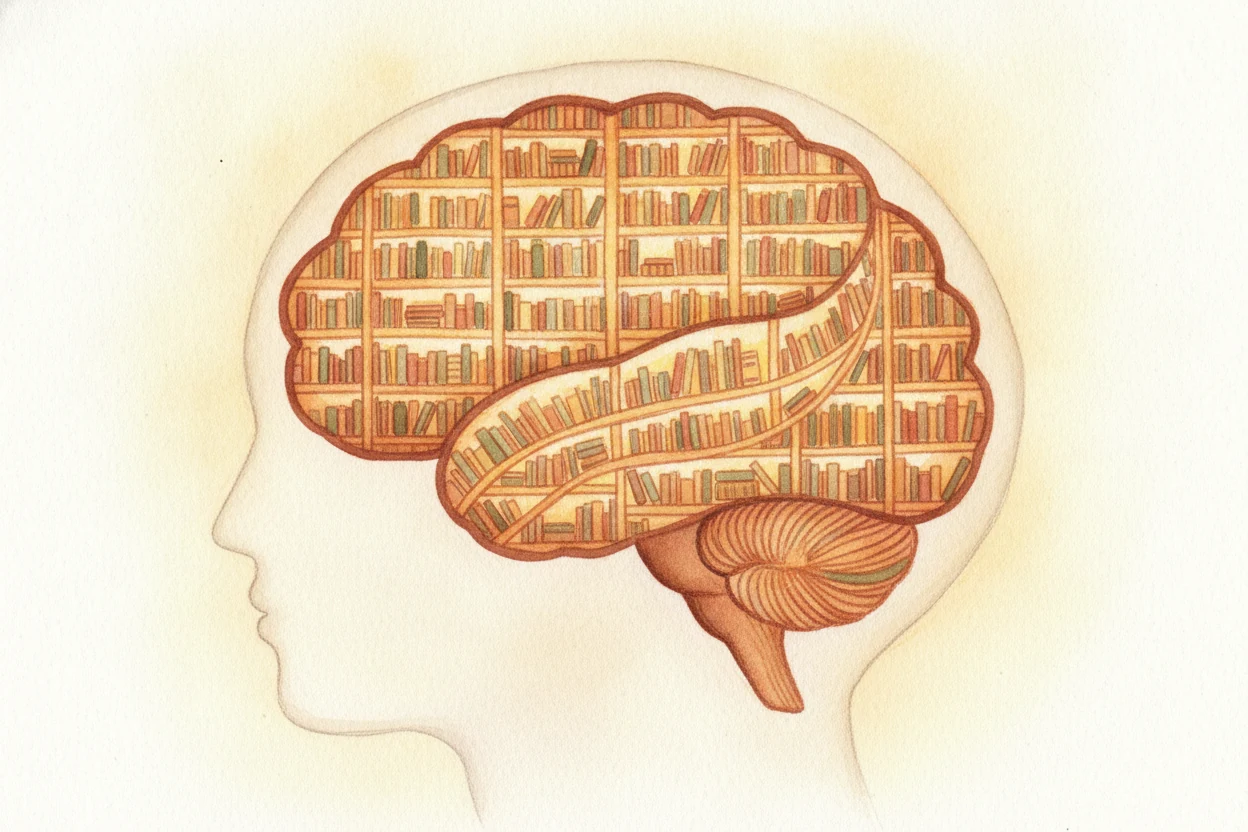
Brain's Memory Library

Right now, somewhere inside your head, a memory is being filed away โ maybe the smell of breakfast, maybe this very sentence. Your brain is doing it without asking you. So how does this squishy, three-pound lump pull off such a trick? Let's go find out.

Start with one tiny worker: a brain cell called a neuron. It's a little like a tree with branches, and it has one job โ to pass a message to the next neuron in line. One alone can't do much. But you have billions of them, all reaching out to hold hands.

When you experience something โ a song, a face, a taste โ a whole crowd of neurons light up together at the same moment. That specific crowd, flashing together, *is* the experience. Think of it like a string of fairy lights blinking in one special pattern.

Here's the clever part. When neurons fire together a lot, the connections between them grow stronger โ easier to trigger next time. Scientists sum it up like this: Prose: "Neurons that fire together, wire together." Prose: A memory is really just a path that got worn smooth from use, like a shortcut across a grassy field.

But who decides what's worth keeping? Deep in your brain sits a curved, seahorse-shaped helper called the hippocampus. It's the night-shift librarian. All day it grabs new experiences and decides which ones get filed into long-term storage โ and which ones get tossed.

A lot of that filing happens while you sleep. As you snooze, your brain quietly replays the day, moving the keeper-memories into deeper, longer-lasting storage. That's part of why a good night's sleep helps you remember what you studied. Your brain does homework while you snore.

So why do some things stick like glue and others vanish? Two big reasons: feeling and repeating. Memories tied to strong emotions โ joy, surprise, your first wobbly bike ride โ get a bright highlighter. And anything you repeat, like a phone number you say twice, wears that grassy path deeper.

Remembering isn't like grabbing a photo from a shelf. It's more like your brain rebuilding the moment from pieces โ relighting that old pattern of fairy lights. Which is also why memories shift a little each time you recall them. You're not replaying the tape; you're re-painting the picture.

And what about forgetting? It isn't a bug โ it's tidying. If your brain kept every single second forever, you'd never find the stuff that matters. So it lets the unused paths fade back into grass, keeping the important trails clear. Forgetting is your brain making room to think.

So the next time you remember a friend's laugh or where you left your shoes, picture it: billions of tiny tree-cells flashing together, a seahorse filing the keepers, paths worn smooth from use. Your brain isn't a dusty cabinet. It's a living, glowing library โ and you're holding the only library card.