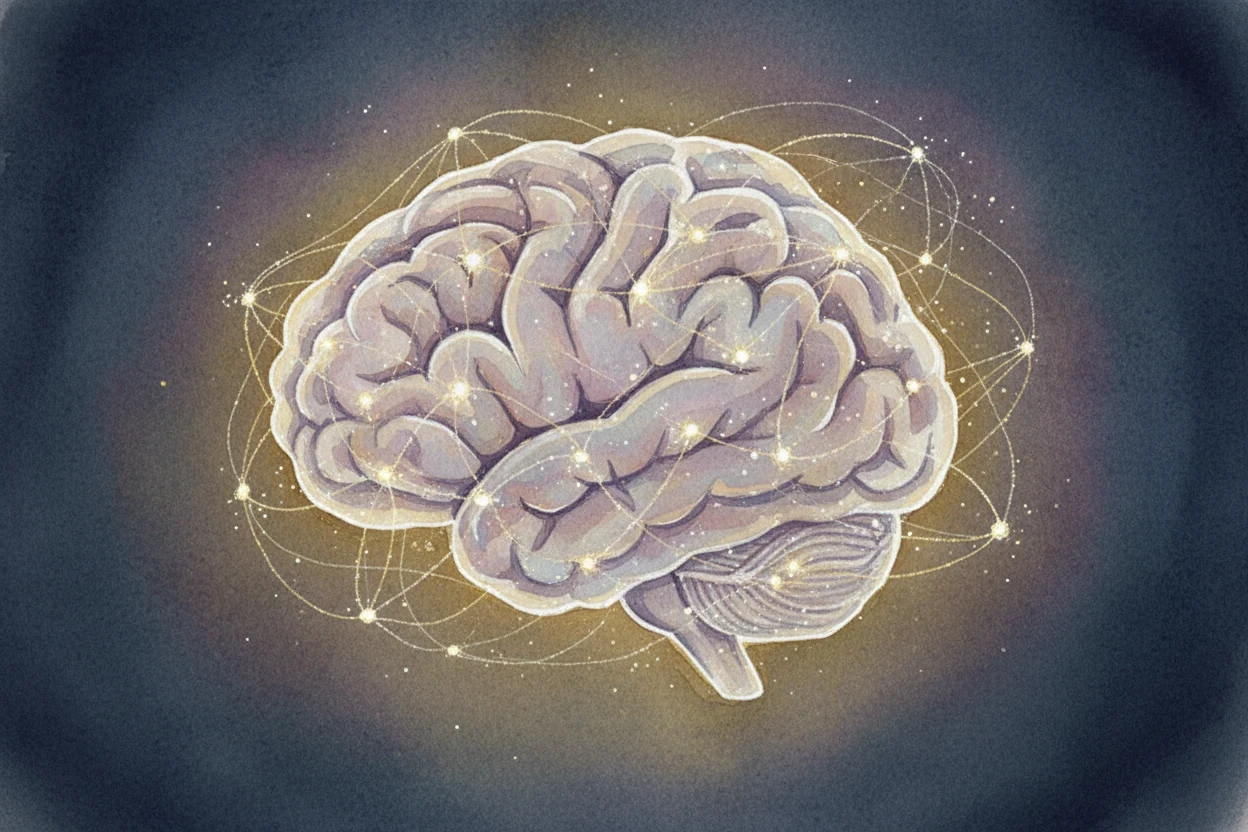
Brain's Living Trails
Your brain doesn't have a filing cabinet or a hard drive. So where do memories actually go? Right now, while you're reading this, your brain is doing something wild: it's rewiring itself, building tiny new connections between brain cells, and those connections ARE the memory. Let's watch it happen.
Your brain has about 86 billion neurons โ special cells that send messages to each other. Each neuron looks like a tiny tree with branches reaching out to other neurons. When you experience something โ biting into pizza, hearing a song, learning your friend's name โ specific neurons fire together, sending electrical signals down their branches.
Here's the key part: when two neurons fire at the same time, the connection between them gets stronger. It's like walking across a grassy field โ the first time, you push through tall grass and it's hard. But walk the same path ten times and you've made a trail. Walk it a hundred times and you've worn a groove in the ground.
That stronger connection IS the memory. Scientists call these connections synapses. When you remember your best friend's laugh, you're not playing back a recording โ you're reactivating the same pattern of neurons that fired when you first heard it. The neurons fire together again, following the trail they wore into themselves.
Your brain decides what to remember based on emotion and repetition. Boring stuff gets weak connections that fade fast. But something funny, scary, or important? Your brain floods the area with chemicals that say "SAVE THIS!" The chemicals tell the neurons to build stronger, thicker connections โ wider trails through the grass.
The memory-making happens in stages. First, the hippocampus โ a seahorse-shaped part deep in your brain โ grabs the new experience and holds it temporarily, like scribbling on a sticky note. This is short-term memory: fragile, easy to lose. You can hold about seven things here at once, which is why you can remember a phone number just long enough to dial it.
But if the memory matters โ if you rehearse it, sleep on it, or feel something about it โ the hippocampus slowly transfers it to the outer layer of your brain, the cortex, where it gets woven into long-term storage. This transfer happens mostly while you sleep, which is why cramming all night before a test doesn't work as well as studying, sleeping, and reviewing.
Here's the weird part: every time you remember something, you're actually changing it a little. Recalling a memory means firing those neurons again โ and every time they fire, the pattern can shift slightly. You might add details from today's mood, or blend in pieces of other memories. Your brain isn't a camera. It's more like a storyteller who tells the same story a bit differently each time.
So that's the secret: memories aren't stored things. They're living trails worn into your brain by neurons firing together, strengthened by emotion and sleep, and reshaped every time you walk down them again. Your brain is always building itself around what you experience. Every moment you pay attention to is quietly rewiring you.