cover

Water's Wild Ride

How does the water cycle move water around Earth?
~~Right now~~, the same water that dinosaurs drank **200 million years ago** might be sitting in your glass. Water _does

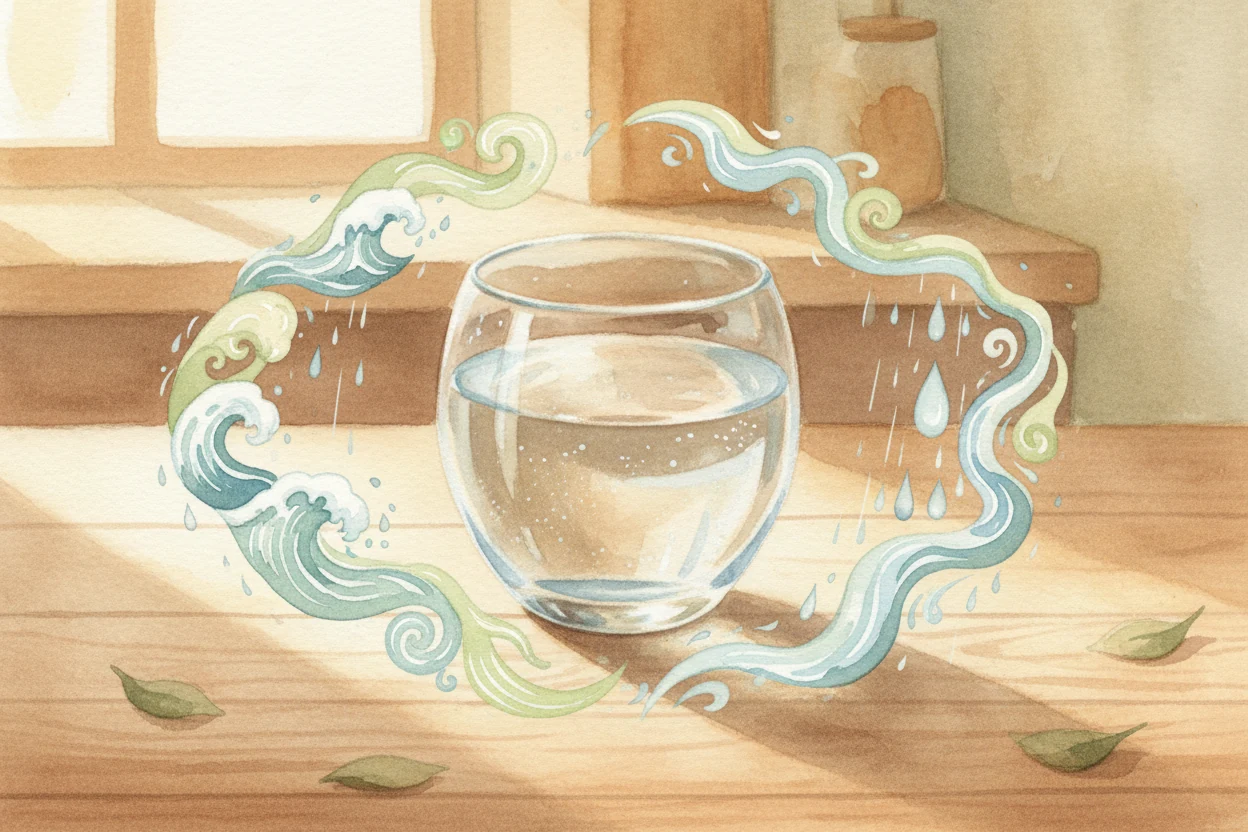
Right now, the same water that dinosaurs drank 200 million years ago might be sitting in your glass. Water doesn't leave Earth โ€” it just takes the longest, wildest road trip imaginable, moving from oceans to clouds to rivers to you and back again, over and over, forever.

The trip starts with the sun heating up oceans, lakes, and rivers. That heat gives water molecules enough energy to brea

The trip starts with the sun heating up oceans, lakes, and rivers. That heat gives water molecules enough energy to break free from the liquid and float up into the air as invisible water vapor โ€” like steam from a hot shower, but happening everywhere, all the time. This escape act is called evaporation.

~~Plants join the party too.~~ Trees and grass **slurp water from the soil** through their roots, use it to make food, t

Plants join the party too. Trees and grass slurp water from the soil through their roots, use it to make food, then release the extra back into the air through tiny holes in their leaves. It's like they're breathing out water vapor. Add this plant breath to evaporation and you get the water cycle's first big move: moisture rising into the sky.

High up where the air is colder, that invisible water vapor **hits a wall**. *Cold air can't hold as much water as warm

High up where the air is colder, that invisible water vapor hits a wall. Cold air can't hold as much water as warm air, so the vapor cools down and condenses โ€” it clusters together into tiny liquid droplets around specks of dust and pollen. Billions of these droplets crowd together, and suddenly you're looking at a cloud.

Inside the cloud, droplets bump into each other and stick together, growing heavier and heavier. When they get too heavy

Inside the cloud, droplets bump into each other and stick together, growing heavier and heavier. When they get too heavy for the air to hold up โ€” gravity wins. Down they fall as rain. If it's cold enough up there, they freeze into snowflakes or hail instead. Either way, water that floated up is now crashing back to Earth.

Where the rain lands decides what happens next. Some soaks into the ground and trickles down through soil and rock, beco

Where the rain lands decides what happens next. Some soaks into the ground and trickles down through soil and rock, becoming groundwater that might sit underground for years โ€” or centuries โ€” until it bubbles up as a spring. Some lands on pavement and rushes straight into storm drains, speeding toward rivers.

The rest gathers into streams that merge into rivers, all flowing downhill, pulled by gravity toward the ocean. A single

The rest gathers into streams that merge into rivers, all flowing downhill, pulled by gravity toward the ocean. A single raindrop that falls in the mountains might travel hundreds of miles, tumbling over waterfalls, swirling through cities, before finally spilling into the salty sea. And then โ€” the cycle starts over.

The water cycle never stops. ~~Right now~~, some water is evaporating off your skin. Some is frozen in Antarctic ice tha

The water cycle never stops. Right now, some water is evaporating off your skin. Some is frozen in Antarctic ice that's been locked away for 800,000 years. Some is inside a carrot you'll eat for lunch. It's all the same water, just visiting different places โ€” the longest, most recycled road trip in history.

How was this book?

A Wonderleaf Book

Water's Wild Ride

โ€” How does the water cycle move water around Earth? โ€”

Wonderleaf Editions
โ€” ex libris โ€”
A Wonderleaf Book

Water's Wild Ride

How does the water cycle move water around Earth?

Wonderleaf Editions ยท MMXXVI
Scene 1
~~Right now~~, the same water that dinosaurs drank **200 million years ago** might be sitting in your glass. Water _does
Water's Wild Ride2
Scene 1

Right now, the same water that dinosaurs drank 200 million years ago might be sitting in your glass. Water doesn't leave Earth โ€” it just takes the longest, wildest road trip imaginable, moving from oceans to clouds to rivers to you and back again, over and over, forever.

3Water's Wild Ride
Scene 2
The trip starts with the sun heating up oceans, lakes, and rivers. That heat gives water molecules enough energy to brea
Water's Wild Ride4
Scene 2

The trip starts with the sun heating up oceans, lakes, and rivers. That heat gives water molecules enough energy to break free from the liquid and float up into the air as invisible water vapor โ€” like steam from a hot shower, but happening everywhere, all the time. This escape act is called evaporation.

5Water's Wild Ride
Scene 3
~~Plants join the party too.~~ Trees and grass **slurp water from the soil** through their roots, use it to make food, t
Water's Wild Ride6
Scene 3

Plants join the party too. Trees and grass slurp water from the soil through their roots, use it to make food, then release the extra back into the air through tiny holes in their leaves. It's like they're breathing out water vapor. Add this plant breath to evaporation and you get the water cycle's first big move: moisture rising into the sky.

7Water's Wild Ride
Scene 4
High up where the air is colder, that invisible water vapor **hits a wall**. *Cold air can't hold as much water as warm
Water's Wild Ride8
Scene 4

High up where the air is colder, that invisible water vapor hits a wall. Cold air can't hold as much water as warm air, so the vapor cools down and condenses โ€” it clusters together into tiny liquid droplets around specks of dust and pollen. Billions of these droplets crowd together, and suddenly you're looking at a cloud.

9Water's Wild Ride
Scene 5
Inside the cloud, droplets bump into each other and stick together, growing heavier and heavier. When they get too heavy
Water's Wild Ride10
Scene 5

Inside the cloud, droplets bump into each other and stick together, growing heavier and heavier. When they get too heavy for the air to hold up โ€” gravity wins. Down they fall as rain. If it's cold enough up there, they freeze into snowflakes or hail instead. Either way, water that floated up is now crashing back to Earth.

11Water's Wild Ride
Scene 6
Where the rain lands decides what happens next. Some soaks into the ground and trickles down through soil and rock, beco
Water's Wild Ride12
Scene 6

Where the rain lands decides what happens next. Some soaks into the ground and trickles down through soil and rock, becoming groundwater that might sit underground for years โ€” or centuries โ€” until it bubbles up as a spring. Some lands on pavement and rushes straight into storm drains, speeding toward rivers.

13Water's Wild Ride
Scene 7
The rest gathers into streams that merge into rivers, all flowing downhill, pulled by gravity toward the ocean. A single
Water's Wild Ride14
Scene 7

The rest gathers into streams that merge into rivers, all flowing downhill, pulled by gravity toward the ocean. A single raindrop that falls in the mountains might travel hundreds of miles, tumbling over waterfalls, swirling through cities, before finally spilling into the salty sea. And then โ€” the cycle starts over.

15Water's Wild Ride
Scene 8
The water cycle never stops. ~~Right now~~, some water is evaporating off your skin. Some is frozen in Antarctic ice tha
Water's Wild Ride16
Scene 8

The water cycle never stops. Right now, some water is evaporating off your skin. Some is frozen in Antarctic ice that's been locked away for 800,000 years. Some is inside a carrot you'll eat for lunch. It's all the same water, just visiting different places โ€” the longest, most recycled road trip in history.

17Water's Wild Ride

~ finis ~

Tiny picture books for big little questions.

โ€” a small constellation of questions โ€”
โœฆWonderleaf
Editions