Velcro's Tiny Army
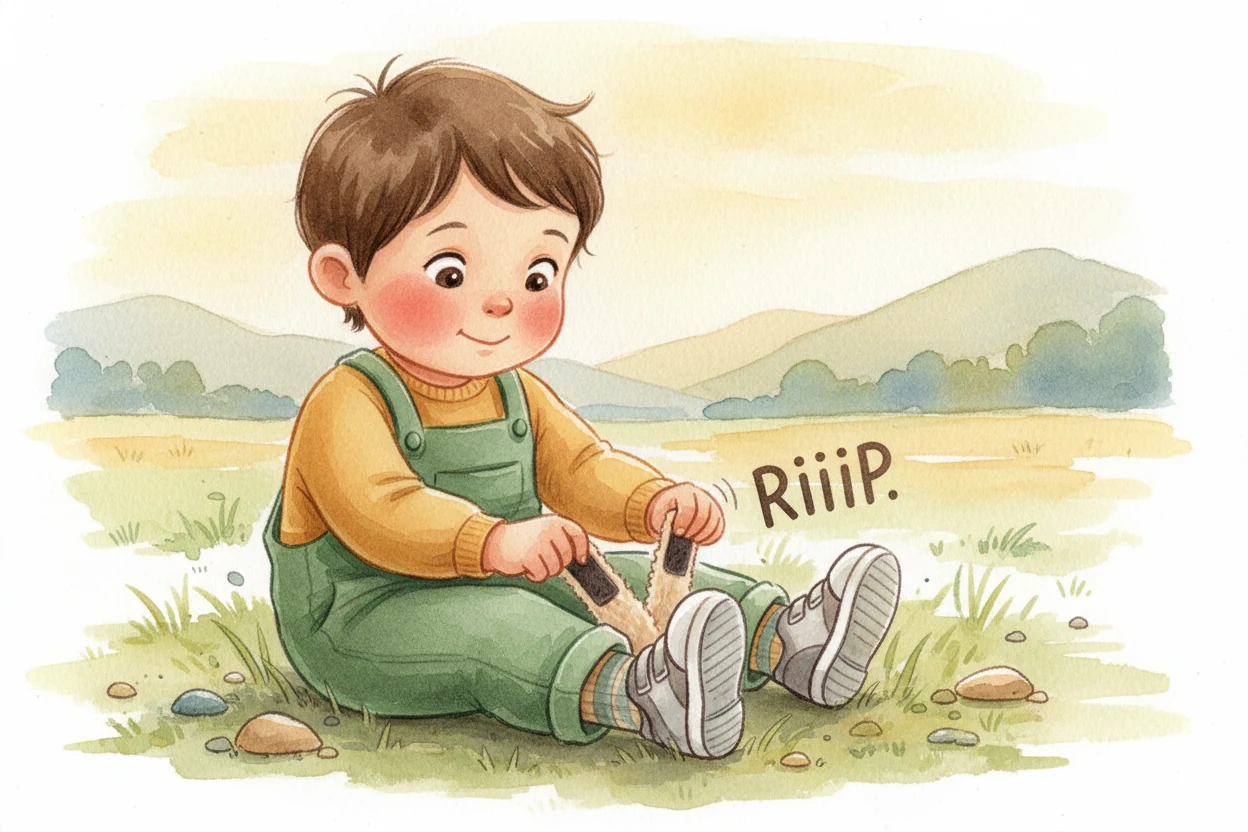
You pull apart your shoe strap โ rrrrrip! โ and there's that satisfying sound. Press it back together โ scrunch! โ and it holds tight again. How does Velcro grab on so perfectly, then let go so easily?
Velcro has two sides that are completely different from each other. One side is covered in thousands of tiny soft loops, like miniature yarn circles. The other side is covered in thousands of tiny stiff hooks, like microscopic fishing hooks. Neither side does anything special on its own.
When you press the two sides together, magic happens โ except it's not magic at all. Each tiny hook snags into a loop and holds on. One hook holding one loop wouldn't be strong, but thousands of hooks holding thousands of loops? That's serious grip.
It's like trying to hold a door shut with one finger โ easy to push open. But a hundred friends all pushing on the door at once? That door's not budging. Velcro's strength is in the numbers.
So why does it unstick so easily when you pull? Because you're not fighting all the hooks at once. When you peel from one edge, the hooks pop free one row at a time โ like unzipping a zipper instead of trying to rip the whole thing apart at once.
That's the ripping sound you hear: thousands of tiny hooks letting go in a wave, pop-pop-pop-pop-pop, faster than you can count. Each pop is quiet, but thousands together make that familiar rrrrrip!
The inventor got the idea from nature. He noticed how burrs โ those prickly seed pods โ stuck to his dog's fur after a walk. Under a microscope, the burrs had tiny hooks, and the dog's fur had loops. He thought: I could make that!
Now Velcro is everywhere โ shoes, backpacks, space suits, blood pressure cuffs. Thousands of hooks, thousands of loops, working together every single time you press them closed. And always ready to rrrrrip open again when you need them.