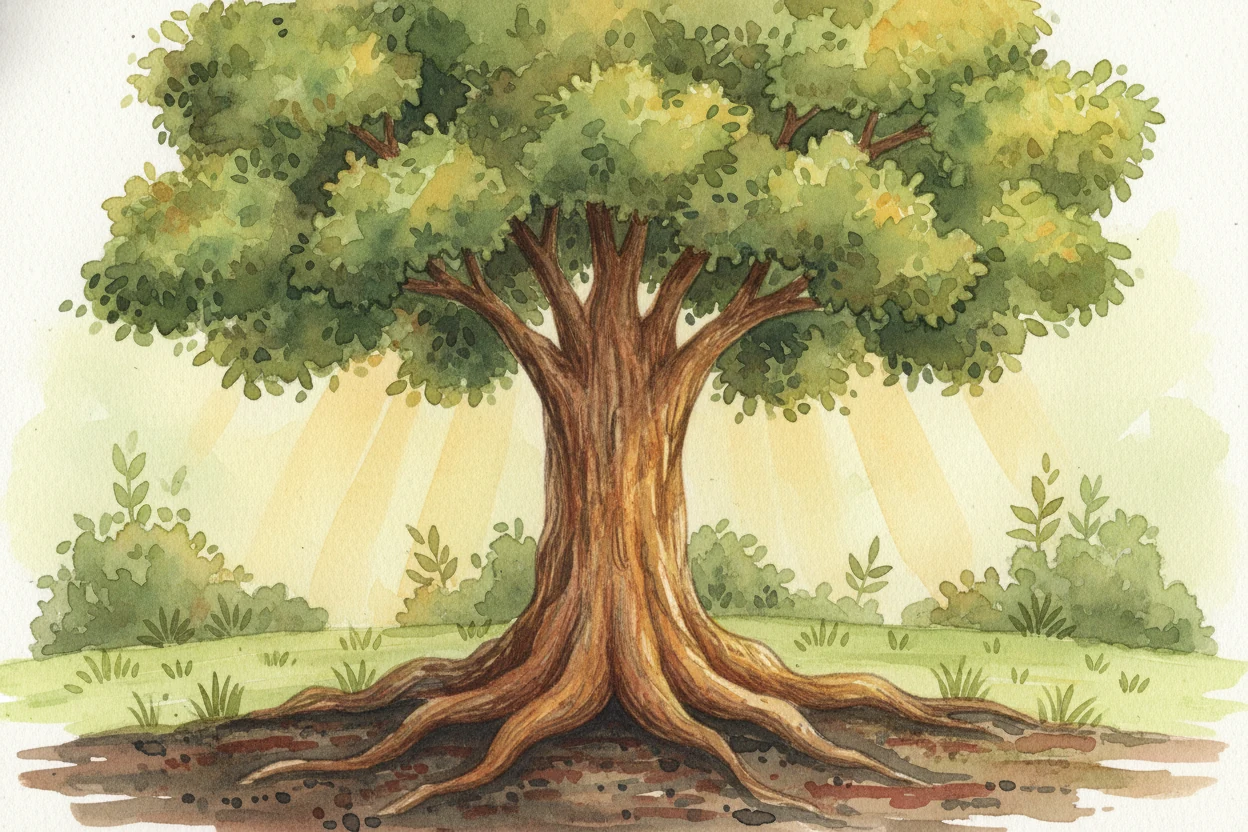
Tree to Sheet
You're holding a piece of paper right now โ or you were a minute ago, or you will be tomorrow. Maybe it's crisp and white. Maybe it's crumpled in your pocket. But here's the wild part: that flat, smooth thing started its life as a tree standing in a forest, swaying in the wind.
Trees are made of millions of tiny fibers called cellulose, all bundled together like a massive pile of uncooked spaghetti strands. Those fibers give the tree its strength โ they're what hold the trunk upright and let branches reach toward the sky. To make paper, we need to get those fibers out and untangle them.
First, the tree gets chopped into logs, then the logs get fed into a machine that strips off the bark and chops the wood into tiny chips โ about the size of your thumb. Imagine a wood chipper, but industrial-strength and loud enough to make your ears ring. Those chips get piled up, ready for the next step.
Now comes the chemistry. The wood chips go into a giant pressure cooker called a digester, where they're cooked with water and chemicals that dissolve the glue holding the fibers together. It's like making a huge vat of wood soup. What's left after hours of cooking is a brown, mushy pulp โ those cellulose fibers, finally free and floating in liquid.
The pulp gets washed to rinse out the chemicals, then bleached if the paper needs to be white. But it's still soupy โ about 99% water, 1% fiber. To turn that into paper, we need to get the water out and convince those millions of fibers to lie down flat and lock together, like a tangled mat of hair drying into a solid sheet.
The pulp gets poured onto a moving screen โ a long conveyor belt made of fine mesh, the length of a football field. As the belt moves, water drains through the mesh and the fibers start settling into a thin, wet mat. Gravity does some of the work. Suction pumps underneath do more. The fibers tangle and overlap, beginning to hold each other in place.
The wet sheet โ still fragile, still about 50% water โ travels through a series of heavy rollers that squeeze it like a giant mangle. Each pair of rollers presses harder than the last, forcing more water out and mashing the fibers closer together. Then the sheet moves through heated rollers, hot as an oven, that evaporate the remaining moisture and lock the fibers into their final flat shape.
What comes out the other end is smooth, dry, strong paper โ wound onto enormous rolls taller than a person. Those rolls get sliced into smaller sheets, packed, and shipped. And somewhere down the line, one of those sheets ends up in your hand, ready to hold your drawing, your note, your shopping list. The tree became fibers. The fibers became paper. And now the paper becomes yours.