Time Finally Yours
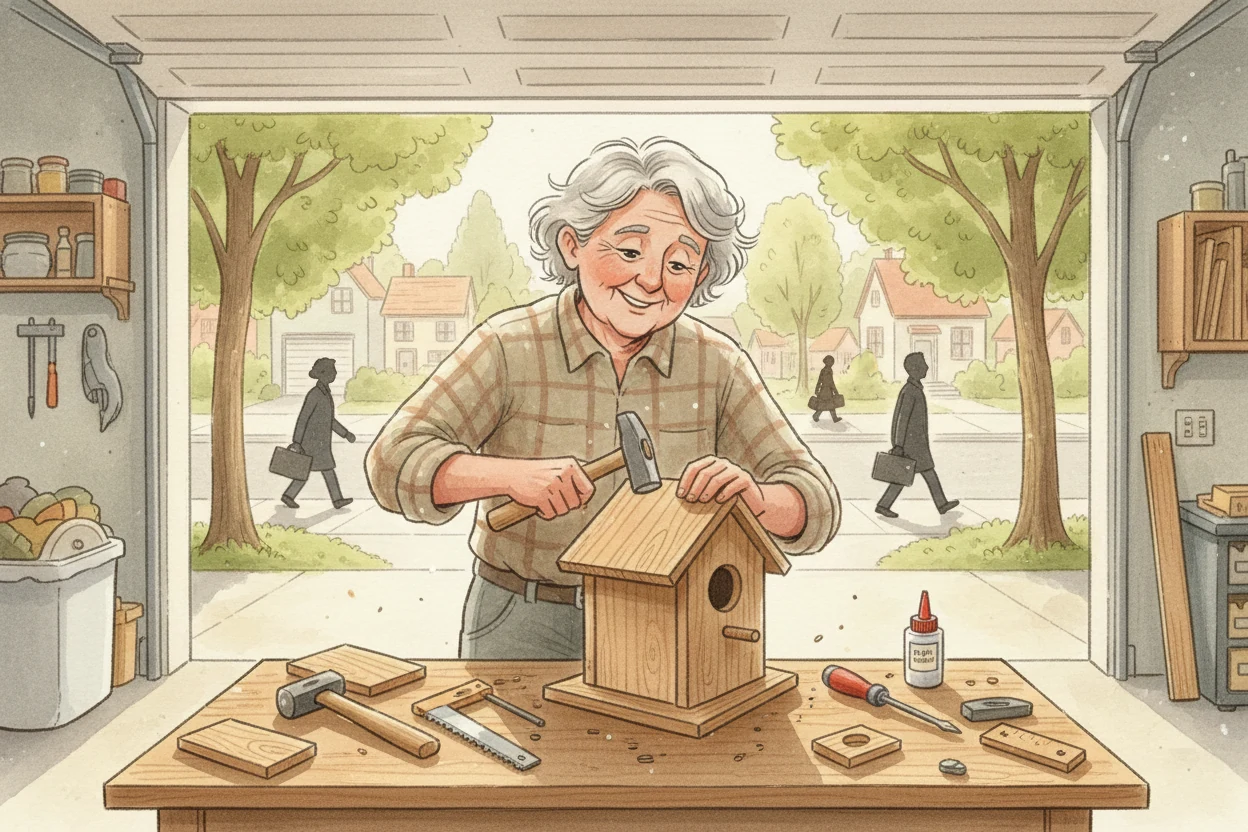
You've heard grown-ups say someone "retired," like your neighbor who used to leave for work every morning but now spends Tuesday afternoons building birdhouses in the garage. What happened? Did they quit? Get fired? Win the lottery?
Retirement means you stop working your regular job—but not because something went wrong. You stop because you've worked long enough, saved enough money, and now you get to choose how to spend your days. Think of work like a really long book you've been reading for thirty or forty years. Retirement is when you finally get to close that book and pick up a different one.
Here's how the money part works. While you're working, you don't spend every dollar you earn. You tuck some away each month into special savings accounts—like a piggy bank that grows over decades. Your workplace might add money too. By the time you're sixty-five or seventy, that piggy bank has become enormous. Big enough to pay for groceries, rent, doctor visits, and birdhouse wood for the next twenty or thirty years—even though you're not earning a paycheck anymore.
Most people retire somewhere between sixty and seventy, but there's no magic rule. Some people love their work so much they keep going into their eighties. Others save aggressively and retire at fifty. A few win the lottery or sell a company and retire at thirty—though that's about as common as finding a dinosaur bone in your backyard.
What do retired people actually do all day? Anything they want—and that's the whole point. Your grandfather might spend his mornings fishing, your neighbor might volunteer at the library, your piano teacher might finally have time to learn Italian. Some people get bored and pick up part-time jobs just for fun. Retirement isn't about doing nothing. It's about doing what you choose, on your schedule, without a boss telling you when to show up.
There's also something called Social Security—a government program where everyone pays in a little from each paycheck while they work, and then when they retire, the government pays them back a monthly check. It's like a national piggy bank everyone shares. It doesn't cover everything, which is why your own savings matter, but it's a safety net that catches most people.
Not everyone gets to retire comfortably, though, and that's one of the hard truths. Some people never earned enough to save much. Some had emergencies that drained their accounts—a medical crisis, a house fire, helping a family member in trouble. They might need to keep working longer, or live on very little, or rely on help from family. That's why many people feel strongly that society should do more to help everyone retire with dignity.
So when someone retires, they're not disappearing or giving up. They're stepping into a new chapter where time is finally theirs. They've spent decades building, earning, showing up, solving problems—and now they get to sleep in, chase hobbies, spoil grandkids, or just sit on the porch and watch the clouds. They've earned it.