Pebble's Bright Goodbye
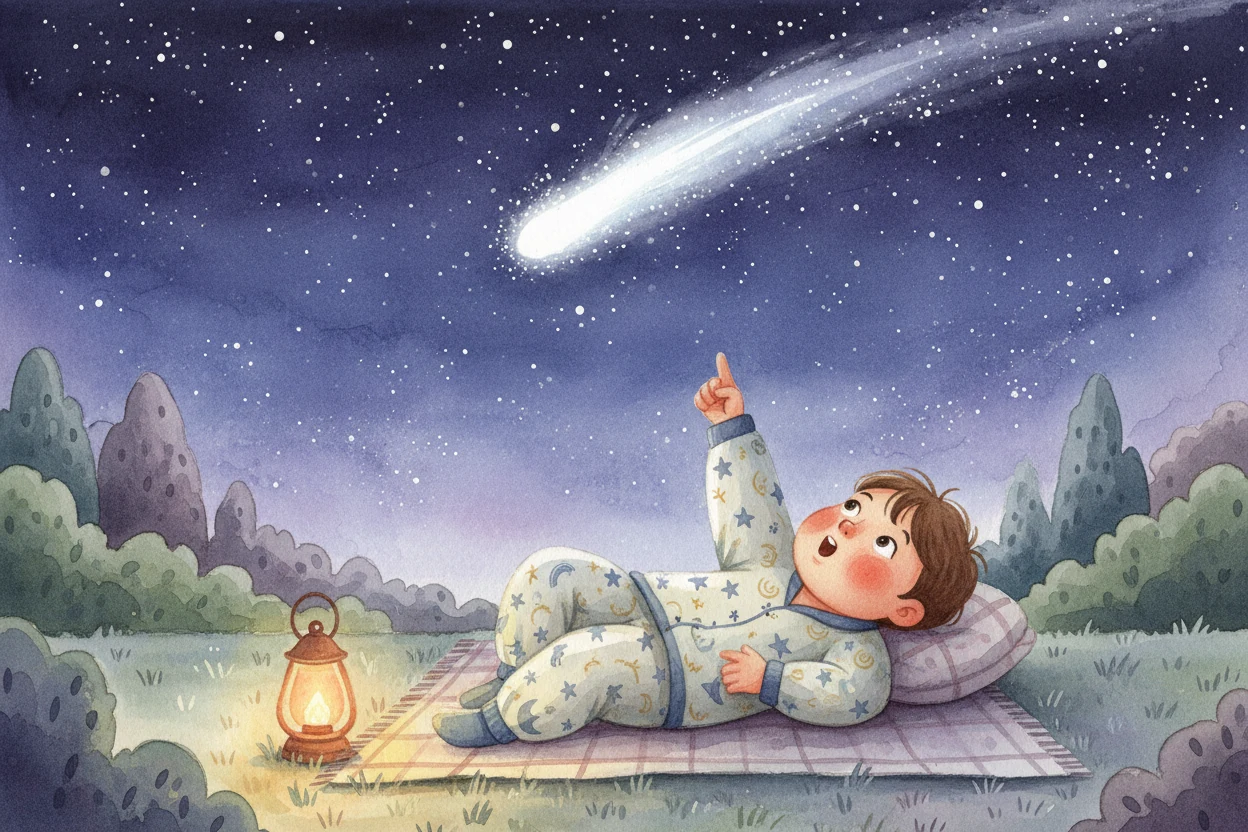
You look up at night, and suddenly โ a streak of light zips across the dark! You made a wish, didn't you? Everyone calls them shooting stars, but here's the secret: they're not stars at all.
A shooting star is actually a tiny piece of space rock โ smaller than a pebble, sometimes just a grain of sand โ racing through space at ridiculous speed. We're talking 25,000 miles per hour. That's New York to Los Angeles in about seven minutes.
These little speedsters are called meteoroids, and space is full of them โ leftover crumbs from when the solar system formed, or bits that flaked off passing comets. They zip around the sun in their own orbits, just minding their business.
Then one day, Earth gets in the way. Our planet is barreling through space too, and when a meteoroid slams into Earth's atmosphere โ the thick blanket of air surrounding us โ everything changes in an instant.
The air molecules are packed together down here, and the meteoroid is moving so fast that it can't shove them aside smoothly. Instead, it crushes the air in front of it like a bike tire ramming into a wall. That compression makes the air heat up โ really, really hot. Thousands of degrees hot.
The heat is so intense that the little rock starts to vaporize โ it literally turns into glowing gas. The air around it glows too, superheated by the collision. That streak of light you see isn't the rock itself anymore. It's the trail of blazing-hot gas the rock leaves behind as it burns up.
Most meteoroids burn up completely before they ever reach the ground โ they're just too small. The whole light show lasts only a second or two, and then it's over. The "star" has shot across your sky and vanished into nothing but warm air and memory.
So next time you see one, make your wish โ but know you're really watching a pebble's final, brilliant moment. It traveled millions of miles through the cold dark, only to blaze across your night like a tiny firework, just for you.