Invisible Brick Party

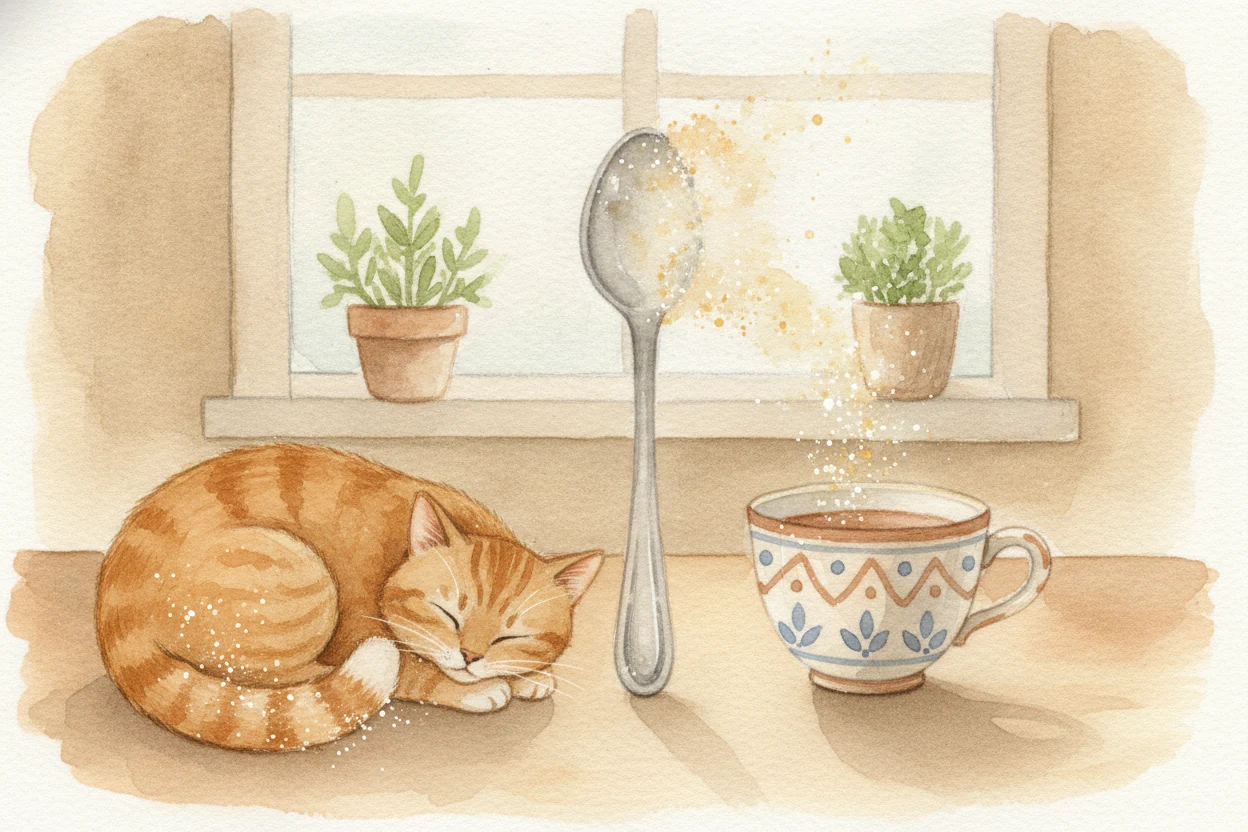
Look at anything around you โ a spoon, a cat, your own thumb. They all feel like solid, finished things. But here's the secret: everything is built out of pieces too small to see. Zoom in far enough, and the whole world turns out to be made of tiny LEGO bricks of stuff.

Take that spoon and imagine cutting it in half. Then half again. And again, and again, thousands of times. Eventually you'd reach a piece so small you couldn't cut it anymore without it stopping being that stuff. That tiniest possible piece is called an atom. Everything you can touch is made of atoms.

Atoms are unbelievably small. A single drop of water holds more atoms than there are stars you could ever count. If an atom were the size of a marble, you'd be a creature taller than the whole planet. They are the quiet building blocks hiding inside every single thing.

But atoms aren't the end of the story. Each atom is itself made of smaller pieces. In the middle sits a tight little clump called the nucleus โ think of it as the atom's heavy heart. And zooming around that heart is a buzzing blur of even tinier specks called electrons.

That heavy heart, the nucleus, is built from two kinds of pieces: protons and neutrons. They huddle together in the middle, packed tight. The number of protons is like an atom's name tag โ it decides whether the atom is gold, oxygen, or the carbon in your pencil.

Here's the wild part: an atom is almost entirely empty space. The nucleus is a tiny speck, and the electrons zip around far, far away from it. If the nucleus were a marble in the center of a football stadium, the electrons would be flickering near the back rows. So when you knock on a table, you're mostly knocking on emptiness held together by invisible forces.

Now, are protons and neutrons the very smallest pieces? Almost โ but not quite. Inside them live even tinier specks called quarks. Quarks are so small and so tightly stuck together that you never find one wandering on its own. As far as anyone can tell, electrons and quarks are the bottom of the box โ the smallest bits we know.

So how do you get from invisible quarks to a whole cat? You stack. Quarks make protons and neutrons. Those build a nucleus. Add electrons and you've got an atom. Stick atoms together and you get water, metal, fur, and bone. Tiny pieces, snapped together step by step, until โ surprise โ they become you.

So the next time you hold a spoon, remember what you're really holding: a swarm of atoms, each one mostly empty space, each one humming with electrons and quarks too small to ever see. The whole solid world is a quiet, busy dance of the tiniest things imaginable. Pretty good trick, for a bunch of invisible bricks.