cover

River That Wouldn't Quit

What makes the Grand Canyon so big?
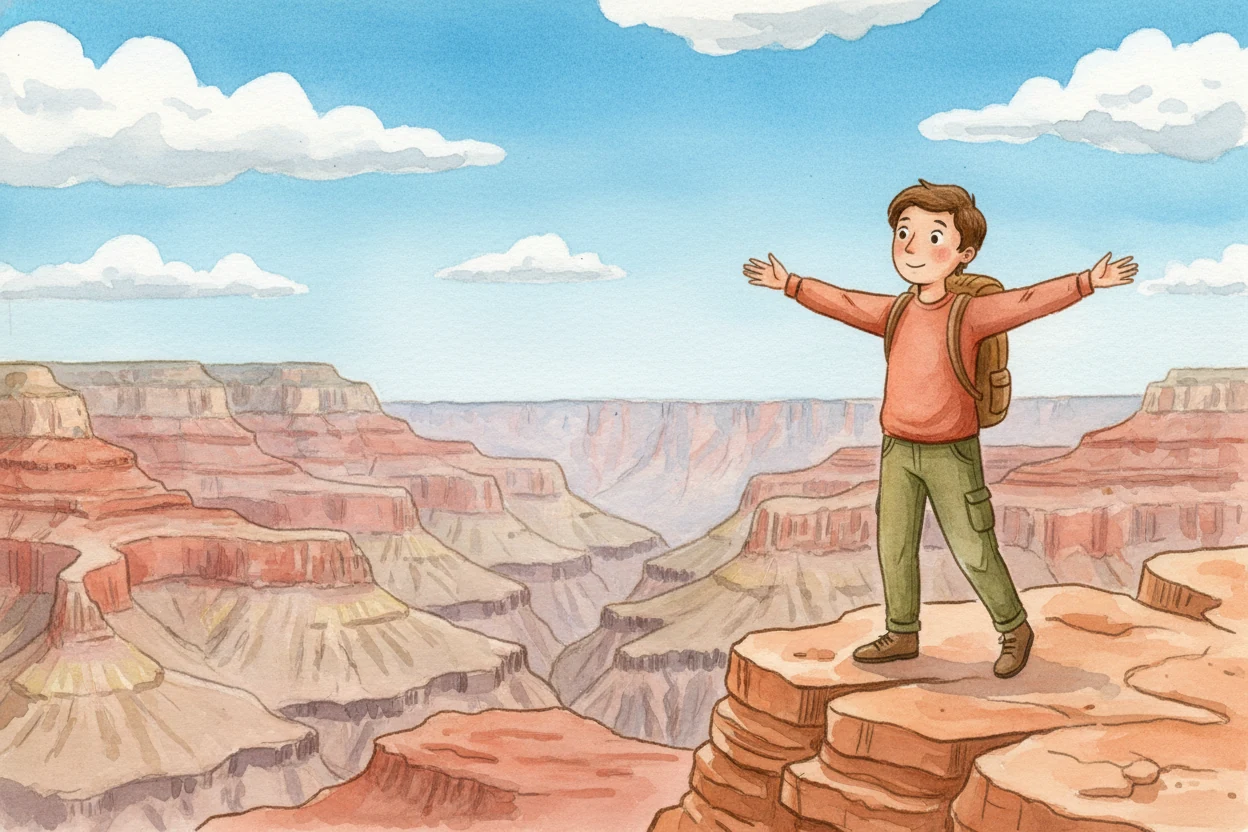
Stand at the rim of the ++Grand Canyon++ and you'll see a hole in the ground so enormous it looks like **the planet crac

Stand at the rim of the Grand Canyon and you'll see a hole in the ground so enormous it looks like the planet cracked open. It's a mile deep, ten miles wide in places, and stretches for 277 miles โ€” longer than the distance from New York City to Washington D.C. What on Earth carved something this colossal?

The simple answer is water. Specifically, the ++Colorado River++, which still flows along the canyon floor today. ~~But

The simple answer is water. Specifically, the Colorado River, which still flows along the canyon floor today. But here's the twist: rivers don't usually dig DOWN. They flow across the land, carving side to side, making valleys shaped like gentle bowls. To understand why this river carved a mile-deep gash instead, you need to know what happened beneath its feet.

About **70 million years ago**, the entire region where the canyon sits now started rising up like a gigantic platform b

About 70 million years ago, the entire region where the canyon sits now started rising up like a gigantic platform being lifted from below. Geologists call this the Colorado Plateau โ€” a chunk of the Earth's crust the size of multiple states that got pushed upward thousands of feet. The river was already there, flowing peacefully across flat land. As the ground rose beneath it, the river didn't stop and find a new path. It just kept flowing in its old channel, cutting down through the rising rock like a saw blade.

This is the key to the Grand Canyon's depth: it's not that the river dug an unusually deep hole. It's that **the land ro

This is the key to the Grand Canyon's depth: it's not that the river dug an unusually deep hole. It's that the land rose UP while the river held its position, cutting down at the same rate the plateau climbed. It took about 6 million years of this relentless slicing. Imagine holding a cheese wire still while someone slowly raises a block of cheese into it โ€” the wire doesn't move, but it cuts deeper and deeper as the cheese rises.

But water alone doesn't explain the canyon's immense WIDTH โ€” that **ten-mile gap** between the rims. The river itself is

But water alone doesn't explain the canyon's immense WIDTH โ€” that ten-mile gap between the rims. The river itself is only about 300 feet wide down at the bottom. The canyon got wide because Arizona is a desert, and deserts are demolition zones. Rain is rare, but when it comes, it's violent. Without much plant life to hold the soil in place, every downpour sends rocks, gravel, and dirt tumbling from the canyon walls into the river below, which carries the rubble away. Over millions of years, the walls crumbled back and back, widening the gash.

~~Freezing helps, too.~~ Water seeps into tiny cracks in the rock during the day, then freezes at night. Ice expands wit

Freezing helps, too. Water seeps into tiny cracks in the rock during the day, then freezes at night. Ice expands with tremendous force โ€” enough to pop apart boulders from the inside. Each winter night is like a slow-motion explosion happening in thousands of cracks at once, prying the canyon walls apart piece by piece. The broken rocks tumble down, the river sweeps them away, and the canyon grows a little wider.

~~Here's the bonus marvel:~~ the rocks at the bottom of the canyon are **almost 2 billion years old** โ€” **nearly half th

Here's the bonus marvel: the rocks at the bottom of the canyon are almost 2 billion years old โ€” nearly half the age of the Earth itself. The river didn't just carve through dirt; it sliced down through a history book written in stone. The layers are stacked like pages, each one a different chapter of ancient oceans, deserts, and mountains that existed long before the first dinosaurs. Cutting down through all that stone took the perfect combination: a river that wouldn't quit, a plateau that wouldn't stop rising, and millions of years of desert weather tearing the walls apart.

So the Grand Canyon isn't big because of one thing โ€” it's big because of **EVERYTHING working together**. A river with _

So the Grand Canyon isn't big because of one thing โ€” it's big because of EVERYTHING working together. A river with relentless patience. A rising plateau that turned a gentle stream into a saw. Desert storms and ice that widened the cut mile by mile. And deep time, vast beyond imagining, letting it all unfold. Stand at the rim again and you're not just looking at a hole. You're looking at what happens when small forces refuse to stop for millions of years.

How was this book?

A Wonderleaf Book

River That Wouldn't Quit

โ€” What makes the Grand Canyon so big? โ€”

Wonderleaf Editions
โ€” ex libris โ€”
A Wonderleaf Book

River That Wouldn't Quit

What makes the Grand Canyon so big?

Wonderleaf Editions ยท MMXXVI
Scene 1
Stand at the rim of the ++Grand Canyon++ and you'll see a hole in the ground so enormous it looks like **the planet crac
River That Wouldn't Quit2
Scene 1

Stand at the rim of the Grand Canyon and you'll see a hole in the ground so enormous it looks like the planet cracked open. It's a mile deep, ten miles wide in places, and stretches for 277 miles โ€” longer than the distance from New York City to Washington D.C. What on Earth carved something this colossal?

3River That Wouldn't Quit
Scene 2
The simple answer is water. Specifically, the ++Colorado River++, which still flows along the canyon floor today. ~~But
River That Wouldn't Quit4
Scene 2

The simple answer is water. Specifically, the Colorado River, which still flows along the canyon floor today. But here's the twist: rivers don't usually dig DOWN. They flow across the land, carving side to side, making valleys shaped like gentle bowls. To understand why this river carved a mile-deep gash instead, you need to know what happened beneath its feet.

5River That Wouldn't Quit
Scene 3
About **70 million years ago**, the entire region where the canyon sits now started rising up like a gigantic platform b
River That Wouldn't Quit6
Scene 3

About 70 million years ago, the entire region where the canyon sits now started rising up like a gigantic platform being lifted from below. Geologists call this the Colorado Plateau โ€” a chunk of the Earth's crust the size of multiple states that got pushed upward thousands of feet. The river was already there, flowing peacefully across flat land. As the ground rose beneath it, the river didn't stop and find a new path. It just kept flowing in its old channel, cutting down through the rising rock like a saw blade.

7River That Wouldn't Quit
Scene 4
This is the key to the Grand Canyon's depth: it's not that the river dug an unusually deep hole. It's that **the land ro
River That Wouldn't Quit8
Scene 4

This is the key to the Grand Canyon's depth: it's not that the river dug an unusually deep hole. It's that the land rose UP while the river held its position, cutting down at the same rate the plateau climbed. It took about 6 million years of this relentless slicing. Imagine holding a cheese wire still while someone slowly raises a block of cheese into it โ€” the wire doesn't move, but it cuts deeper and deeper as the cheese rises.

9River That Wouldn't Quit
Scene 5
But water alone doesn't explain the canyon's immense WIDTH โ€” that **ten-mile gap** between the rims. The river itself is
River That Wouldn't Quit10
Scene 5

But water alone doesn't explain the canyon's immense WIDTH โ€” that ten-mile gap between the rims. The river itself is only about 300 feet wide down at the bottom. The canyon got wide because Arizona is a desert, and deserts are demolition zones. Rain is rare, but when it comes, it's violent. Without much plant life to hold the soil in place, every downpour sends rocks, gravel, and dirt tumbling from the canyon walls into the river below, which carries the rubble away. Over millions of years, the walls crumbled back and back, widening the gash.

11River That Wouldn't Quit
Scene 6
~~Freezing helps, too.~~ Water seeps into tiny cracks in the rock during the day, then freezes at night. Ice expands wit
River That Wouldn't Quit12
Scene 6

Freezing helps, too. Water seeps into tiny cracks in the rock during the day, then freezes at night. Ice expands with tremendous force โ€” enough to pop apart boulders from the inside. Each winter night is like a slow-motion explosion happening in thousands of cracks at once, prying the canyon walls apart piece by piece. The broken rocks tumble down, the river sweeps them away, and the canyon grows a little wider.

13River That Wouldn't Quit
Scene 7
~~Here's the bonus marvel:~~ the rocks at the bottom of the canyon are **almost 2 billion years old** โ€” **nearly half th
River That Wouldn't Quit14
Scene 7

Here's the bonus marvel: the rocks at the bottom of the canyon are almost 2 billion years old โ€” nearly half the age of the Earth itself. The river didn't just carve through dirt; it sliced down through a history book written in stone. The layers are stacked like pages, each one a different chapter of ancient oceans, deserts, and mountains that existed long before the first dinosaurs. Cutting down through all that stone took the perfect combination: a river that wouldn't quit, a plateau that wouldn't stop rising, and millions of years of desert weather tearing the walls apart.

15River That Wouldn't Quit
Scene 8
So the Grand Canyon isn't big because of one thing โ€” it's big because of **EVERYTHING working together**. A river with _
River That Wouldn't Quit16
Scene 8

So the Grand Canyon isn't big because of one thing โ€” it's big because of EVERYTHING working together. A river with relentless patience. A rising plateau that turned a gentle stream into a saw. Desert storms and ice that widened the cut mile by mile. And deep time, vast beyond imagining, letting it all unfold. Stand at the rim again and you're not just looking at a hole. You're looking at what happens when small forces refuse to stop for millions of years.

17River That Wouldn't Quit

~ finis ~

Tiny picture books for big little questions.

โ€” a small constellation of questions โ€”
โœฆWonderleaf
Editions