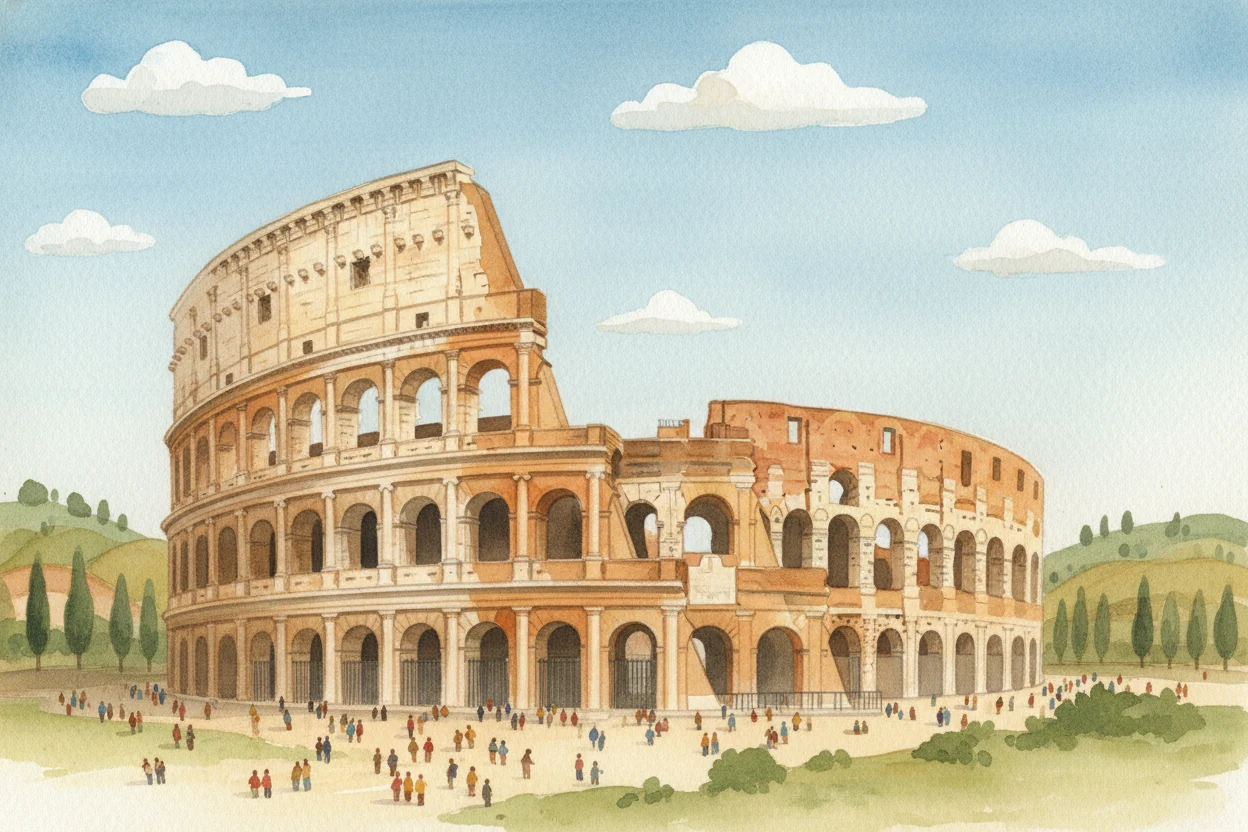
Rome's Wild Arena
In the heart of ancient Rome, there was a building so huge it could swallow fifty thousand screaming people โ and it did, almost every day. The Colosseum wasn't a temple or a palace. It was Rome's favorite stadium, a place where the wildest shows on Earth unfolded under the open sky.
The main event? Gladiator fights โ trained fighters battling each other with swords, nets, and tridents while the audience roared. Some gladiators were prisoners or slaves, but others were celebrities, signing autographs and earning fortunes. Winning meant glory. Losing usually meant death, though a brave fighter might get a thumbs-up from the emperor and live to fight another day.
But gladiators were just the opening act. The Colosseum also staged wild animal hunts โ lions, bears, elephants, even ostriches shipped from across the empire. Hunters called venatores would chase them through fake forests built right on the arena floor. One morning might feature a hundred animals. By noon, the sand would be soaked red.
Between fights, stagehands worked hidden tunnels beneath the floor โ a whole network of chambers, ramps, and elevators. They'd crank wooden lifts to hoist a caged tiger up through a trapdoor, making it look like the beast appeared by magic. The audience had no idea eighty men were sweating underground to pull off the trick.
Sometimes the Colosseum became a lake. Engineers would flood the arena floor with water from Roman aqueducts, then float in actual warships for mock naval battles called naumachiae. Prisoners dressed as sailors would fight and sink each other while the crowd ate snacks and placed bets. Draining it afterward took all night.
The shows were free โ paid for by emperors and senators who wanted the public to love them. If you kept the people entertained, they wouldn't revolt. "Bread and circuses," the saying went. Fill their bellies, fill their eyes, and they'll cheer your name. It worked for four hundred years.
The Colosseum wasn't just brutal โ it was brilliant engineering. A massive canvas awning called the velarium could be pulled across the top by sailors using ropes and pulleys, shading the crowd from the summer sun. Beneath the seats, a network of fountains sprayed scented water to cool the air and cover the smell of blood. Comfort mattered, even at a death match.
The games finally ended around 435 CE, as Rome fell apart and the empire ran out of money for spectacles. The Colosseum stood empty, then became a fortress, a church, even a quarry where people hauled away stones to build new palaces. But the old arena never quite disappeared. It still stands in the center of Rome today, a broken crown that once held fifty thousand people howling for blood, magic, and the greatest show on Earth.