Flush Journey
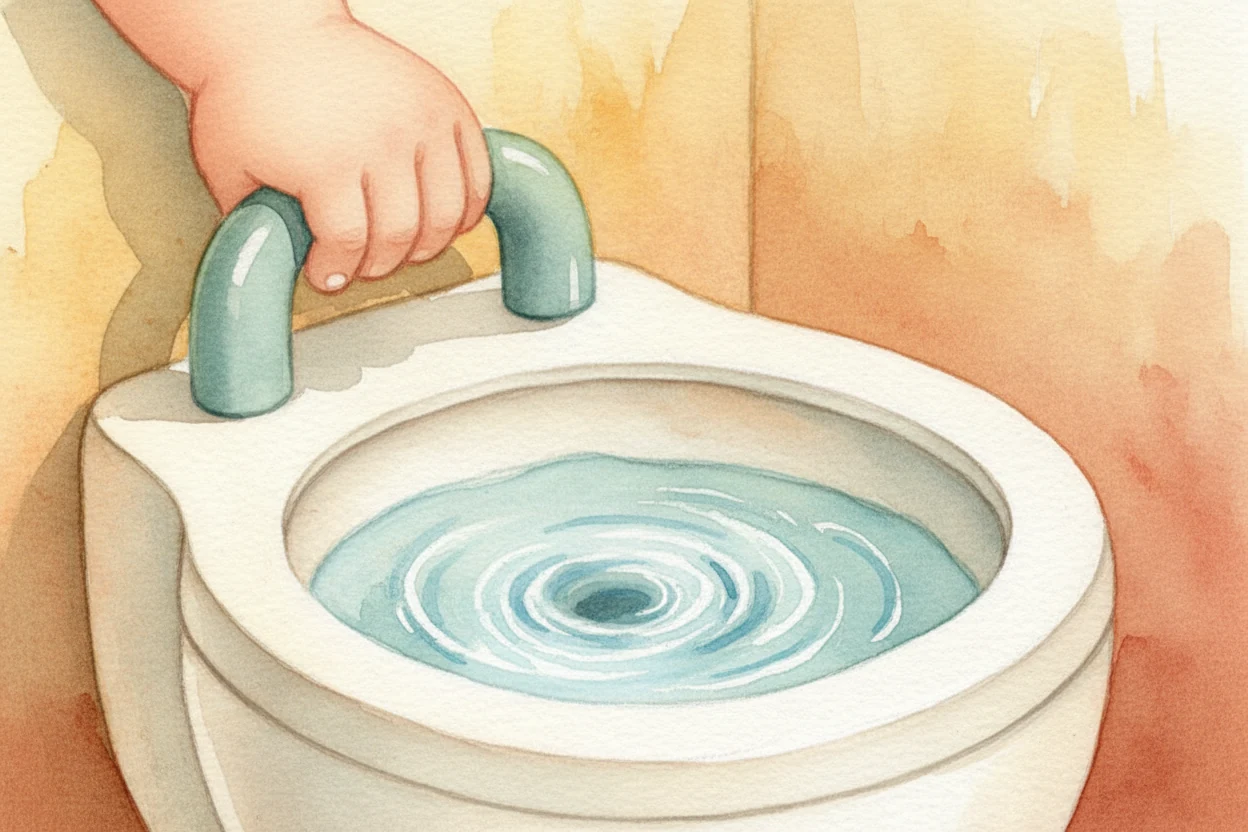
You press the handle, water swirls, and everything vanishes down that hole. Gone! But here's the thing: it doesn't just disappear. That water โ and everything riding along with it โ is starting a wild journey through pipes, machines, and clever science. Let's follow it.
First stop: your home's drain pipes. Gravity pulls the water downward through a curved pipe called a trap โ it's shaped like a U. That U-bend is genius: it holds a puddle of clean water that blocks sewer gases from sneaking back up into your bathroom. The waste keeps flowing down, but those stinky fumes stay trapped below.
The water rushes through your house's pipes, joining streams from sinks and showers, then shoots into an underground sewer pipe beneath the street. These pipes slope slightly downhill โ just enough that gravity keeps everything moving. In some neighborhoods, if the land is too flat, pumps give the water a boost. Either way, it's heading toward the treatment plant.
At the wastewater treatment plant, the water gets its first cleanup. It flows into big settling tanks where heavy solids sink to the bottom like sand settling in a jar. Workers scrape that sludge away. The clearer water on top moves forward. What sank? Anything dense enough to drop under its own weight.
Next, the water meets billions of tiny helpers: bacteria. These microorganisms are the plant's secret weapon. They eat the dissolved waste โ leftovers the settling tank couldn't catch โ breaking it down into harmless carbon dioxide and water. Think of them as microscopic garbage disposals, working 24/7. The treatment plant keeps them well-fed and happy because without them, the job doesn't get done.
After the bacteria feast, the water flows into another settling tank. The bacteria clump together and sink. What remains is water so clean you can see through it โ clear, odorless, and almost drinkable. Almost. One more step: the plant adds a tiny bit of chlorine or shines ultraviolet light through the water to zap any lingering germs. Now it's safe.
The treated water leaves the plant through a pipe that leads to a river, lake, or ocean. It rejoins the natural water cycle โ the same cycle that brought it to your house in the first place. Rain will fall, rivers will flow, treatment plants will purify it again, and it'll come back through your tap. That gulp of water you drank this morning? It's been around for billions of years, cycling endlessly.
So when you flush, you're not making water vanish โ you're sending it on a trip. Down through traps and pipes, into tanks where gravity and bacteria do the heavy lifting, then back out into the world, clean and ready to cycle again. Next time you press that handle, you'll know: you just launched a little piece of Earth's water on another lap around the planet.