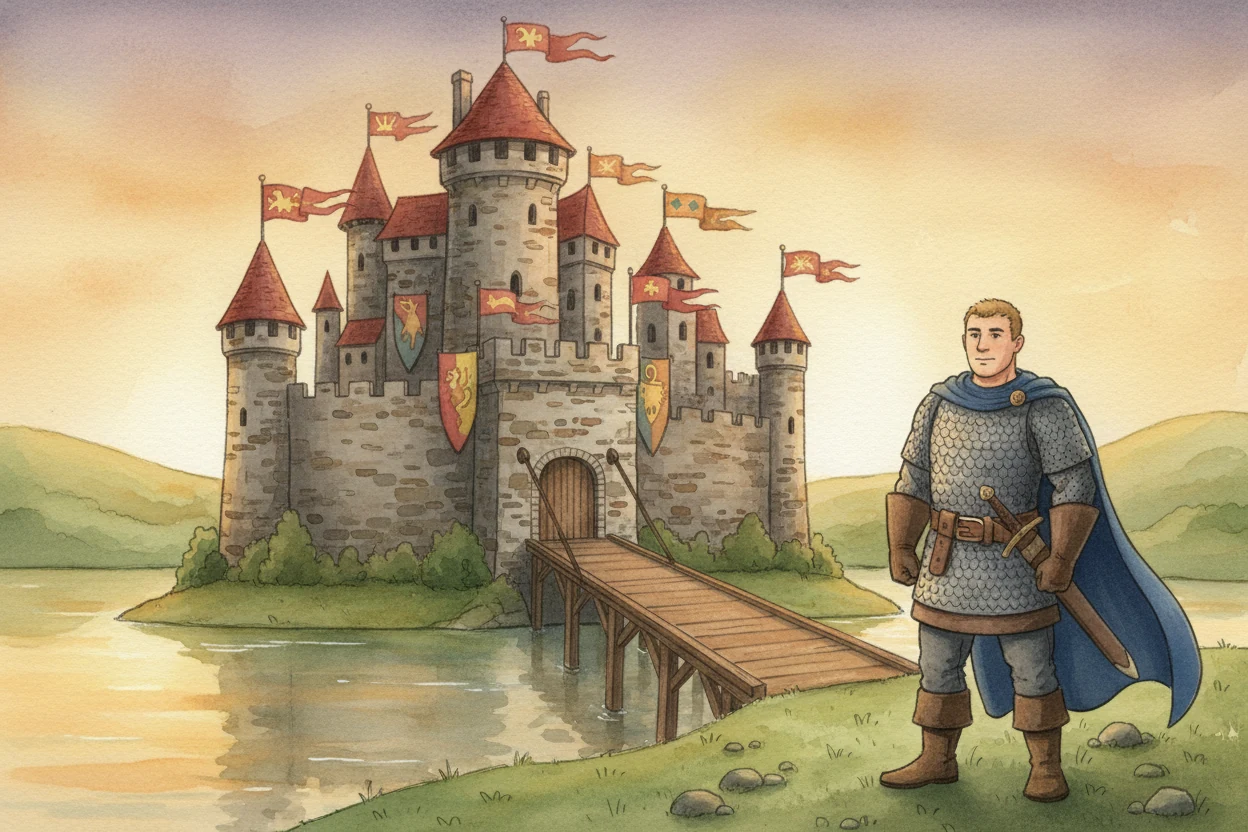
Castle Life
When you picture a castle, you probably see a knight in shining armor, a princess in a tall tower, maybe a dragon guarding the gate. But castles weren't built for fairy tales โ they were real fortresses where real people lived, worked, fought, and ruled for hundreds of years.
The lord owned the castle. He was a powerful noble โ a duke, a count, or a baron โ who controlled the land for miles around. The castle was his headquarters, his courthouse, his army base, and his home, all rolled into one. If you wanted justice, protection, or to pay your taxes, you came to him.
The lord's family lived with him โ his wife, the lady of the castle, who ran the household like a general runs an army. She managed the servants, organized feasts, kept the accounts, oversaw the kitchens and storerooms, and made sure the whole fortress didn't fall apart while her husband was off at war. Without her, the castle would have been chaos.
Knights lived in the castle too, sworn to protect the lord in battle. They trained in the courtyard every day โ sword fighting, jousting, wrestling on horseback โ and when war came, they rode out in full armor. Between battles, they ate at the lord's table, told stories, and argued about honor like athletes argue about sports.
Dozens of servants kept the castle running: cooks who roasted whole pigs over fire pits, maids who hauled water up spiral stairs, blacksmiths who hammered out horseshoes and arrowheads, stable boys who mucked out the horses, and guards who watched from the towers all night. Most of them slept on straw mats in side rooms or above the kitchens, wherever there was space.
Guests came and went constantly โ traveling merchants, messengers from other lords, priests, musicians, and sometimes the king himself. The great hall would fill with long tables, torches blazing, dogs begging for scraps, and everyone eating with their hands while a bard played the lute. Castles were loud, crowded, and never truly private.
During a siege, everyone crammed inside โ farmers from the surrounding villages, their families, their animals. The gates slammed shut, the drawbridge went up, and the castle became a refuge. Archers lined the walls, boiling water and stones were hauled to the battlements, and everyone waited, hoping the enemy would give up before the food ran out.
So who lived in castles? Lords and ladies, knights and squires, cooks and blacksmiths, servants and guards, guests and refugees โ anyone the castle needed to survive. A castle wasn't a quiet museum. It was a fortress, a factory, a town hall, and a home, all wrapped in stone walls thick enough to stop an army.