Sky's Color Filter
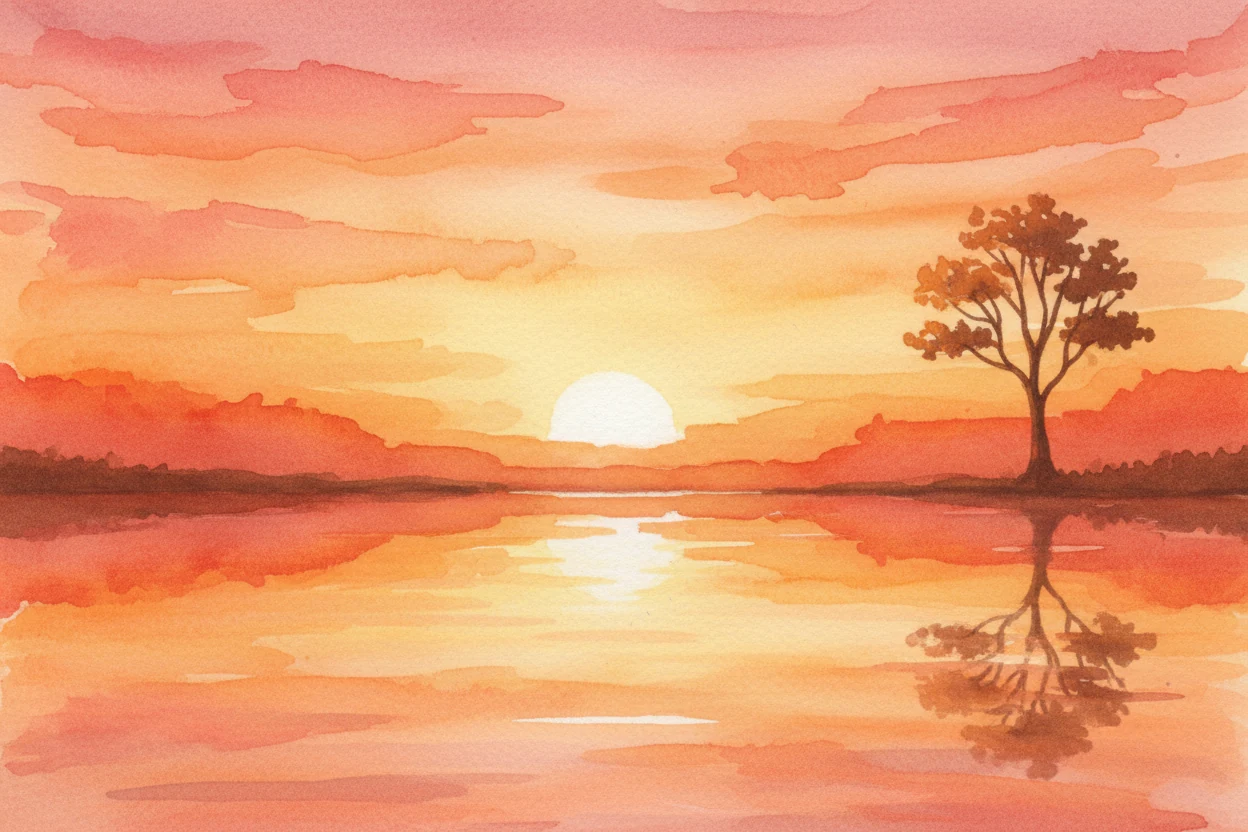
You've seen it a thousand times: the sun drops toward the horizon, and suddenly the whole sky is on fire. Oranges, pinks, reds โ colors that weren't there at noon. What changed? The sun is the same star it was three hours ago. So why does it paint the sky like this at the end of the day?
The answer is hiding in something you can't see: air. Miles and miles of it, stacked up between you and the sun. Air looks empty, but it's actually packed with tiny molecules โ nitrogen, oxygen, little bits of dust. At noon, sunlight zips straight down through a thin layer of this stuff. At sunset, the light has to travel sideways through much more air to reach your eyes, like a swimmer crossing a pool the long way instead of diving straight to the bottom.
Now here's the trick: sunlight isn't one color. It's all the colors mixed together โ red, orange, yellow, green, blue, violet. When that bundle of colors hits a molecule of air, something strange happens. The molecule scatters the light, bouncing it in random directions like a pinball. But it doesn't scatter all colors equally. Blue light has short, tight waves that get knocked around easily. Red light has long, lazy waves that sail right past most molecules without flinching.
At noon, when the sun is overhead, its light only travels through a thin slice of atmosphere. The blue light scatters out in all directions, filling the sky with blue. The red light? Most of it keeps going straight down to you. You see the sun as white-yellow because the red, orange, and yellow are still there, barely touched. The blue is just stolen away to make the rest of the sky blue.
But at sunset, the light has to travel much farther โ through fifty times more air, sometimes a hundred times more, depending on how low the sun sits. Now the blue light doesn't stand a chance. It gets scattered and rescattered so many times it's gone, knocked sideways miles before it reaches you. The green and yellow? Scattered away too. What's left is the light that's stubborn enough to survive the long journey: red, orange, and sometimes pink.
So the red sunset isn't the sun changing color โ it's the air filtering out everything else. You're seeing the only colors tough enough to make it through the gauntlet. It's like shining a flashlight through a jar of milk: the milk scatters the blue, and the light that comes out the other side looks warm and orange. The thicker the milk, the redder the glow. At sunset, the atmosphere is your jar of milk, fifty miles thick.
Some sunsets are more dramatic than others. After a volcanic eruption, tiny ash particles and sulfur droplets get flung high into the atmosphere, and they scatter even more light. The 1991 eruption of Mount Pinatubo in the Philippines made sunsets around the world glow crimson and purple for months. Dust storms, wildfires, pollution โ they all add particles that scatter light, deepening the reds and stretching the color show higher into the sky.
And here's a bonus: the same physics works at sunrise, but most of us are still asleep. The morning sun is traveling through just as much air as the evening sun, scattering away the blues and greens, painting the eastern sky red. The light doesn't know what time it is. It just knows it has a long path to travel, and only the reds will survive.