The Rock That Changed Everything
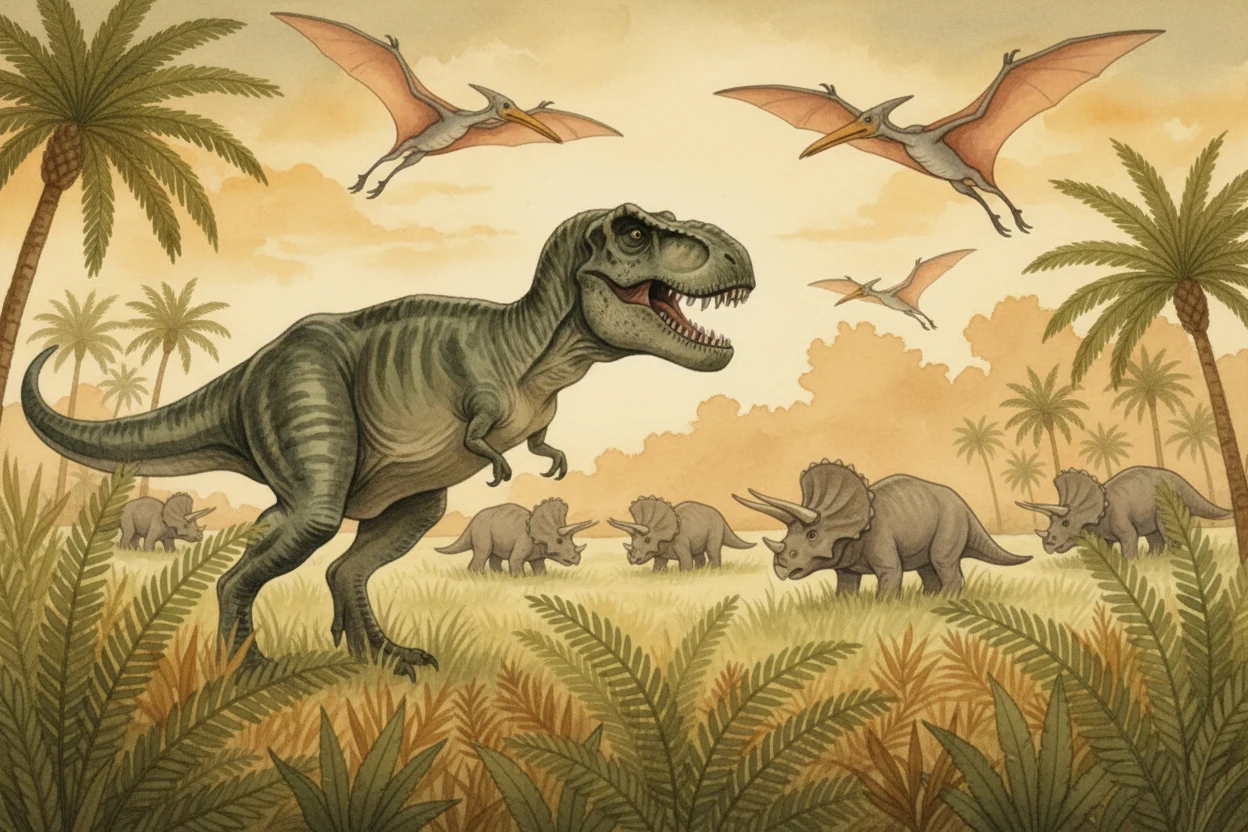
For 165 million years, dinosaurs ruled the planet. T. rex hunted in forests. Triceratops grazed in herds. Pterosaurs soared overhead. Then, 66 million years ago, they vanished โ all of them, everywhere, almost overnight. What could possibly wipe out creatures that had dominated Earth for longer than mammals have even existed?
The answer came from space. A rock the size of Mount Everest โ an asteroid about six miles wide โ was hurtling toward Earth at 45,000 miles per hour. The dinosaurs had no idea it was coming. Nothing could have stopped it.
When the asteroid slammed into what is now Mexico, the impact was a million times more powerful than all of humanity's nuclear weapons combined. It blasted a crater 110 miles wide and vaporized rock into superheated gas. The shockwave flattened forests for hundreds of miles. Earthquakes split the ground. Tsunamis taller than skyscrapers rolled across oceans.
But the real killer wasn't the impact itself. Trillions of tons of pulverized rock and soot were thrown into the atmosphere, wrapping the entire planet in a thick, dark cloud. Sunlight couldn't get through. In days, the Earth went cold and nearly pitch-black โ like someone had turned off the sun.
Without sunlight, plants couldn't photosynthesize โ they couldn't make food. Within weeks, plants died. Herbivores that ate those plants starved. Carnivores that ate those herbivores starved. The food chain collapsed from the bottom up, like dominoes. A T. rex can't survive on nothing.
The darkness lasted for months, maybe years. Temperatures plummeted. Acid rain poisoned rivers. Only small creatures that could hide, scavenge, or hibernate had a chance โ mammals the size of rats, burrowing lizards, crocodiles that could go months without eating, seeds waiting underground. Big dinosaurs needed too much food, too fast.
Slowly, over thousands of years, the dust settled. Sunlight returned. Plants grew back. But the dinosaurs were gone. Around 75% of all species on Earth had been erased. The tiny mammals that survived crept out of their burrows and inherited the planet. Eventually, millions of years later, those mammals would evolve into us.
One asteroid, six miles wide, ended the age of dinosaurs and made the age of mammals possible. If that rock had missed Earth by just a few minutes, you might not be reading this โ and a very different creature might be wondering why humans never showed up.