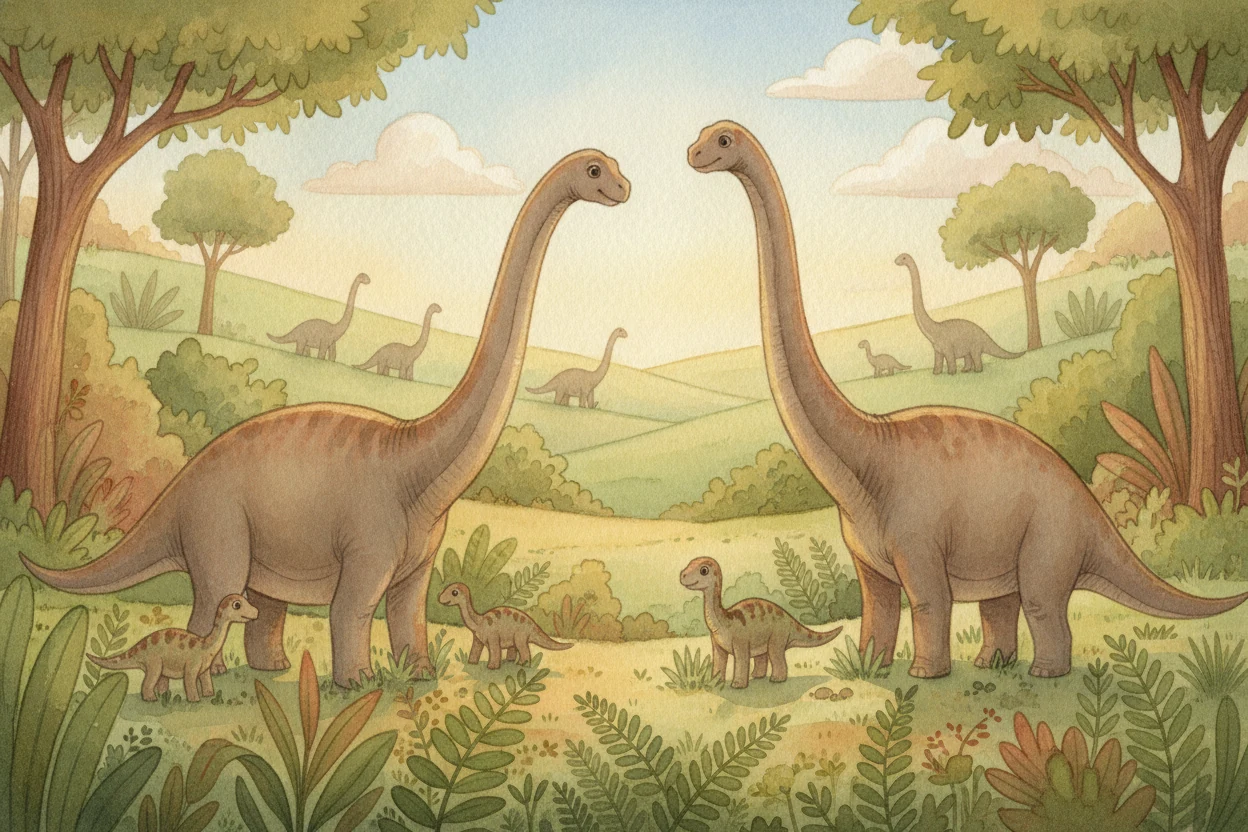
Dinosaur's Last Day

For about 165 million years, dinosaurs ran the planet. They were the kings, the giants, the tiny feathered weirdos, the everything. And then, around 66 million years ago, almost all of them vanished. The big question is: what could possibly knock out the most successful animals Earth had ever seen?

The answer arrived from space. A chunk of rock โ an asteroid roughly the size of a small mountain, maybe six miles across โ was wandering through the solar system on a very unlucky path. It had no plan. It wasn't aiming at anyone. It was just falling, the way everything in space falls.

It struck what is now Mexico, near a town called Chicxulub. The impact was almost impossible to imagine โ far more powerful than every bomb humans have ever built, combined. It punched a crater over a hundred miles wide into the planet's crust in a single instant.

Here's the strange part: the crash itself wasn't what got most of the dinosaurs. The real danger was what the crash threw into the sky. The blow flung enormous amounts of rock, dust, and tiny droplets high into the air โ so high they spread all the way around the world.

That dust and haze did something terrible and quiet: it blocked the Sun. For months, maybe years, the sky stayed dim and gray, like a permanent overcast afternoon that refused to end. The world got colder and darker than it had been in a very long time.

And here's where the trouble truly spread. Plants need sunlight to grow โ it's their food. With the Sun dimmed, plants struggled and died. The plant-eating dinosaurs ran out of meals. And the meat-eaters who hunted them ran out of meals too. The whole food chain wobbled and collapsed from the bottom up.

So it wasn't really one disaster โ it was a chain of them. A rock fell, the sky filled with dust, the Sun dimmed, the plants failed, and the giants slowly starved. Big animals need lots of food, and there simply wasn't enough to go around anymore.

But "all the dinosaurs died" isn't quite true. Some small, feathered dinosaurs made it through. Tiny, needing little food, they survived the lean years โ and their descendants are still here. Every sparrow, every pigeon, every chicken is a living dinosaur. The story didn't end. It just got smaller and learned to fly.

So the next time a bird lands near you, remember: it's a survivor of the biggest catastrophe the planet has ever seen. The mountains fell, the sky went dark, the giants vanished โ and somehow this little dinosaur kept singing. Not bad for a family that's been around 165 million years.