Brown Party Inside
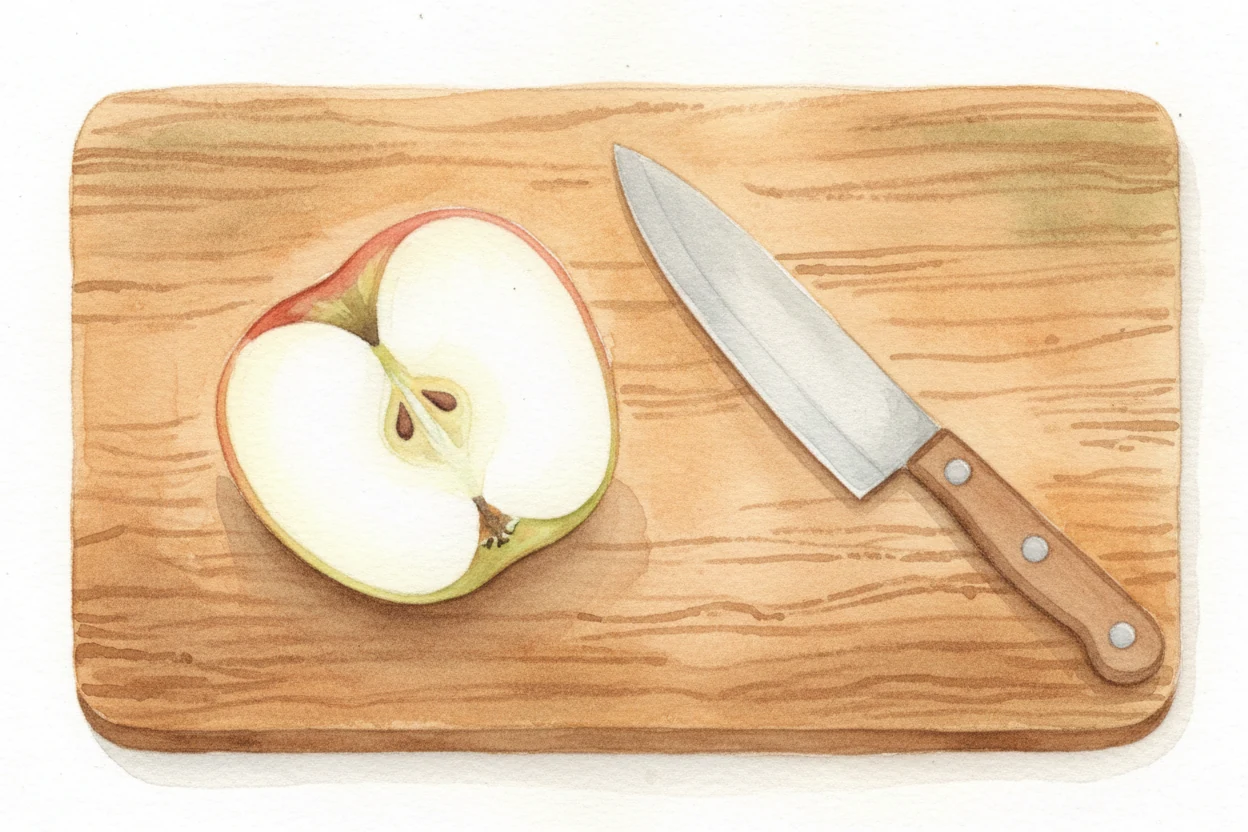
You slice an apple open โ crisp, white, perfect. Ten minutes later, you look back and the inside has gone brown and dull. What just happened? Did the apple go bad that fast?
The apple didn't spoil. It met the air. Inside every apple cell, there are tiny molecules called polyphenols just floating around, minding their business. They're trapped inside compartments, like toys locked in separate toy boxes.
There's also an enzyme in apple cells called polyphenol oxidase โ PPO for short. Think of PPO as a worker that loves to glue polyphenols together. But as long as the apple is whole, PPO and the polyphenols are kept apart by cell walls. They never touch.
When you cut the apple, you slice through millions of cells. The walls break. Everything that was separated spills out and mixes together. Suddenly PPO and polyphenols are bumping into each other for the first time.
PPO grabs a polyphenol and connects it to oxygen from the air. This creates a new brown molecule called a quinone. Then the quinones stick to each other and build bigger, browner chains. It's like polyphenols holding hands and forming a brown chain gang.
More PPO means more browning. More oxygen means faster browning. The reaction keeps going until the apple dries out or you eat it. The brown stuff isn't harmful โ it's just oxidized polyphenols. Same chemistry that makes a cut potato or avocado turn brown.
You can slow it down. Lemon juice works because the acid puts PPO to sleep for a while. Cold temperature slows the enzyme down. Covering the apple blocks oxygen from reaching the surface. No oxygen, no brown chain gang.
So the apple isn't dying when it browns โ it's just chemistry happening in real time. The same locked-up molecules that were fine inside the whole apple are now meeting the air and throwing a brown party. Next time you see it, you'll know: that's PPO at work.