Wings on Schedule
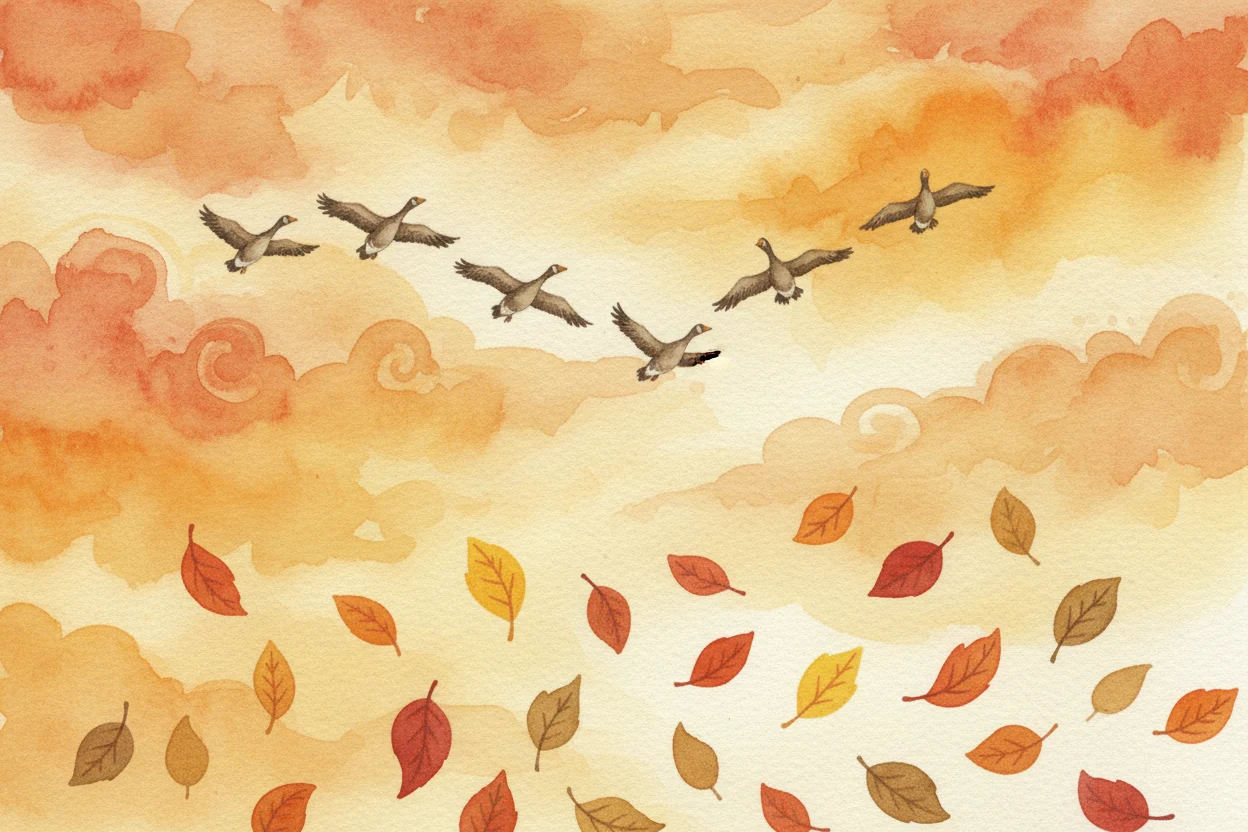
Every fall, millions of birds pack up and fly thousands of miles south. They don't have suitcases or boarding passes โ just wings and an ancient instruction written into their bodies. Why do they do it? Why not just stay put?
The short answer: food. When winter arrives in places like Canada or Alaska, insects vanish underground, seeds get buried in snow, and the berry bushes go bare. A bird that eats bugs all summer suddenly finds an empty restaurant. So it flies to where the restaurant is still open โ like Mexico, or Central America, or even the southern tip of South America.
But food isn't the only reason. Winter also means cold โ brutally cold. A tiny warbler weighs less than a cookie. Keeping that body warm when it's twenty below zero takes a staggering amount of energy. Even if the bird found enough frozen seeds to survive, it would burn through calories just shivering. Flying south is often cheaper, energy-wise, than staying and fighting the cold.
Now here's the twist: birds don't migrate because winter is hard. They migrate because summer up north is amazing. Long daylight hours in June mean more time to hunt for food. Explosion of insects in the short northern summer means a feast for baby birds. Less competition from other species means more nesting spots. Birds go north to raise their families in paradise, then retreat south when paradise closes for the season.
So how do they know when to leave? Birds read the world like a calendar. As autumn days get shorter, the change in daylight triggers hormones in their bodies. Those hormones say: "Time to go." The birds start eating extra food โ doubling their weight in fat, which is fuel for the flight. They get restless at night. Then one evening, they lift off. Sometimes alone, sometimes in flocks of thousands.
The journey is staggering. Arctic terns fly from the North Pole to the South Pole and back every year โ over 44,000 miles, the longest migration on Earth. Bar-tailed godwits fly nonstop from Alaska to New Zealand in nine days, no rest, no food, just beating wings over open ocean. Ruby-throated hummingbirds, each weighing less than a nickel, cross the entire Gulf of Mexico in one night.
Navigation is the wildest part. Birds use the sun as a compass during the day, reading its position to know which way is south. At night, they navigate by the stars โ they recognize constellations the way you recognize street signs. Some birds can sense Earth's magnetic field, like having a built-in GPS. Young birds on their first migration fly the route perfectly, even when traveling alone, following instructions coded into their genes that are millions of years old.
Not all birds migrate. Chickadees and cardinals tough out the winter, finding seeds and sheltering in dense trees. Penguins never leave Antarctica โ they just huddle together and wait for spring. But for the migrants, the journey is worth it. They get two summers instead of one: breed in the north when food explodes, then fly south to feast again when the north freezes over. It's a gamble every year โ storms, exhaustion, predators โ but for millions of years, it's worked. They trade safety for opportunity, and they do it on wings.