cover

The Purr Engine

Why do cats purr?
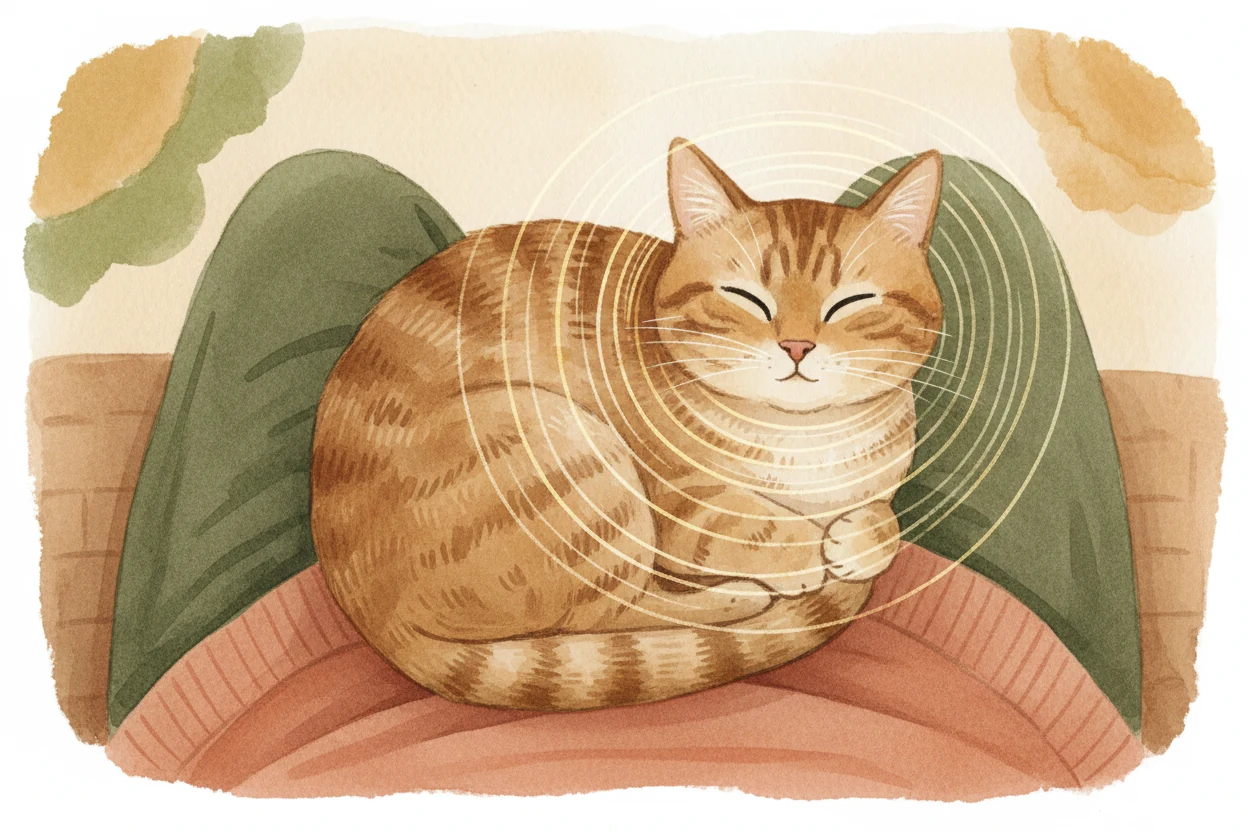
Your cat is curled up on your lap, eyes half-closed, and suddenly you hear it โ€” a gentle rumbling, like a tiny motor run

Your cat is curled up on your lap, eyes half-closed, and suddenly you hear it โ€” a gentle rumbling, like a tiny motor running in her chest. What's making that sound, and why does she do it?

The purr comes from muscles in your cat's throat. ~~About 25 times per second~~, these muscles **squeeze and release** a

The purr comes from muscles in your cat's throat. About 25 times per second, these muscles squeeze and release around the voice box, making the air vibrate as your cat breathes in and out. It's the same basic idea as humming โ€” except cats can do it continuously, even while breathing, which humans can't pull off.

Most of the time, cats purr when they're content โ€” *lounging in a sunbeam*, getting scratched behind the ears, or drifti

Most of the time, cats purr when they're content โ€” lounging in a sunbeam, getting scratched behind the ears, or drifting off to sleep. The purr is their way of saying "this is nice, keep going." It's a signal to you, and maybe to themselves, that everything's okay.

~~But here's the twist:~~ cats also purr when they're *nervous, injured, or even giving birth*. Scientists think the vib

But here's the twist: cats also purr when they're nervous, injured, or even giving birth. Scientists think the vibration itself might be soothing โ€” like how rocking back and forth calms a baby. The purr becomes a self-comfort tool, a way to say "I'm handling this" when things get tough.

Some researchers believe purring might even help cats heal faster. The frequency of a purr โ€” *around 25 to 50 vibrations

Some researchers believe purring might even help cats heal faster. The frequency of a purr โ€” around 25 to 50 vibrations per second โ€” falls in a range known to promote bone and tissue repair in mammals. It's like built-in physical therapy, humming through their whole skeleton every time they purr.

Not all cats purr, though. Big cats like ++lions and tigers++ can't do it โ€” they roar instead. The difference comes down

Not all cats purr, though. Big cats like lions and tigers can't do it โ€” they roar instead. The difference comes down to a tiny piece of anatomy: small cats have a completely hard bone in their throat, which lets them vibrate it precisely. Big cats have a flexible ligament there, which gives them a roar but takes away the purr.

Mother cats purr to their kittens right after birth. The kittens are **born blind and deaf**, but they can feel vibratio

Mother cats purr to their kittens right after birth. The kittens are born blind and deaf, but they can feel vibrations. That steady purr acts like a beacon, guiding newborns to warmth and milk. Within days, the kittens start purring back โ€” a conversation in rumbles.

So when your cat curls up and starts that rumbling engine, she's doing something **millions of years old** โ€” *a signal,

So when your cat curls up and starts that rumbling engine, she's doing something millions of years old โ€” a signal, a comfort, maybe even a healing trick. And for you? It's just nice. That's enough.

How was this book?

A Wonderleaf Book

The Purr Engine

โ€” Why do cats purr? โ€”

Wonderleaf Editions
โ€” ex libris โ€”
A Wonderleaf Book

The Purr Engine

Why do cats purr?

Wonderleaf Editions ยท MMXXVI
Scene 1
Your cat is curled up on your lap, eyes half-closed, and suddenly you hear it โ€” a gentle rumbling, like a tiny motor run
The Purr Engine2
Scene 1

Your cat is curled up on your lap, eyes half-closed, and suddenly you hear it โ€” a gentle rumbling, like a tiny motor running in her chest. What's making that sound, and why does she do it?

3The Purr Engine
Scene 2
The purr comes from muscles in your cat's throat. ~~About 25 times per second~~, these muscles **squeeze and release** a
The Purr Engine4
Scene 2

The purr comes from muscles in your cat's throat. About 25 times per second, these muscles squeeze and release around the voice box, making the air vibrate as your cat breathes in and out. It's the same basic idea as humming โ€” except cats can do it continuously, even while breathing, which humans can't pull off.

5The Purr Engine
Scene 3
Most of the time, cats purr when they're content โ€” *lounging in a sunbeam*, getting scratched behind the ears, or drifti
The Purr Engine6
Scene 3

Most of the time, cats purr when they're content โ€” lounging in a sunbeam, getting scratched behind the ears, or drifting off to sleep. The purr is their way of saying "this is nice, keep going." It's a signal to you, and maybe to themselves, that everything's okay.

7The Purr Engine
Scene 4
~~But here's the twist:~~ cats also purr when they're *nervous, injured, or even giving birth*. Scientists think the vib
The Purr Engine8
Scene 4

But here's the twist: cats also purr when they're nervous, injured, or even giving birth. Scientists think the vibration itself might be soothing โ€” like how rocking back and forth calms a baby. The purr becomes a self-comfort tool, a way to say "I'm handling this" when things get tough.

9The Purr Engine
Scene 5
Some researchers believe purring might even help cats heal faster. The frequency of a purr โ€” *around 25 to 50 vibrations
The Purr Engine10
Scene 5

Some researchers believe purring might even help cats heal faster. The frequency of a purr โ€” around 25 to 50 vibrations per second โ€” falls in a range known to promote bone and tissue repair in mammals. It's like built-in physical therapy, humming through their whole skeleton every time they purr.

11The Purr Engine
Scene 6
Not all cats purr, though. Big cats like ++lions and tigers++ can't do it โ€” they roar instead. The difference comes down
The Purr Engine12
Scene 6

Not all cats purr, though. Big cats like lions and tigers can't do it โ€” they roar instead. The difference comes down to a tiny piece of anatomy: small cats have a completely hard bone in their throat, which lets them vibrate it precisely. Big cats have a flexible ligament there, which gives them a roar but takes away the purr.

13The Purr Engine
Scene 7
Mother cats purr to their kittens right after birth. The kittens are **born blind and deaf**, but they can feel vibratio
The Purr Engine14
Scene 7

Mother cats purr to their kittens right after birth. The kittens are born blind and deaf, but they can feel vibrations. That steady purr acts like a beacon, guiding newborns to warmth and milk. Within days, the kittens start purring back โ€” a conversation in rumbles.

15The Purr Engine
Scene 8
So when your cat curls up and starts that rumbling engine, she's doing something **millions of years old** โ€” *a signal,
The Purr Engine16
Scene 8

So when your cat curls up and starts that rumbling engine, she's doing something millions of years old โ€” a signal, a comfort, maybe even a healing trick. And for you? It's just nice. That's enough.

17The Purr Engine

~ finis ~

Tiny picture books for big little questions.

โ€” a small constellation of questions โ€”
โœฆWonderleaf
Editions