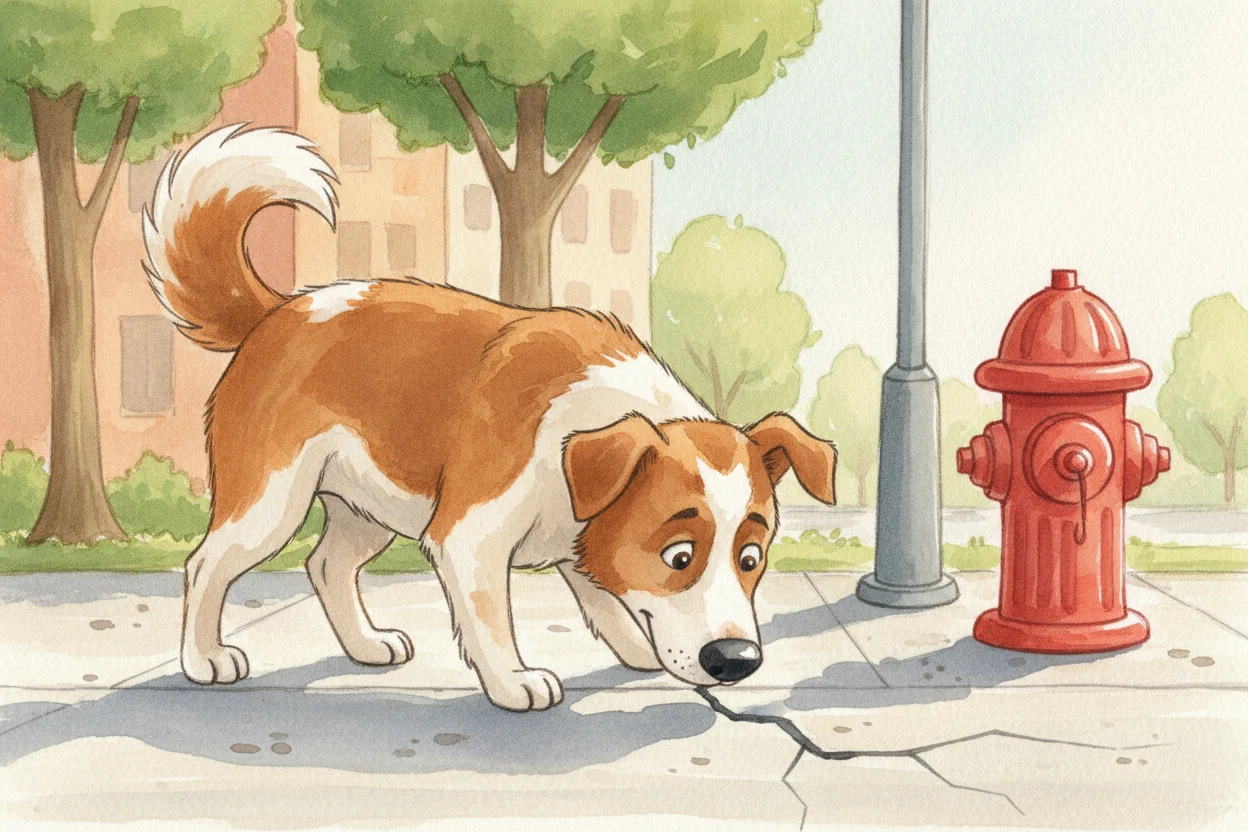
The Sniff Detective
You've seen it happen: your dog stops mid-walk, nose to the ground, sniffing the same boring patch of sidewalk for what feels like forever. What could possibly be so interesting down there?
Inside your dog's nose is a superpower you don't have. Dogs own about 300 million scent receptors โ you have maybe 6 million. If your nose is a flip phone, theirs is a supercomputer.
But it's not just quantity. Dogs breathe differently than you do when they sniff. They pull air into a separate scent chamber that holds the smell while they analyze it, breath after breath. You smell soup; they smell tomatoes, garlic, onions, the metal of the pot, and the fact that you stirred it an hour ago.
And here's the wild part: dogs smell in layers, like reading a timeline. That spot on the sidewalk? It tells them which dogs walked by, how long ago, whether they were scared or excited, maybe even what they ate for breakfast. Scent is their internet, their newspaper, their social media feed.
They also sniff to make mental maps. While you navigate by street signs, your dog navigates by smell-landmarks: the oak tree where a squirrel lives, the corner where the terrier always pees, the trash can that had pizza last Tuesday. Each walk writes a new chapter in their scent library.
Then there's the butt-sniffing thing, which mortifies you at the dog park but is perfectly polite in dog culture. Dogs have scent glands back there that work like a biological ID card: gender, health, mood, even diet. It's a handshake and a rรฉsumรฉ rolled into one quick sniff.
Sniffing also calms them down. When a dog feels stressed or overwhelmed, sniffing activates the thinking part of their brain and lowers their heart rate. It's like a deep breath for you, except they're gathering data while they chill out.
So yes, that "boring" patch of sidewalk is actually a gossip column, a history book, and a stress ball all at once. Your dog isn't wasting time โ they're reading a world you can't even see.