Egg's Tangle Trap
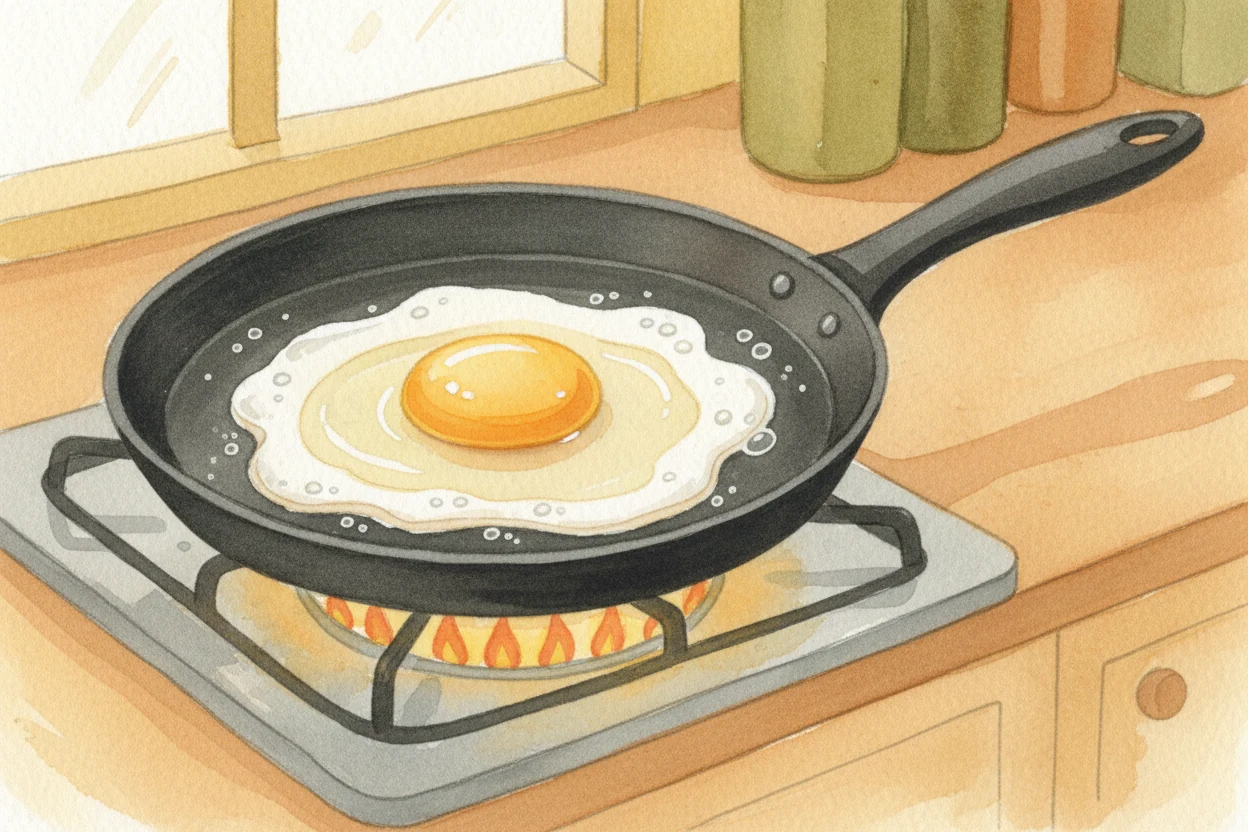
Crack an egg into a hot pan and watch: in seconds, the clear goop turns white and solid. The runny yolk firms up. You can't shake it back to liquid, no matter how hard you try. What just happened?
Inside that raw egg are millions of proteins โ long molecules folded up tight like tangled balls of yarn. They're packed so close together in the egg white that light can't get through, but they're small enough that the whole thing stays liquid and see-through.
Heat is just molecules jiggling. When the pan gets hot, those jiggles spread into the egg. The protein balls start shaking harder and harder, like popcorn kernels bouncing in hot oil.
Shake a ball of yarn hard enough and it starts to come undone. That's exactly what happens to egg proteins around 140ยฐF. The tight folds unravel. Each protein uncurls into a long, sticky strand.
Now you've got millions of loose, sticky strands all bumping into each other in hot liquid. They do what sticky things do: they grab onto their neighbors. One strand links to another, then another, building a tangled net.
The strands keep connecting until they've built a solid mesh throughout the whole egg white โ a net so tight that water molecules get trapped in the spaces. That mesh IS the cooked egg. It's not liquid anymore because the proteins have locked into a new shape.
And here's the kicker: you can't undo it. Cooling the egg down doesn't make the proteins let go and curl back up. They've bonded into their new tangled formation. The change is permanent.
So when you cook an egg, you're not adding anything or taking anything away. You're just giving proteins enough energy to unravel and grab onto each other in a brand-new way. Chemistry, deliciously rearranged.