Glow Bug Secrets
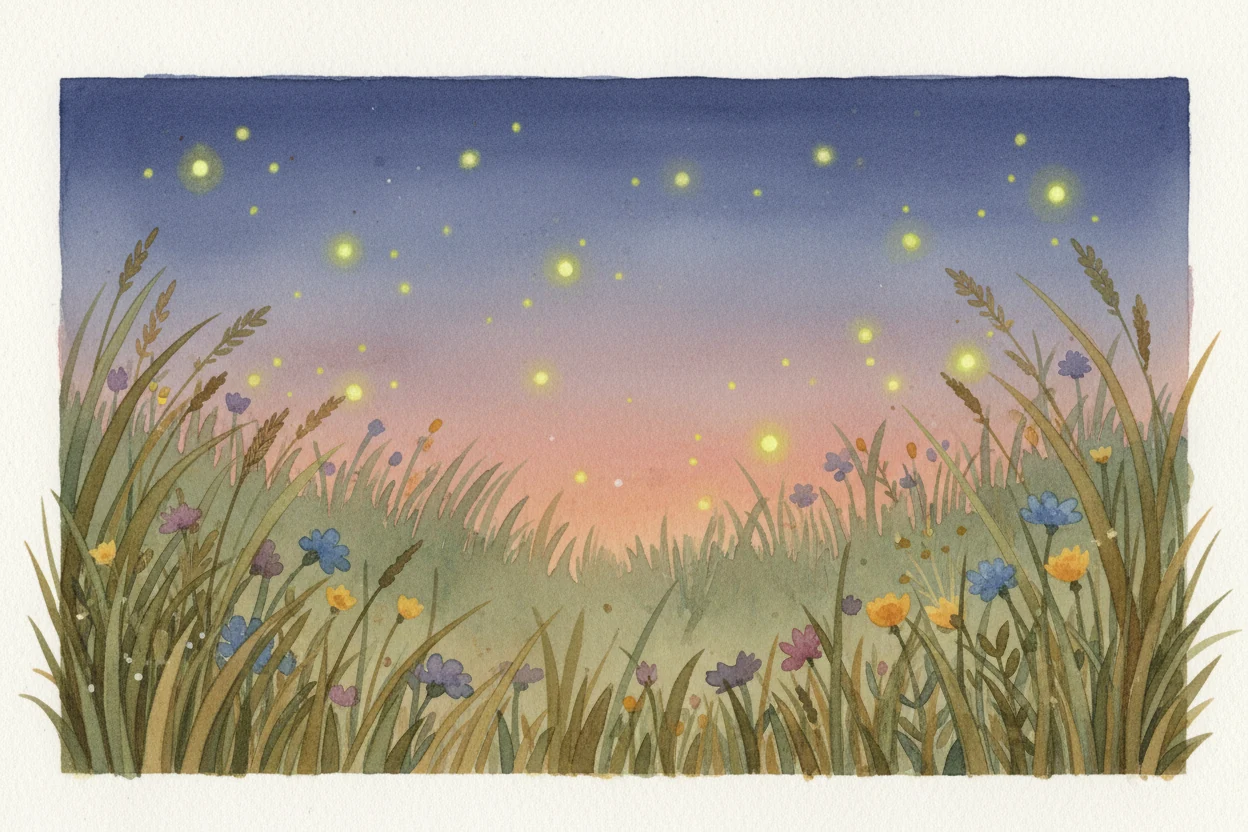
On a warm summer night, tiny lights blink on and off in the darkness like someone flipping switches in the sky. Fireflies! But here's the wild part: those little bugs are making cold light inside their own bodies, and they're doing it on purpose.
Inside a firefly's belly sits a special chemical called luciferin—which literally means "light-bringer." When luciferin meets oxygen and a helper enzyme called luciferase, they have a chemical reaction. And instead of making heat like a fire would, this reaction releases pure light. Almost no energy gets wasted as heat. It's the most efficient light source in nature.
The firefly controls exactly when to glow by opening and closing tiny tubes in its belly that let oxygen rush in. Oxygen in? Glow. Oxygen blocked? Dark. Flash, flash, flash—the firefly is operating a biological on-off switch hundreds of times a minute.
But why bother? Fireflies glow to talk to each other—specifically, to find dates. Each firefly species has its own flash pattern, like a secret code. Males fly around flashing "Hey, I'm over here! I'm a Photinus pyralis male!" Females sit in the grass, watching. When a female sees the right pattern from the right species, she flashes back: "I see you. Come closer."
Some species synchronize their flashes—entire trees full of fireflies blinking on and off together like a living Christmas display. They're all timing their signals so the males don't drown each other out. It's a light-up chorus line, thousands strong, all hoping to be noticed.
And here's where it gets sneaky. Some female fireflies have learned to fake the flash patterns of other species. A male flies down thinking he's found a mate—but surprise! She eats him. Firefly femme fatales: they trick their prey with fraudulent light signals, then turn the date into dinner.
The glow also warns predators: "Don't eat me—I taste terrible." Fireflies contain bitter, toxic chemicals in their blood. Most animals learn quickly that a glowing bug equals a mouthful of regret. The light is both a love letter and a keep-away sign, depending on who's watching.
So the next time you see fireflies writing messages in the summer dark, you're watching chemistry, communication, romance, and biological deception all at once—a whole hidden world, spelled out in cold light that costs almost nothing to make. Not bad for a bug the size of your pinky nail.