Mountain's Weather Twist
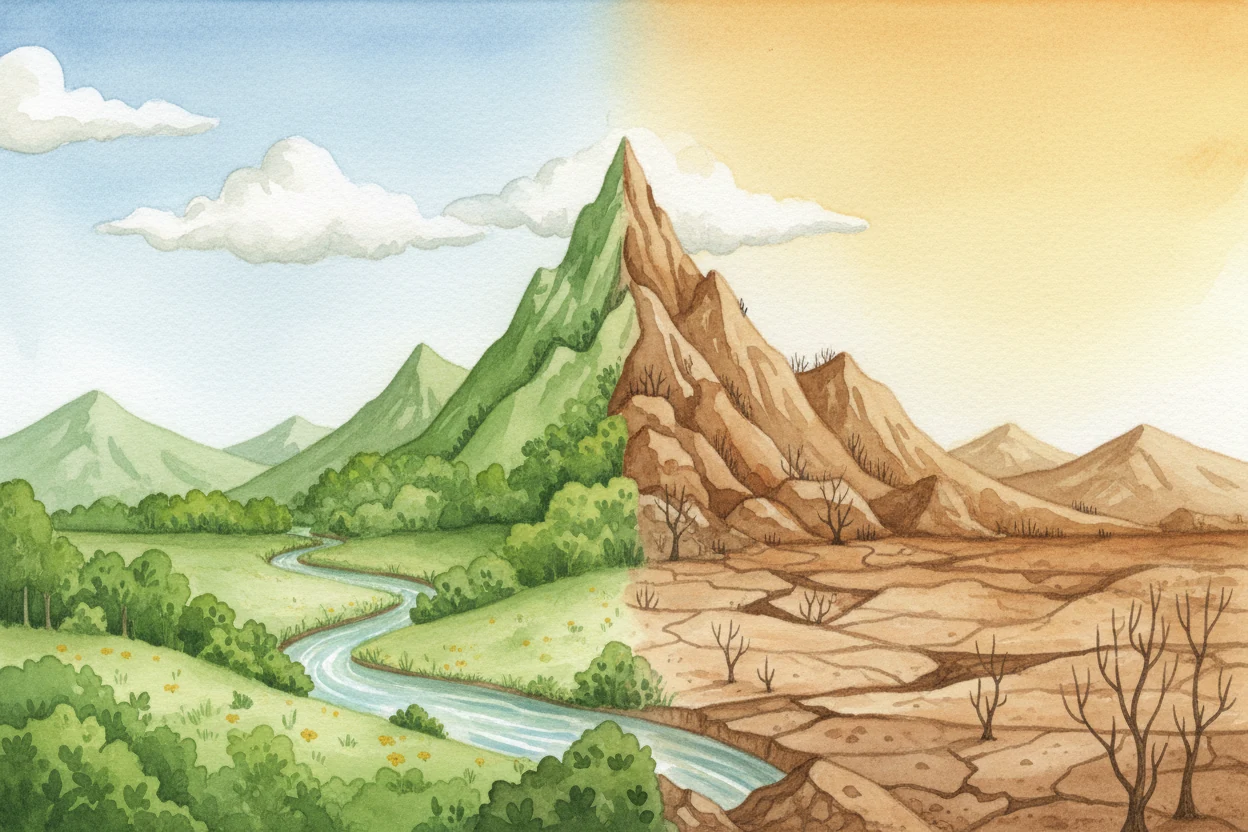
You've probably noticed: one side of a mountain range can be sunny and green, while the other side is dry and brown. Mountains don't just sit there looking pretty โ they grab passing weather and twist it around like a wrestling move.
It starts when wind carrying wet ocean air hits a mountain. The air can't go through solid rock, so it has to go up and over โ like water flowing up and over a big rock in a stream.
As the air climbs higher, something weird happens: it gets colder. For every thousand feet up, the temperature drops about 3 to 5 degrees. Cold air can't hold as much water as warm air โ it's like a sponge that shrinks when you chill it.
So the climbing air squeezes out its water. Clouds form. Rain falls. Sometimes snow. All that moisture dumps on the side of the mountain facing the wind โ called the windward side. That's why it's so green.
By the time the air reaches the top and starts down the other side, it's wrung dry โ like a towel that's been twisted until there's nothing left. Now it's descending, warming up again, but with almost no moisture to give.
This dry side โ the leeward side โ gets what's called a rain shadow. The mountain literally casts a shadow made of missing rain. Deserts often form here. Same mountain range, completely different world.
Mountains also speed wind up and funnel it through passes, creating local wind patterns with their own names โ like the Santa Ana winds in California or the Chinook winds in the Rockies. These winds can be warm, cold, fierce, or gentle depending on where they've been and what the mountain did to them.
So mountains don't just change the weather โ they CREATE weather, splitting the sky into wet and dry kingdoms. Next time you cross a mountain range, watch the world flip from one climate to another in just a few miles. The mountain did that.