The Shark's Tooth Factory
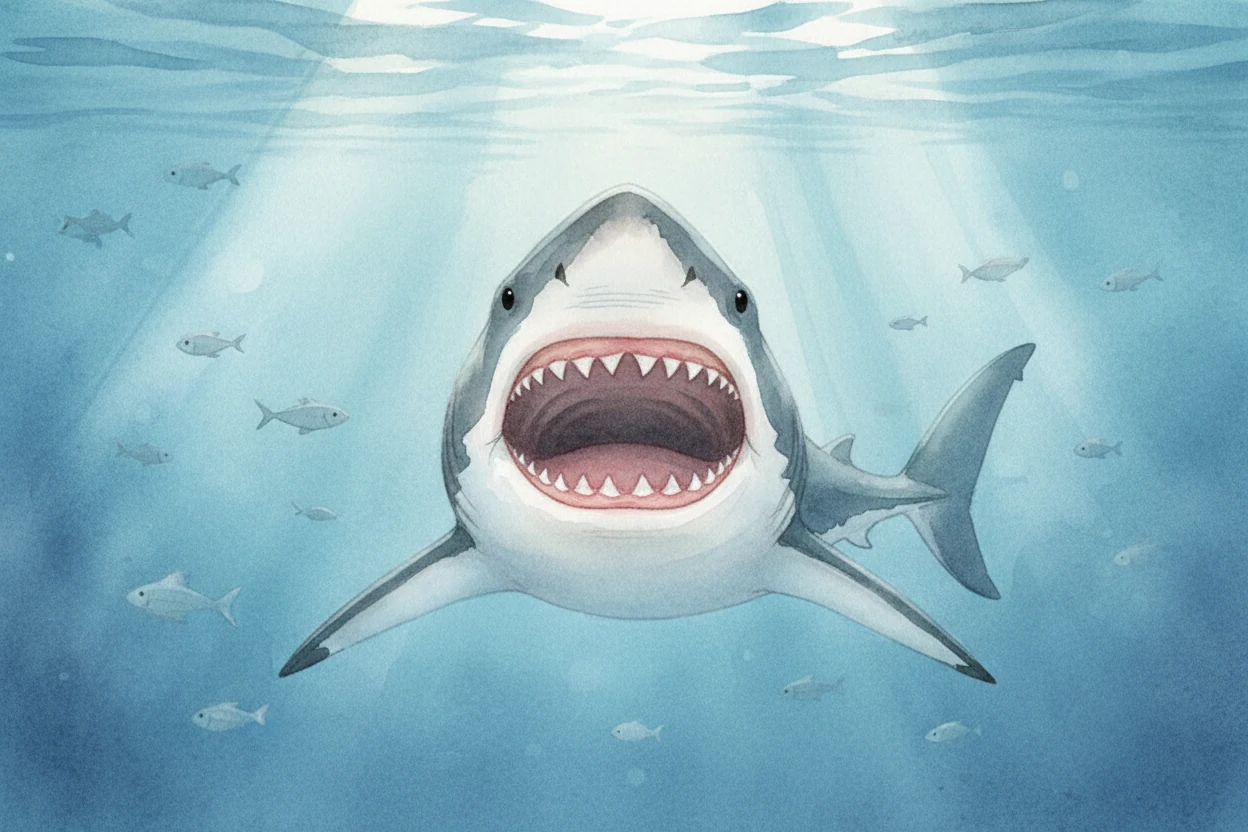
Open wide and count: a single shark might grow twenty thousand teeth in its lifetime. Twenty thousand! That's enough to fill a bathtub. Why does a shark need so many teeth when you and I get by with just thirty-two?
Start with what shark teeth are made for: grabbing and tearing, not chewing. A shark bites down once โ hard โ and shakes its head to rip away a chunk of prey. No grinding, no careful nibbling. Just raw tearing force.
That kind of work is rough on teeth. Shark teeth aren't anchored into the jaw with deep roots like yours. They're attached to the gums with soft tissue โ more like Velcro than bolts. One hard bite into bone or shell, and a tooth can snap right off.
So sharks grow their teeth in rows, like a conveyor belt. Behind the front row of working teeth sit four or five backup rows, lying flat and waiting. When a front tooth falls out, the one behind it slides forward to take its place โ sometimes in less than a day.
This conveyor belt runs for the shark's entire life. A single shark might lose a tooth every week, sometimes more. Multiply that by thirty or forty years of hunting, and you get thousands and thousands of replacement teeth, all grown from the same jaw.
Different sharks, different teeth. A great white's teeth are triangular and serrated like steak knives, perfect for slicing through seals. A tiger shark's teeth are curved with jagged edges, built to crack turtle shells. A nurse shark's teeth are flat and stubby, made for crushing crabs and clams.
The system works so well that sharks have been using it for four hundred million years โ long before dinosaurs, long before trees. While other animals evolved complex chewing, sharks stuck with the simple plan: bite hard, lose a tooth, grow a new one, repeat.
So when you find a shark tooth on the beach, you're holding one tiny piece of that endless conveyor belt โ a tooth that did its job, fell out, and got replaced before the shark even noticed. Another one's already sliding forward to take its place.