Heat's Magic Trick
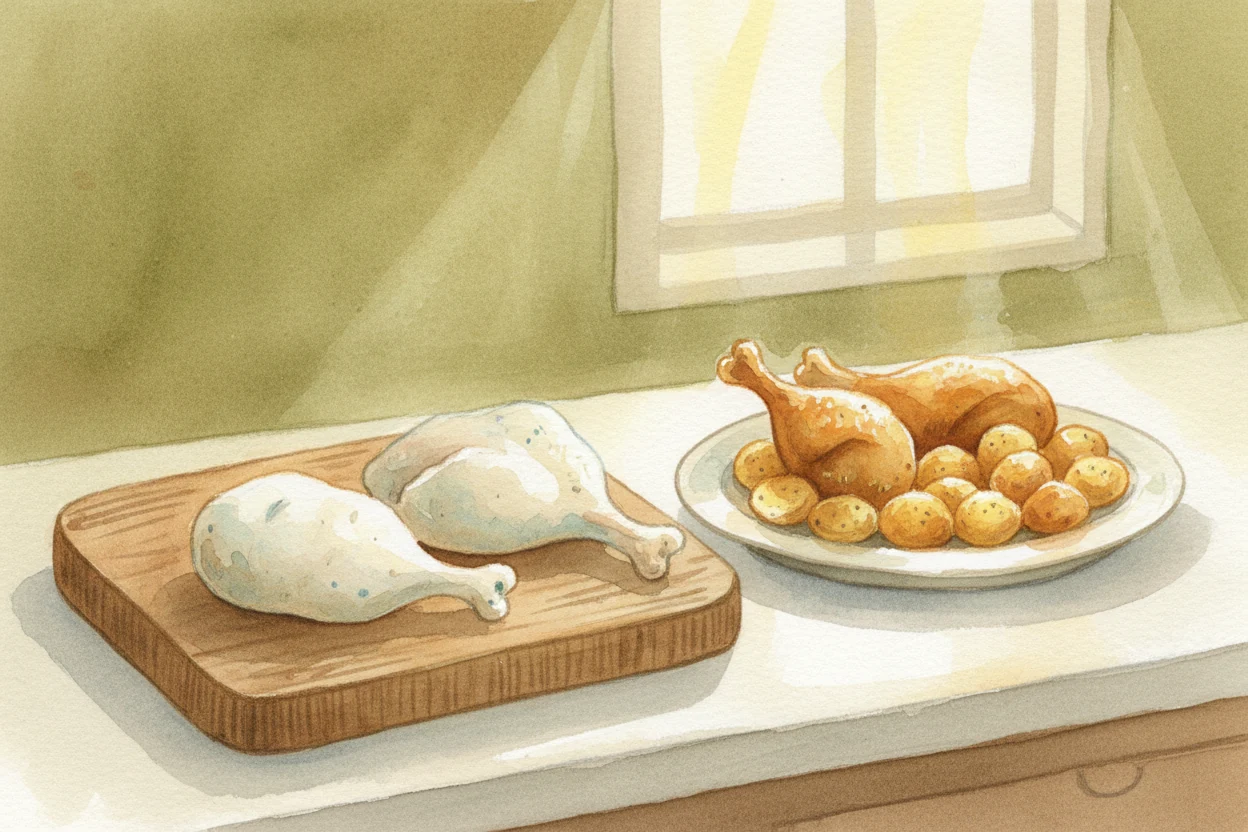
Raw potatoes taste like crunchy dirt. Raw chicken is slimy and dangerous. But bake them together and suddenly you've got dinner. What's the magic trick?
Heat does three big jobs when it touches food. First, it breaks things apart โ long tangly molecules snap into smaller, softer pieces. A raw carrot's walls are tough chains holding hands; cooking breaks the handshake, and the carrot goes soft.
Second, heat kills the invisible hitchhikers. Bacteria, parasites, molds โ they live on raw meat and vegetables, waiting to make you sick. At 165ยฐF, their proteins fall apart like a house of cards in a windstorm. They can't survive, can't multiply, can't hurt you.
But here's the best part: heat creates flavors that don't exist in raw food. When sugars and proteins get hot together, they throw a chemical party called the Maillard reaction. It's what makes bread crust golden, makes steak brown and savory, makes cookies smell like heaven.
The Maillard reaction is picky โ it only happens above 300ยฐF, and it needs dry heat. That's why boiling (212ยฐF) makes food soft but not brown, and why a towel-dried steak sears better than a wet one. Water blocks the party.
Humans started cooking around a million years ago, and it changed everything. Cooked food is easier to chew and digest, so our guts could shrink and our brains could grow bigger. Fire made us human.
Not everything needs cooking, of course. Apples, carrots, and cucumbers are safe and delicious raw. But cooking unlocks foods that would otherwise be too tough, too bitter, or too dangerous. It turns the inedible into a feast.
So when you smell cookies baking or hear a steak sizzle, remember: you're not just heating food. You're breaking molecules, killing invaders, and throwing a chemistry party that didn't exist five minutes ago. That's the magic trick.