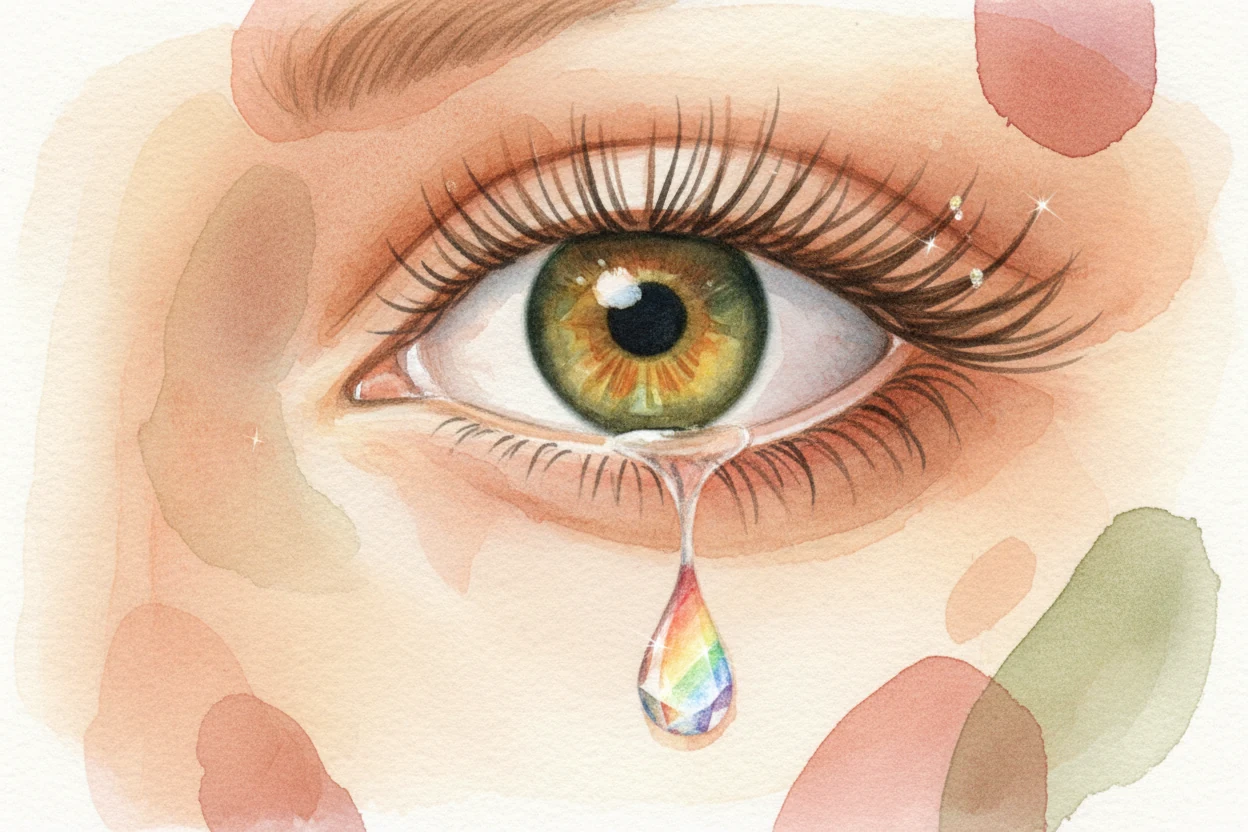
Tears Tell Tales
You blink. Your eyes feel wet. Maybe you're watching a sad movie, or you just got smacked in the face with a soccer ball, or you're laughing so hard you can't breathe. Whatever the reason โ here come the tears, rolling down your cheeks like tiny saltwater rivers. But why? Why does your body decide that water leaking out of your face is the right response to... well, basically everything?
First, the mechanical truth: your eyes are always wet. Right now, as you read this, a thin layer of tears coats your eyeballs like a microscopic swimming pool. Every time you blink โ which you do about 15 times a minute without thinking โ your eyelids spread this liquid across the surface, keeping everything slippery and clean. These are called basal tears, your eyes' 24/7 maintenance crew.
Basal tears aren't just water. They're a three-layer cocktail. The bottom layer is mucus that sticks to your eyeball like glue. The middle layer is the watery part, full of proteins and salts. The top layer is oil, which seals everything in so the tears don't evaporate in two seconds. It's engineering: your eye built a tiny lake with a waterproof lid.
Now, sometimes your eyes need backup. A speck of dust flies in, or an onion releases its chemical weapons while you're chopping dinner. Your eye freaks out and calls for reinforcements: reflex tears. These flood the scene in seconds, washing out the invader. You're not sad โ you're just running an emergency sprinkler system.
Reflex tears are fast. Your eye detects the threat, signals your lacrimal gland (a little factory above your eyeball), and boom โ liquid everywhere. The tears drain through two tiny holes in the corners of your eyelids, down a tunnel, and into your nose. That's why your nose runs when you cry. It's all the same plumbing.
But then there's the weird one: emotional tears. You watch a character die in a movie. You laugh until your stomach hurts. You get so frustrated you want to scream. And somehow, your brain decides the correct response is to make your eyes leak. Scientists still aren't totally sure why we do this โ humans are the only animals who cry from feelings.
One theory: emotional tears are a signal. When you cry, everyone around you immediately knows you're in distress (or joy, or overwhelm). It's a built-in communication system that works even when you can't find the words. Some researchers also think crying might flush out stress hormones, giving you a chemical reset โ like your body's way of saying, "Okay, let's start fresh."
Here's the kicker: emotional tears actually have a different chemical recipe than reflex tears. They contain more protein and stress hormones. Your body knows the difference between "there's dust in my eye" and "I just finished the saddest book ever written." It custom-builds the tears to match.
So the next time you cry โ whether it's from laughter, onions, or a gut-punch of a goodbye โ remember: your eyes are doing exactly what they're designed to do. They're cleaning, signaling, maybe even healing. Tears aren't a malfunction. They're your body being weirdly, precisely human.