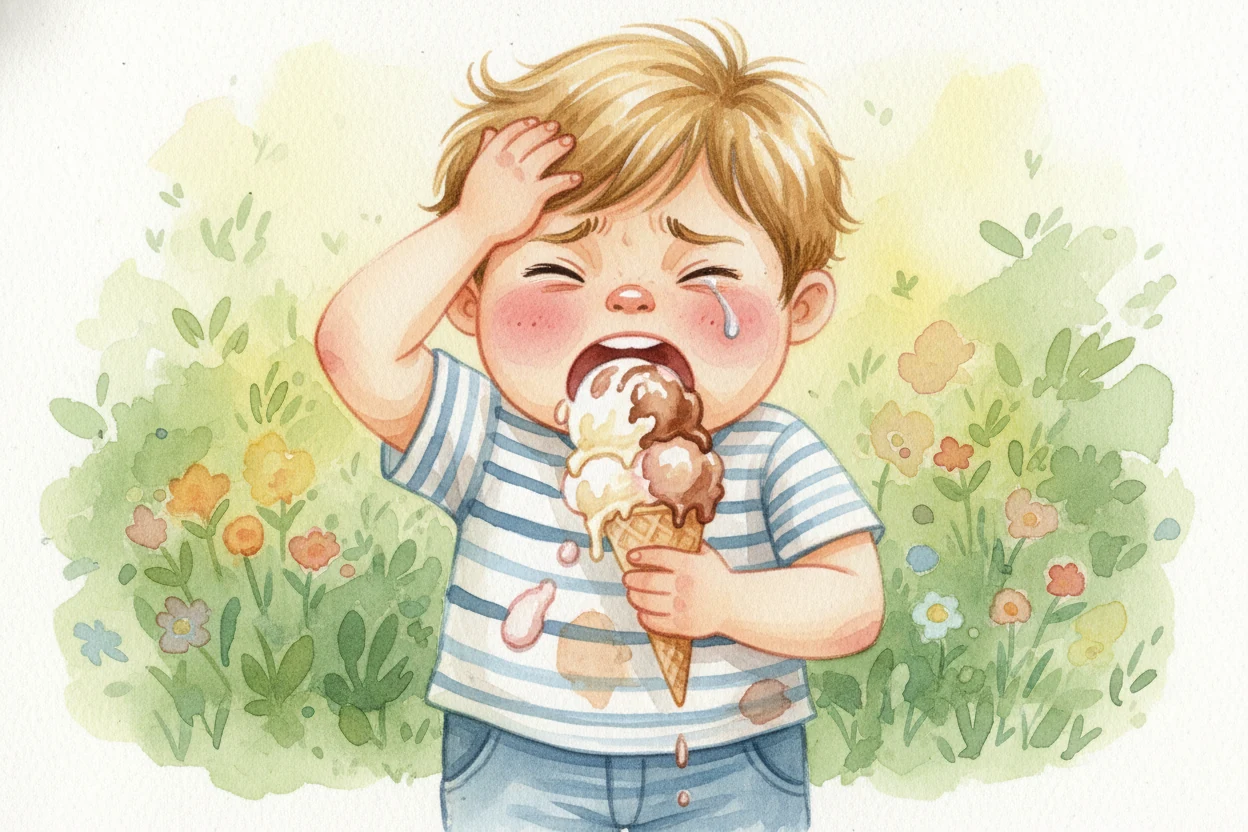
Brain Freeze Mystery
You're halfway through the best ice cream cone of summer when โ WHAM โ a spike of pain shoots through your forehead. What just happened? Your brain didn't actually freeze. But something wild just went down in your mouth, and your brain got the wrong message.
Here's the real culprit: the roof of your mouth. Up there, tucked behind your front teeth, runs a network of blood vessels close to the surface. When something ice-cold touches that spot โ a gulp of slushie, a bite of popsicle โ those blood vessels feel it instantly.
Your body doesn't like sudden cold near your brain. So those blood vessels do something clever: they squeeze tight, getting narrower to protect you. Then, a moment later, they panic and do the opposite โ they swell wide open, flooding the area with warm blood to heat things back up.
That quick swell sends a pain signal racing up nearby nerves. But here's where it gets weird. Those nerves also connect to your forehead. Your brain receives the signal and thinks, "Ow! Something hurts up front!" even though the actual trouble is in your mouth.
Scientists call this "referred pain" โ pain that shows up in the wrong spot. It's like when you press a doorbell at the back door, but the chime rings in the living room. Same wiring, confusing location.
The fancy medical name is "sphenopalatine ganglioneuralgia," which is absurdly long for something that lasts about thirty seconds. Most people just call it brain freeze or ice cream headache. Both names work. The long one is just showing off.
The good news? Brain freeze is completely harmless. Nothing's damaged, nothing's wrong. The pain fades as soon as those blood vessels settle down. Pressing your tongue against the roof of your mouth helps โ you're warming up the cold spot faster.
So next time, eat your frozen treat a little slower. Let your mouth adjust to the cold. But if you do get zapped mid-slurp? At least now you know: it's just your mouth's blood vessels overreacting, and your brain getting confused about the address.