Rules That Let Us Play
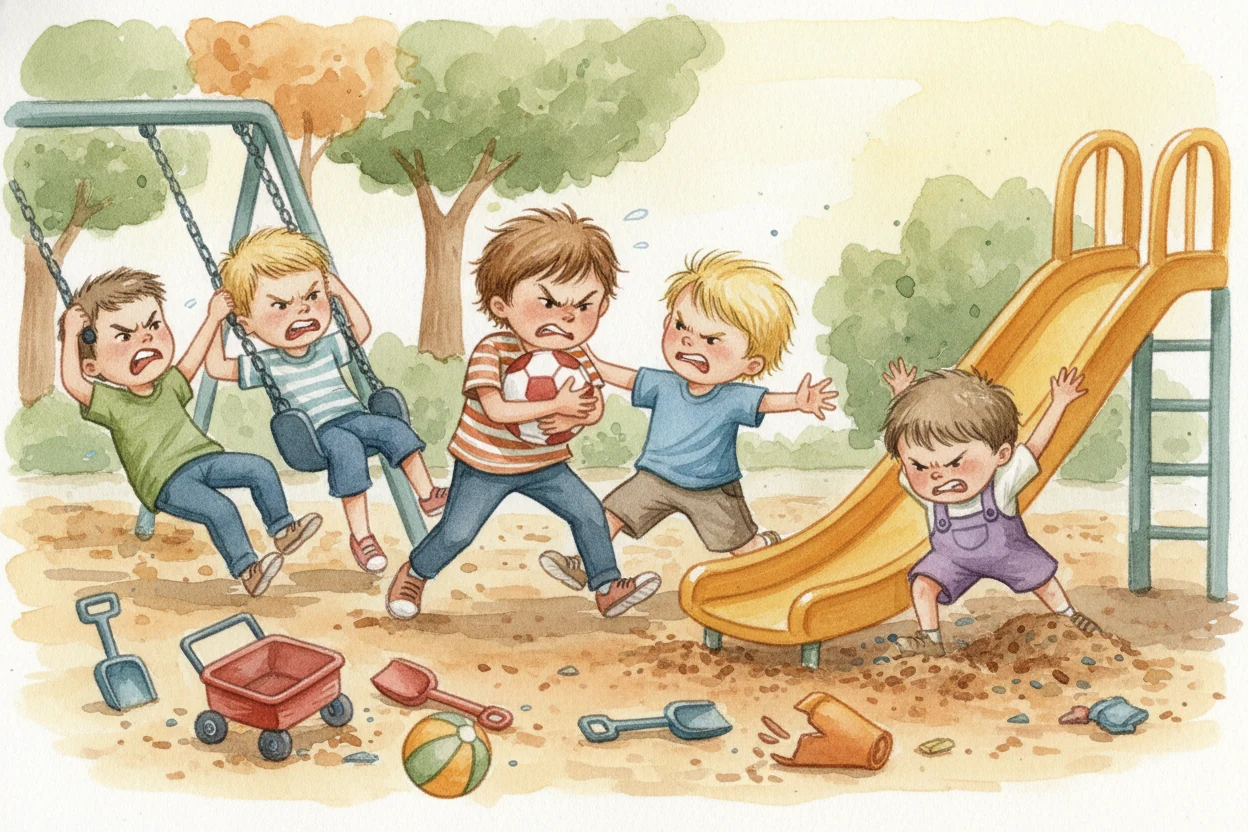
Imagine a school playground with no rules at all. Sounds fun, right? But here's what would happen: someone grabs the only soccer ball and won't share. Two kids both claim the same swing. Another kid starts pushing people off the slide. Within five minutes, everyone's either fighting or crying โ and nobody's actually playing.
Rules are the invisible things that let us actually DO stuff together. They're agreements we make so everyone gets a turn, nobody gets hurt, and fun things can happen. "You can't hog the ball" becomes a rule. "Wait your turn for the swing" becomes a rule. Suddenly the playground works again.
Laws are just rules for the whole city, state, or country. They're the agreements that let millions of strangers live near each other without constant disaster. "Don't steal someone's car" is a law. "Drive on the right side of the road" is a law. These aren't mysterious โ they're just playground rules scaled up, because adults need them too.
But why do we NEED the rules written down? Why not just trust everyone to be nice? Here's the problem: people disagree about what "nice" means. You think loud music at midnight is fine; your neighbor thinks it's torture. You think that parking spot is yours; someone else got there first. Without a clear rule, you're just two people yelling opinions at each other forever.
Written rules break the tie. They say: "This is what we've agreed counts as fair, BEFORE the argument happens." Now when you blast music at midnight, it's not your opinion versus theirs โ it's the rule that says quiet hours start at 10pm. The rule makes the decision, so you don't have to fight.
Of course, some rules are bad. History is full of laws that protected powerful people and hurt everyone else โ laws that said some humans could own other humans, that women couldn't vote, that you had to follow the king's religion or else. Bad rules don't make the IDEA of rules wrong; they prove we need ways to CHANGE rules when they're unjust.
That's why democracies let citizens challenge laws, protest them, vote for new leaders, and rewrite the rules. The rules aren't carved in stone by gods โ they're tools we build together, and like any tool, we can fix them when they break or become unfair. A good system has rules AND ways to question the rules.
So we have rules and laws for the same reason we have roads and bridges โ they're infrastructure that makes living together possible. Without them, we'd spend all our energy fighting over every tiny decision. With them, we can save our energy for the stuff that actually matters: building things, creating art, exploring ideas, taking care of each other, and yes โ playing on the playground.