Brain's Happy Alarm
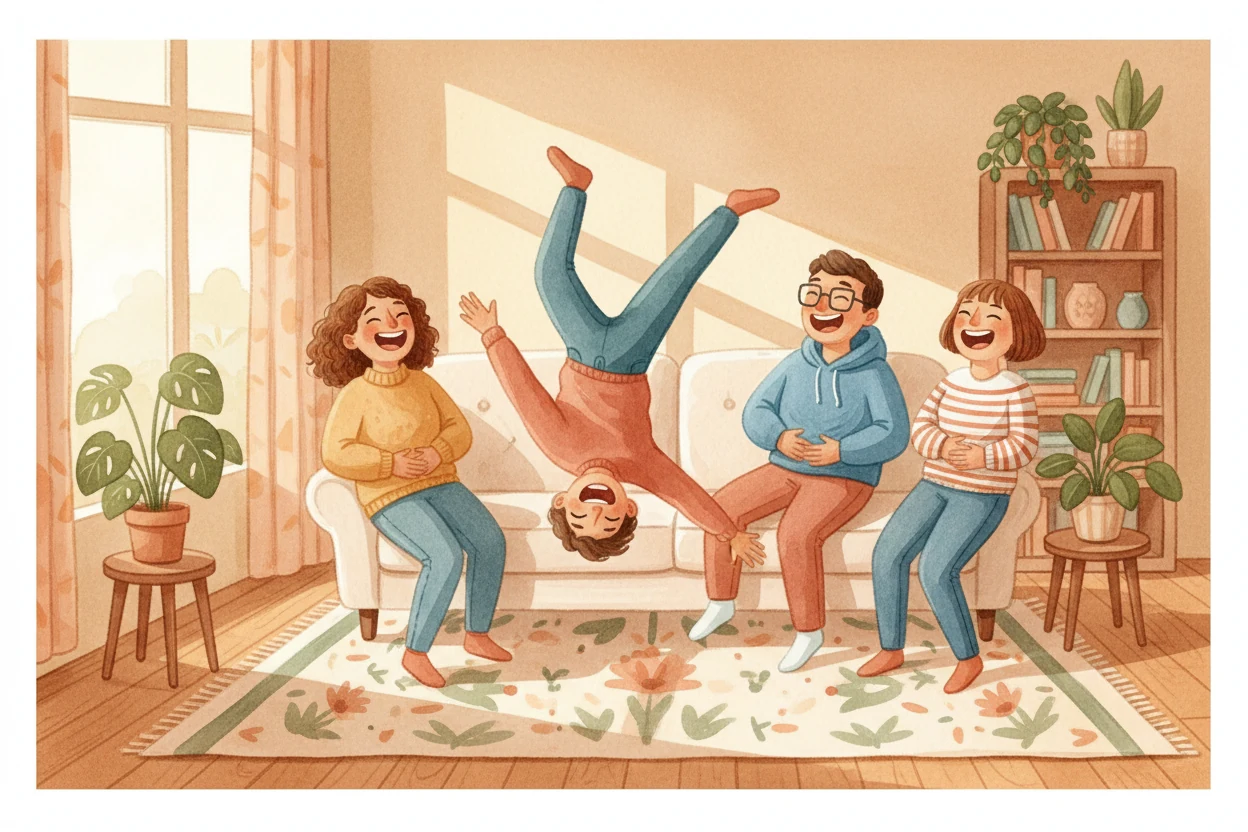
You're sitting with friends when someone trips over nothing, flails dramatically, and lands safely on the couch. Everyone bursts out laughing โ including the person who fell. But why? What just happened inside your brain and body to turn a stumble into giggles?
Here's the surprise: laughter is one of your brain's oldest tools, older than language itself. Animals laugh too โ rats chirp when you tickle them, dogs pant in play-giggles, and chimps make breathy hoots during wrestling matches. Your ancient ancestors were laughing millions of years before they could say a single word.
Laughter does something clever: it signals "everything's okay" when something unexpected happens. Your friend trips โ for a split second, your brain goes on alert. Danger? Threat? But no, they're fine. The stumble was surprising but harmless. Laughter is your brain's way of shouting "false alarm!" to everyone nearby.
Think of your brain like a prediction machine. It's constantly guessing what happens next โ the next word in a sentence, the next step on the stairs. When reality breaks the pattern in a safe, silly way, you laugh. The gap between expectation and reality is the joke. A banana peel works because floors aren't supposed to betray you.
When you laugh, your body throws a tiny party. Your brain releases endorphins โ natural painkiller chemicals that make you feel good. Your breathing speeds up, pumping more oxygen. Your muscles tense and release in waves. A big laugh is actually a workout: fifteen minutes of solid laughing burns about fifty calories, the same as a brisk walk around the block.
But laughter's real superpower is social glue. When you laugh with someone, your brains synchronize โ you're literally sharing the same rhythm of breath and feeling. It's a bonding signal that says "I'm with you, we're safe together, we see the world the same way." Laughter builds trust faster than almost anything else.
Not all laughter is about jokes. You laugh when you're nervous, to cut tension. You laugh to show affection, even when nothing's funny. You laugh in relief after a scare. You laugh because everyone else is laughing and it's contagious โ your brain has special mirror neurons that fire when you see someone else laugh, making you want to join in.
So when your friend trips and you all crack up, here's what really happened: your brain detected a surprise, decided it was safe, released feel-good chemicals, synced everyone's breathing into the same rhythm, and strengthened your friendship โ all in about two seconds. Laughter is your brain's favorite way to say "we're okay, we're together, and this moment is ours."