cover

Shadow Dance

Why does an eclipse happen?
You look up one afternoon and the Sun โ€” the giant glowing ball that lights up every single day of your life โ€” is being e

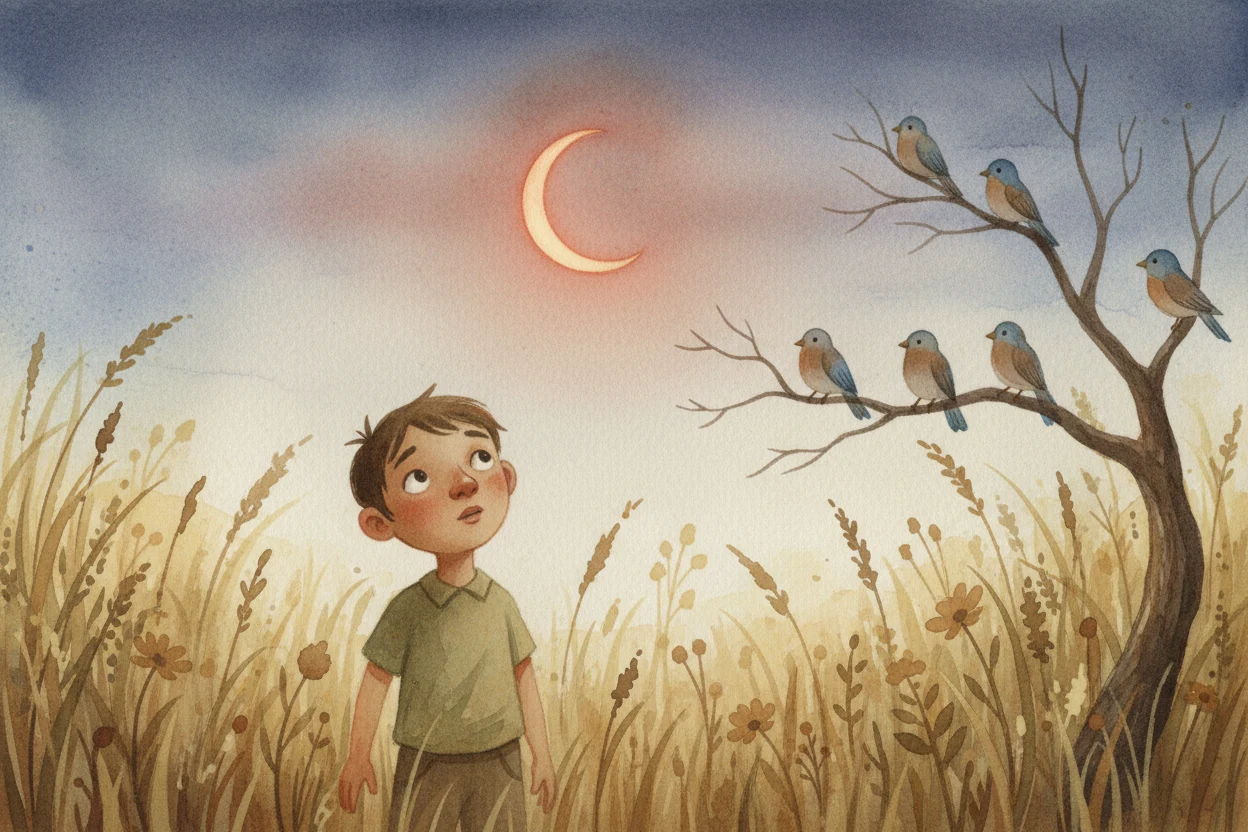
You look up one afternoon and the Sun โ€” the giant glowing ball that lights up every single day of your life โ€” is being eaten by a dark circle. The sky turns twilight gray. Birds go quiet. It's eerie, it's beautiful, and it's called an eclipse. But what's actually happening up there?

~~Here's the setup:~~ You're standing on Earth, which is spinning through space. The ++Sun++ โ€” a star **93 million miles

Here's the setup: You're standing on Earth, which is spinning through space. The Sun โ€” a star 93 million miles away โ€” blasts light in every direction. That light travels across empty space and hits your planet, making it daytime wherever you happen to be standing. Simple enough. But Earth isn't alone out here.

Orbiting around Earth, about 240,000 miles away, is the ++Moon++ โ€” a big rocky ball with no light of its own. It's much

Orbiting around Earth, about 240,000 miles away, is the Moon โ€” a big rocky ball with no light of its own. It's much smaller than the Sun (400 times smaller, in fact), but it's also 400 times closer to you. Which means from where you're standing, they look almost exactly the same size in the sky. That coincidence is the key to the whole show.

Most of the time, the Moon orbits above or below the invisible line between you and the Sun โ€” so sunlight sails right pa

Most of the time, the Moon orbits above or below the invisible line between you and the Sun โ€” so sunlight sails right past it and floods your day as usual. But about twice a year, the geometry lines up perfectly. The Moon slides directly between Earth and the Sun, like a marble rolling in front of a spotlight. And because they look the same size from down here, the Moon can cover the Sun completely.

When that happens, **the Moon casts a shadow** โ€” and you're standing in it. Shadows aren't mysterious; _they're just pla

When that happens, the Moon casts a shadow โ€” and you're standing in it. Shadows aren't mysterious; they're just places where light can't reach because something's in the way. The Moon's shadow is a dark cone that stretches through space and touches a small spot on Earth's surface, maybe 100 miles wide. If you're in that spot, the Sun vanishes. Total darkness at noon. That's a total solar eclipse.

~~The shadow doesn't sit still~~ โ€” Earth is spinning, the Moon is moving, and the whole dance lasts only a few minutes i

The shadow doesn't sit still โ€” Earth is spinning, the Moon is moving, and the whole dance lasts only a few minutes in any one place. The shadow sweeps across the planet like a searchlight in reverse, and then it's gone. People chase these shadows across deserts and oceans just to stand in darkness for two minutes and see the Sun's corona โ€” the shimmering halo of plasma that's normally too faint to see past the Sun's glare โ€” flare out around the black disk of the Moon.

There's another kind, too. Sometimes the Moon is a little farther away in its orbit (orbits aren't perfect circles โ€” the

There's another kind, too. Sometimes the Moon is a little farther away in its orbit (orbits aren't perfect circles โ€” they're slightly stretched ovals). When it passes in front of the Sun from that extra distance, it looks just a tiny bit smaller, so it doesn't quite cover the whole Sun. You get a "ring of fire" eclipse โ€” a bright halo of sunlight around a dark Moon. It's called an annular eclipse, and it's almost as strange as the total kind.

~~So that's the trick:~~ an eclipse isn't magic or myth โ€” it's just **three balls in space lining up** for a moment. The

So that's the trick: an eclipse isn't magic or myth โ€” it's just three balls in space lining up for a moment. The Sun, vastly larger but vastly farther. The Moon, small and close. And you, standing in the narrow ribbon of shadow where their sizes match and one hides the other. It's geometry, it's timing, and it's one of the most spectacular accidents in the solar system.

How was this book?

A Wonderleaf Book

Shadow Dance

โ€” Why does an eclipse happen? โ€”

Wonderleaf Editions
โ€” ex libris โ€”
A Wonderleaf Book

Shadow Dance

Why does an eclipse happen?

Wonderleaf Editions ยท MMXXVI
Scene 1
You look up one afternoon and the Sun โ€” the giant glowing ball that lights up every single day of your life โ€” is being e
Shadow Dance2
Scene 1

You look up one afternoon and the Sun โ€” the giant glowing ball that lights up every single day of your life โ€” is being eaten by a dark circle. The sky turns twilight gray. Birds go quiet. It's eerie, it's beautiful, and it's called an eclipse. But what's actually happening up there?

3Shadow Dance
Scene 2
~~Here's the setup:~~ You're standing on Earth, which is spinning through space. The ++Sun++ โ€” a star **93 million miles
Shadow Dance4
Scene 2

Here's the setup: You're standing on Earth, which is spinning through space. The Sun โ€” a star 93 million miles away โ€” blasts light in every direction. That light travels across empty space and hits your planet, making it daytime wherever you happen to be standing. Simple enough. But Earth isn't alone out here.

5Shadow Dance
Scene 3
Orbiting around Earth, about 240,000 miles away, is the ++Moon++ โ€” a big rocky ball with no light of its own. It's much
Shadow Dance6
Scene 3

Orbiting around Earth, about 240,000 miles away, is the Moon โ€” a big rocky ball with no light of its own. It's much smaller than the Sun (400 times smaller, in fact), but it's also 400 times closer to you. Which means from where you're standing, they look almost exactly the same size in the sky. That coincidence is the key to the whole show.

7Shadow Dance
Scene 4
Most of the time, the Moon orbits above or below the invisible line between you and the Sun โ€” so sunlight sails right pa
Shadow Dance8
Scene 4

Most of the time, the Moon orbits above or below the invisible line between you and the Sun โ€” so sunlight sails right past it and floods your day as usual. But about twice a year, the geometry lines up perfectly. The Moon slides directly between Earth and the Sun, like a marble rolling in front of a spotlight. And because they look the same size from down here, the Moon can cover the Sun completely.

9Shadow Dance
Scene 5
When that happens, **the Moon casts a shadow** โ€” and you're standing in it. Shadows aren't mysterious; _they're just pla
Shadow Dance10
Scene 5

When that happens, the Moon casts a shadow โ€” and you're standing in it. Shadows aren't mysterious; they're just places where light can't reach because something's in the way. The Moon's shadow is a dark cone that stretches through space and touches a small spot on Earth's surface, maybe 100 miles wide. If you're in that spot, the Sun vanishes. Total darkness at noon. That's a total solar eclipse.

11Shadow Dance
Scene 6
~~The shadow doesn't sit still~~ โ€” Earth is spinning, the Moon is moving, and the whole dance lasts only a few minutes i
Shadow Dance12
Scene 6

The shadow doesn't sit still โ€” Earth is spinning, the Moon is moving, and the whole dance lasts only a few minutes in any one place. The shadow sweeps across the planet like a searchlight in reverse, and then it's gone. People chase these shadows across deserts and oceans just to stand in darkness for two minutes and see the Sun's corona โ€” the shimmering halo of plasma that's normally too faint to see past the Sun's glare โ€” flare out around the black disk of the Moon.

13Shadow Dance
Scene 7
There's another kind, too. Sometimes the Moon is a little farther away in its orbit (orbits aren't perfect circles โ€” the
Shadow Dance14
Scene 7

There's another kind, too. Sometimes the Moon is a little farther away in its orbit (orbits aren't perfect circles โ€” they're slightly stretched ovals). When it passes in front of the Sun from that extra distance, it looks just a tiny bit smaller, so it doesn't quite cover the whole Sun. You get a "ring of fire" eclipse โ€” a bright halo of sunlight around a dark Moon. It's called an annular eclipse, and it's almost as strange as the total kind.

15Shadow Dance
Scene 8
~~So that's the trick:~~ an eclipse isn't magic or myth โ€” it's just **three balls in space lining up** for a moment. The
Shadow Dance16
Scene 8

So that's the trick: an eclipse isn't magic or myth โ€” it's just three balls in space lining up for a moment. The Sun, vastly larger but vastly farther. The Moon, small and close. And you, standing in the narrow ribbon of shadow where their sizes match and one hides the other. It's geometry, it's timing, and it's one of the most spectacular accidents in the solar system.

17Shadow Dance

~ finis ~

Tiny picture books for big little questions.

โ€” a small constellation of questions โ€”
โœฆWonderleaf
Editions