Yeast's Tiny Party
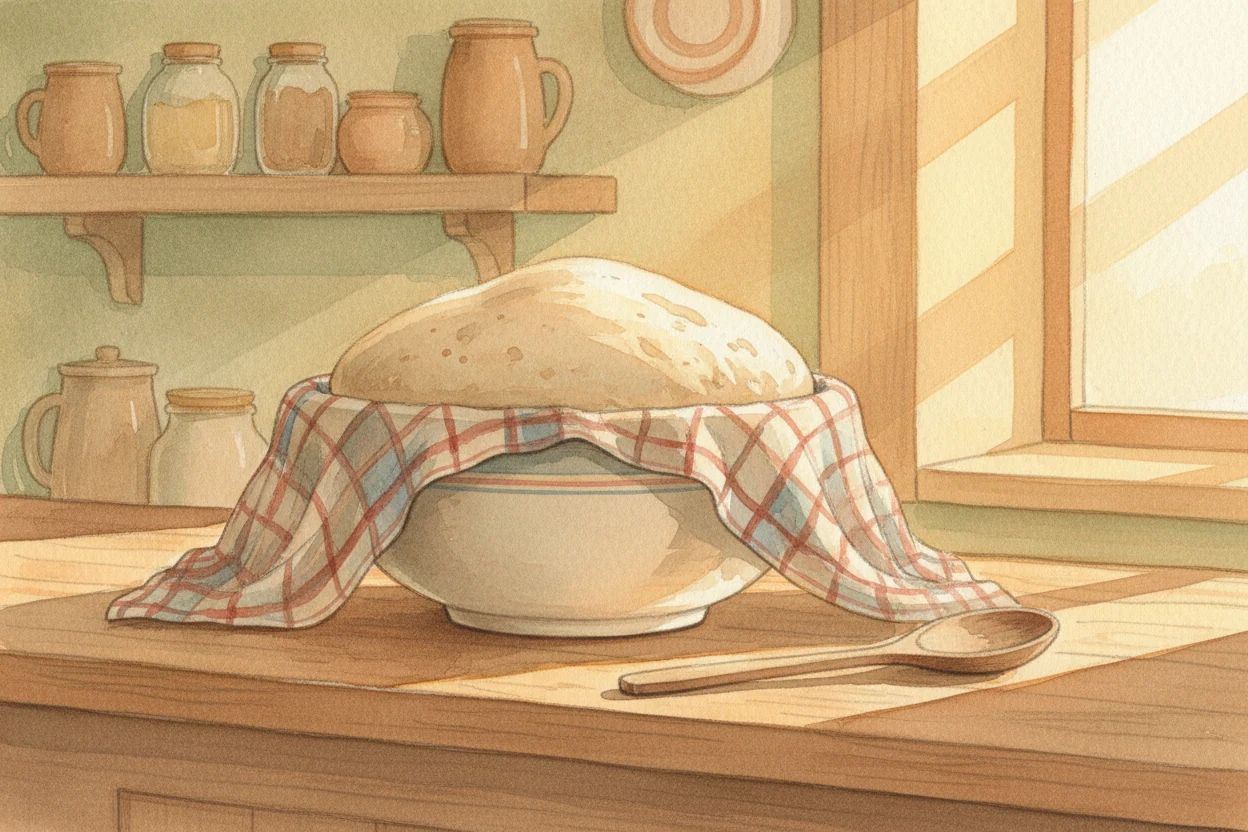
You mix flour, water, salt, and a spoonful of something called yeast. You knead it into a smooth ball, cover it with a towel, and walk away. An hour later, you come back and lift the towel โ and the dough has doubled in size, like someone snuck in and inflated it with a bicycle pump. What just happened?
The secret is the yeast. Yeast isn't a powder or a chemical โ it's millions of tiny living creatures, each one smaller than a grain of sand. When you mixed them into the dough, you woke them up. And now they're hungry.
Yeast eats sugar. You didn't add sugar to the dough, but flour is made of starch, and starch is just long chains of sugar molecules stuck together. The yeast breaks those chains apart and gobbles up the sugar like popcorn at a movie.
Here's the magic part: when yeast eats sugar, it burps. Specifically, it releases carbon dioxide gas โ the same stuff that makes soda fizzy. Millions of yeast cells eating and burping at the same time means millions of tiny gas bubbles forming inside the dough.
Dough is stretchy, like a rubber balloon. The gluten in the flour โ long, springy protein strands โ forms a network that traps the gas bubbles instead of letting them escape. Each bubble pushes against the dough, stretching it a little bit bigger.
Millions of tiny bubbles, all pushing at once, add up. The dough swells from the inside out. It's not magic โ it's a bustling city of yeast workers, each one eating, burping, and inflating a microscopic balloon, all working together to lift your bread.
When you finally bake the bread, the heat kills the yeast, but the bubbles stay trapped inside. The dough hardens around them into that light, airy texture with all those little holes. You're eating a fossil record of a million yeast burps.
So the next time you pull back that towel and see the dough ballooning up at you, you'll know: it's not rising by itself. It's being lifted by an invisible army of tiny, hungry, gassy creatures throwing the world's smallest party inside your bowl.