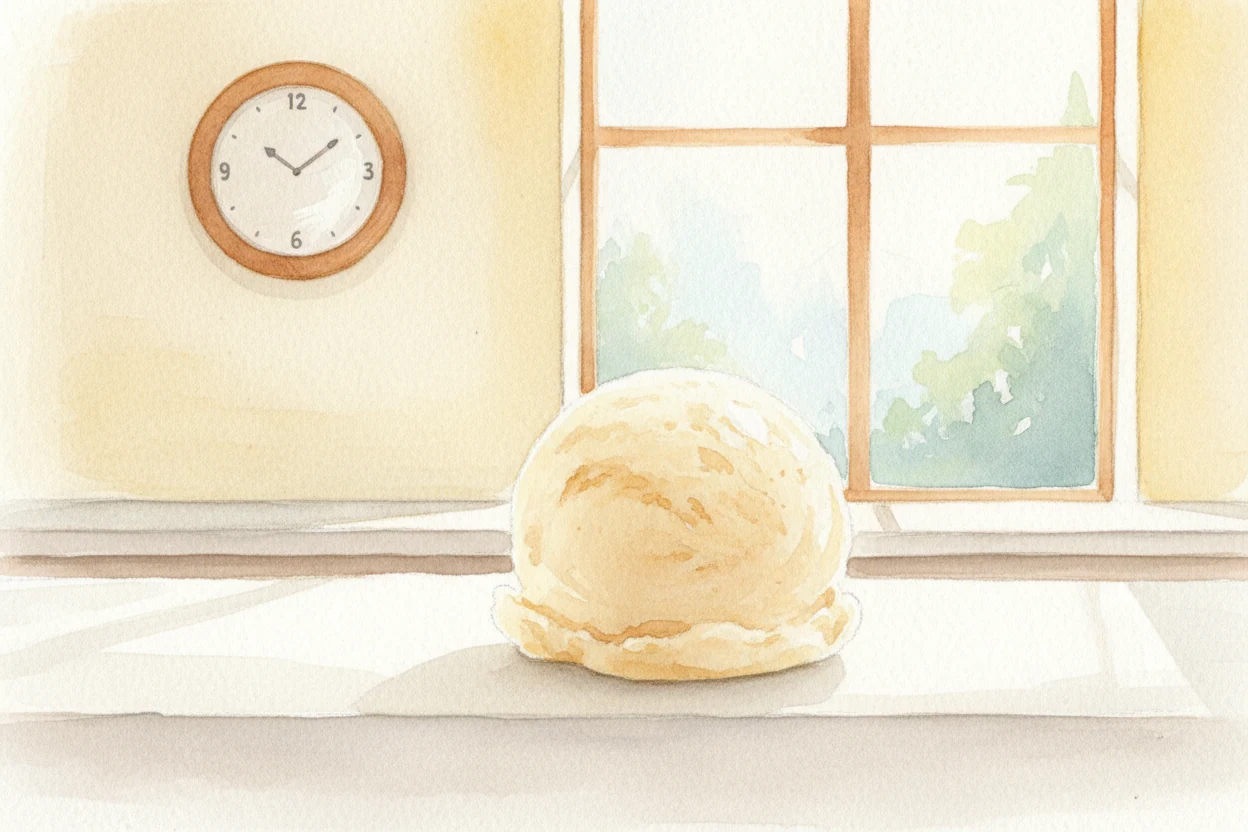
Ice Cream's Great Escape
You pull a frozen scoop of ice cream from the freezer โ hard as a rock, perfect and smooth. Five minutes later, it's a puddle in your bowl. What happened?
Ice cream is made of tiny water crystals locked together in a frozen web, with fat and sugar filling the gaps. As long as it stays cold, everything holds tight. But the moment you take it out of the freezer, the air around it is much warmer โ and heat always flows from warm things to cold things, like water rolling downhill.
Heat from the air crashes into the ice cream's surface. The molecules in the ice crystals start jiggling faster and faster. When they jiggle hard enough, the rigid crystal lattice breaks apart โ solid ice becomes liquid water. That's melting.
The fat and sugar that were trapped in the frozen web now swirl into the growing puddle. What was a firm scoop becomes a sweet, creamy soup. The heat keeps pouring in from the air, and more ice crystals surrender, one after another.
This is why you can't stop melting by wishing hard or blowing on it โ you'd have to cool the air itself, or put the ice cream somewhere colder than the room. Heat flows on its own; it doesn't care about your plans.
Some ice creams melt faster than others. More fat and sugar mean more stuff gets in the way of the ice crystals, so the structure is weaker to begin with. Cheap ice cream with lots of air whipped in collapses faster. Dense gelato, packed tight, holds out a little longer.
Even in the freezer, ice cream isn't perfectly frozen forever. Open the door too often, and warm air sneaks in. The surface melts a tiny bit, then refreezes into bigger, crunchy crystals. That's why old ice cream gets icy and weird.
So the truth is simple: ice cream melts because heat from the world around it breaks the frozen structure apart, turning solid into liquid. The only way to win is to eat it fast โ or find a colder place to hide.