cover

Tiny Party in Your Fridge

Why does milk turn into yogurt?
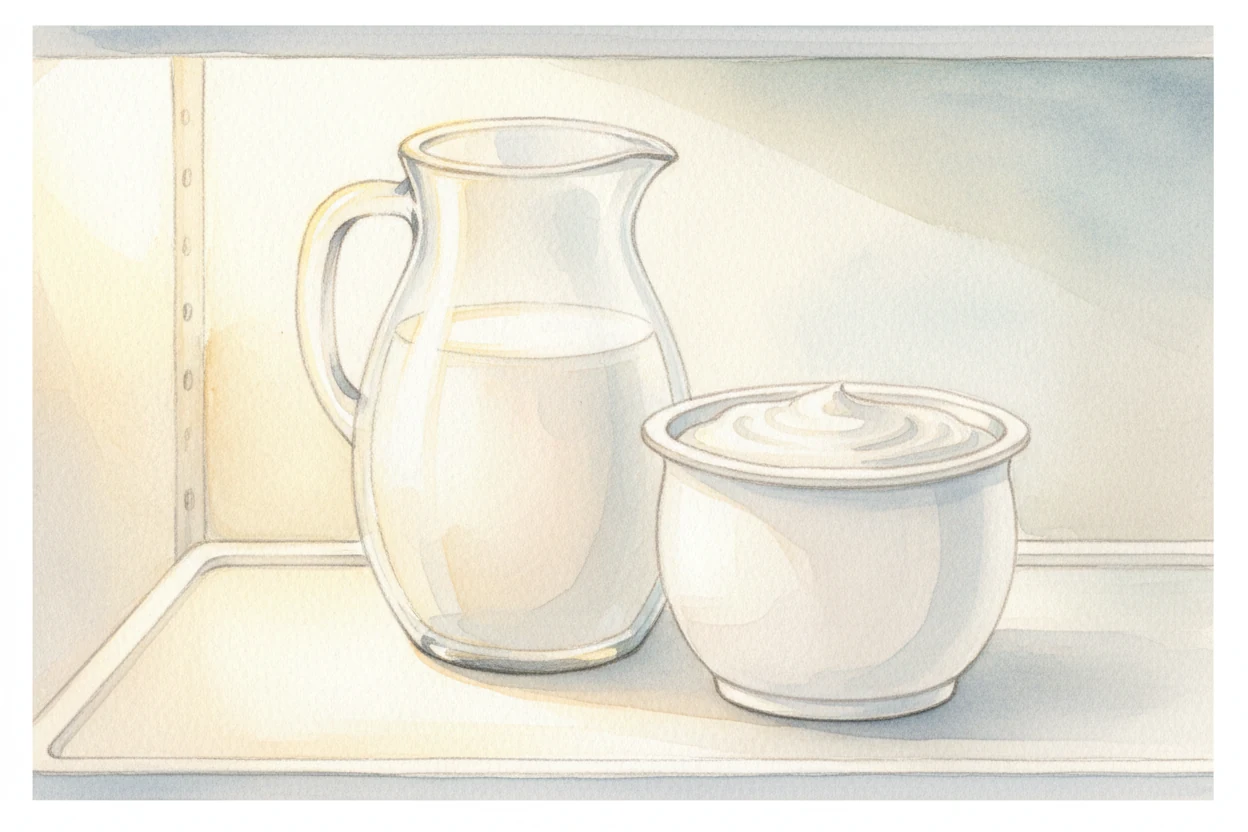
You open the fridge and there it is: a tub of yogurt, **thick and tangy**, sitting right next to the milk jug. Both came

You open the fridge and there it is: a tub of yogurt, thick and tangy, sitting right next to the milk jug. Both came from a cow, but one you pour on cereal and the other you eat with a spoon. How did milk โ€” that thin, sweet liquid โ€” turn into this completely different thing?

The secret is ++bacteria++. Tiny living creatures, **millions of them**, too small to see. When you add the right kind o

The secret is bacteria. Tiny living creatures, millions of them, too small to see. When you add the right kind of bacteria to warm milk and let them hang out for a few hours, they throw a party that transforms everything.

These bacteria are hungry, and their favorite food is lactose โ€” the natural sugar floating around in milk. They gobble i

These bacteria are hungry, and their favorite food is lactose โ€” the natural sugar floating around in milk. They gobble it up like kids at a candy store. But here's the twist: when bacteria eat lactose, they don't just make it disappear. They break it down into something new.

What comes out the other end is ++lactic acid++. It's **sour, sharp**, and it immediately starts changing the milk aroun

What comes out the other end is lactic acid. It's sour, sharp, and it immediately starts changing the milk around it. The acid makes the milk proteins โ€” long, tangled molecules that were happily floating loose โ€” suddenly stick together.

As *more and more proteins tangle up*, the liquid milk starts to thicken. It's **like when you keep stirring flour into

As more and more proteins tangle up, the liquid milk starts to thicken. It's like when you keep stirring flour into water: at first it's runny, then it gets creamy, then it becomes a soft gel you can hold on a spoon. The bacteria keep eating, the acid keeps flowing, and the milk keeps thickening.

The tanginess you taste? **That's the lactic acid the bacteria made**. The thickness? That's **millions of protein tangl

The tanginess you taste? That's the lactic acid the bacteria made. The thickness? That's millions of protein tangles holding everything together in a soft net. The bacteria are still in there too, alive, waiting to be eaten. That's why yogurt is called a "live culture" โ€” it's a culture of tiny creatures you're about to have for breakfast.

Different bacteria make different yogurts. ++Greek yogurt++ bacteria work extra hard, making more acid so cheesemakers c

Different bacteria make different yogurts. Greek yogurt bacteria work extra hard, making more acid so cheesemakers can strain out the liquid whey and leave ultra-thick curds. Icelandic skyr bacteria team up with a touch of rennet to make it even denser. Bulgarian yogurt bacteria love the heat and make it super tangy.

So milk doesn't "turn into" yogurt the way water turns into ice. It gets transformed by a **billion tiny workers** eatin

So milk doesn't "turn into" yogurt the way water turns into ice. It gets transformed by a billion tiny workers eating, making acid, and stitching the proteins into something new. Next time you eat yogurt, you're tasting the leftovers of the biggest, smallest party ever thrown in your fridge.

How was this book?

A Wonderleaf Book

Tiny Party in Your Fridge

โ€” Why does milk turn into yogurt? โ€”

Wonderleaf Editions
โ€” ex libris โ€”
A Wonderleaf Book

Tiny Party in Your Fridge

Why does milk turn into yogurt?

Wonderleaf Editions ยท MMXXVI
Scene 1
You open the fridge and there it is: a tub of yogurt, **thick and tangy**, sitting right next to the milk jug. Both came
Tiny Party in Your Fridge2
Scene 1

You open the fridge and there it is: a tub of yogurt, thick and tangy, sitting right next to the milk jug. Both came from a cow, but one you pour on cereal and the other you eat with a spoon. How did milk โ€” that thin, sweet liquid โ€” turn into this completely different thing?

3Tiny Party in Your Fridge
Scene 2
The secret is ++bacteria++. Tiny living creatures, **millions of them**, too small to see. When you add the right kind o
Tiny Party in Your Fridge4
Scene 2

The secret is bacteria. Tiny living creatures, millions of them, too small to see. When you add the right kind of bacteria to warm milk and let them hang out for a few hours, they throw a party that transforms everything.

5Tiny Party in Your Fridge
Scene 3
These bacteria are hungry, and their favorite food is lactose โ€” the natural sugar floating around in milk. They gobble i
Tiny Party in Your Fridge6
Scene 3

These bacteria are hungry, and their favorite food is lactose โ€” the natural sugar floating around in milk. They gobble it up like kids at a candy store. But here's the twist: when bacteria eat lactose, they don't just make it disappear. They break it down into something new.

7Tiny Party in Your Fridge
Scene 4
What comes out the other end is ++lactic acid++. It's **sour, sharp**, and it immediately starts changing the milk aroun
Tiny Party in Your Fridge8
Scene 4

What comes out the other end is lactic acid. It's sour, sharp, and it immediately starts changing the milk around it. The acid makes the milk proteins โ€” long, tangled molecules that were happily floating loose โ€” suddenly stick together.

9Tiny Party in Your Fridge
Scene 5
As *more and more proteins tangle up*, the liquid milk starts to thicken. It's **like when you keep stirring flour into
Tiny Party in Your Fridge10
Scene 5

As more and more proteins tangle up, the liquid milk starts to thicken. It's like when you keep stirring flour into water: at first it's runny, then it gets creamy, then it becomes a soft gel you can hold on a spoon. The bacteria keep eating, the acid keeps flowing, and the milk keeps thickening.

11Tiny Party in Your Fridge
Scene 6
The tanginess you taste? **That's the lactic acid the bacteria made**. The thickness? That's **millions of protein tangl
Tiny Party in Your Fridge12
Scene 6

The tanginess you taste? That's the lactic acid the bacteria made. The thickness? That's millions of protein tangles holding everything together in a soft net. The bacteria are still in there too, alive, waiting to be eaten. That's why yogurt is called a "live culture" โ€” it's a culture of tiny creatures you're about to have for breakfast.

13Tiny Party in Your Fridge
Scene 7
Different bacteria make different yogurts. ++Greek yogurt++ bacteria work extra hard, making more acid so cheesemakers c
Tiny Party in Your Fridge14
Scene 7

Different bacteria make different yogurts. Greek yogurt bacteria work extra hard, making more acid so cheesemakers can strain out the liquid whey and leave ultra-thick curds. Icelandic skyr bacteria team up with a touch of rennet to make it even denser. Bulgarian yogurt bacteria love the heat and make it super tangy.

15Tiny Party in Your Fridge
Scene 8
So milk doesn't "turn into" yogurt the way water turns into ice. It gets transformed by a **billion tiny workers** eatin
Tiny Party in Your Fridge16
Scene 8

So milk doesn't "turn into" yogurt the way water turns into ice. It gets transformed by a billion tiny workers eating, making acid, and stitching the proteins into something new. Next time you eat yogurt, you're tasting the leftovers of the biggest, smallest party ever thrown in your fridge.

17Tiny Party in Your Fridge

~ finis ~

Tiny picture books for big little questions.

โ€” a small constellation of questions โ€”
โœฆWonderleaf
Editions